
Santa Maria Magnetic Observatory
Satellite imagery: Esri, Maxar, Earthstar Geographics
On Santa Maria Island in Portugal's Azores archipelago, the Santa Maria Magnetic Observatory keeps a continuous watch on Earth's magnetic field rather than the stars above it.
About Santa Maria Magnetic Observatory
The observatory is operated by the GFZ German Research Centre for Geosciences and sits at 196 metres altitude. Its role is to record fine changes in the Earth's magnetic field from a remote Atlantic location, far from the electrical interference of major cities.
Instruments & research
Rather than telescopes, the site runs sensitive magnetometers that continuously log geomagnetic field strength and direction, feeding data into international geomagnetism networks used for navigation, space-weather monitoring, and Earth-science research.
Location & getting there
Santa Maria Island sits in the Azores, a mid-Atlantic Portuguese archipelago, at just under 37 degrees north. The island also hosts a European Space Agency tracking station and other geodetic facilities, reflecting the value of its isolated, low-interference location for scientific instruments of all kinds.
Visiting Santa Maria Magnetic Observatory
As a scientific monitoring station rather than a visitor attraction, the observatory is not generally open to the public; check with GFZ or local Azores tourism information before planning any visit.
See your named star from here
Santa Maria Magnetic Observatory doesn't host telescopes of its own (its instruments watch Earth's magnetic field, not the sky), but the Azores' dark, ocean-facing skies are a fine place to look for a star named through Star Register. Browse the star catalogue to find yours.
Opening hours and public-visit programs vary by season. Check the official website and Google Maps for current times before you travel.
Institutional and reference sources used to verify this guide.
Satellite imagery: Esri, Maxar, Earthstar Geographics

 1,137 km
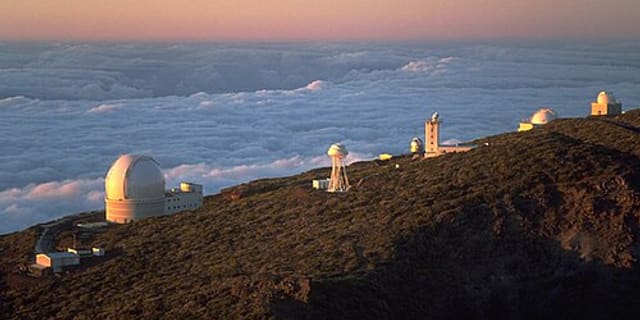
Nordic Optical Telescope observatory
astronomical observatory complex at Roque de los Muchachos Observatory

 1,138 km