
Royal Observatory of Madrid

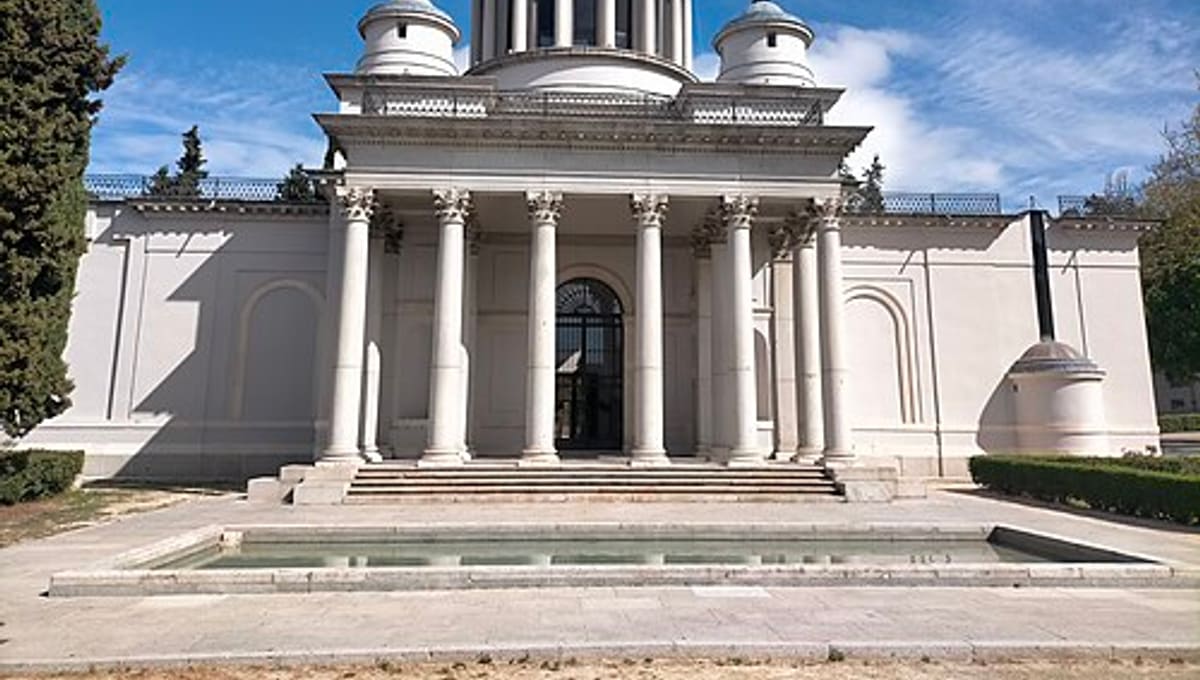
Image: Wikimedia Commons
The Royal Observatory of Madrid has stood on a small hill beside Buen Retiro Park since 1790, and remains in continuous scientific use as the seat of Spain's National Observatory.
About the Royal Observatory of Madrid
Founded in 1790, the observatory was designed by architect Juan de Villanueva with Ventura Rodríguez, built in a neoclassical style shaped like a Greek cross with four equal wings. Its collection includes historical scientific instruments and bibliographic and documentary archives, including a replica of an original 60 cm Herschel reflecting telescope — the first was destroyed during the Napoleonic occupation in 1808.
History
The observatory has operated continuously since its founding and today belongs to Spain's National Geographic Institute, alongside an active geophysics research group. Rafael Bachiller has directed the observatory since 2002. In 2021, it entered the UNESCO World Heritage List as part of the “Paisaje de la Luz” (Landscape of Light) site.
Location & getting there
Sitting at about 655 metres elevation next to Buen Retiro Park in central Madrid, Spain, the observatory is easy to reach on foot or by public transport from the city centre.
Visiting the Royal Observatory of Madrid
Visits are ticketed, with an entry fee in place; wheelchair access is not currently available. For opening times and to book, call +34 914 67 34 61 or check the observatory's official website before travelling.
See your named star from here
A UNESCO-listed observatory with over two centuries of astronomical history is a memorable place to picture your own star's coordinates. Name a star, or browse the star catalogue to find one already registered.
Opening hours and public-visit programs vary by season. Check the official website and Google Maps for current times before you travel.
Not wheelchair accessible
Institutional and reference sources used to verify this guide.
Satellite imagery: Esri, Maxar, Earthstar Geographics

 23 kmResearch
 58 kmRadio
 58 km
58 km