
Pierre Auger Observatory

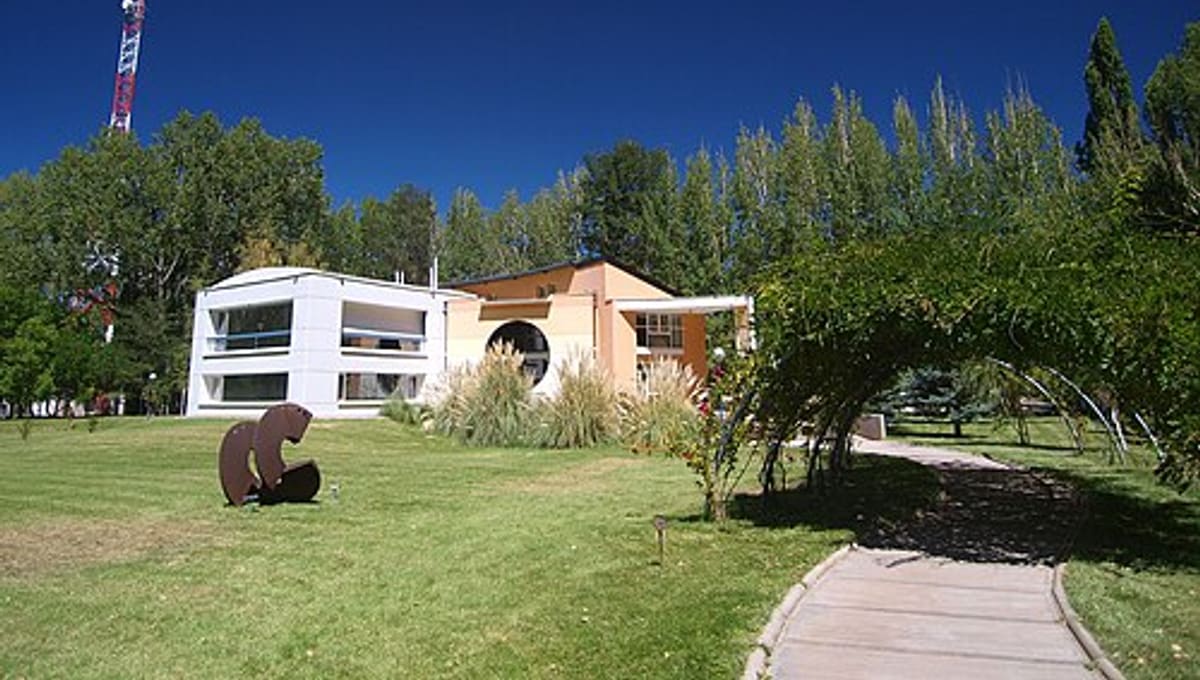
Image: Wikimedia Commons
Pierre Auger Observatory spreads across the Pampa Amarilla in Mendoza Province, Argentina, one of the largest cosmic-ray detection sites ever built.
About Pierre Auger Observatory
Pierre Auger Observatory is an international facility designed to detect ultra-high-energy cosmic rays, subatomic particles travelling at nearly the speed of light with energies beyond 10^18 electron volts. Because these particles strike Earth at a rate of only about one per square kilometre per century, the observatory covers a detection area of roughly 3,000 square kilometres, comparable in size to Rhode Island or Luxembourg, to record a meaningful number of events.
History
Proposed in 1992 by physicists Jim Cronin and Alan Watson, the observatory began construction in 2000 in Mendoza Province, near the Andes. It started collecting production-grade data in 2005 and was officially completed in 2008. It's named after French physicist Pierre Victor Auger. Fifteen participating countries shared the roughly $50 million construction budget.
Telescopes & research
The observatory uses a hybrid detection system combining thousands of water-Cherenkov surface detector tanks with fluorescence telescopes that watch the atmosphere for the faint light produced when cosmic rays collide with air molecules. More than 500 physicists from nearly 100 institutions worldwide collaborate on maintaining the site and analysing its data.
Location & getting there
The observatory sits at around 1,340 metres elevation on the Pampa Amarilla plain in western Mendoza Province, Argentina, near the foothills of the Andes.
Visiting Pierre Auger Observatory
The observatory operates a visitor centre and offers guided tours of parts of the site; check the official Auger website for current hours and tour availability before travelling.
See your named star from here
Pierre Auger Observatory studies cosmic rays rather than starlight, but the night skies above Mendoza Province are as clear as any in Argentina for stargazing. A star named through Star Register comes with exact coordinates you can use with a telescope anywhere under those skies. Name a star or browse the star catalogue to find yours.
Opening hours and public-visit programs vary by season. Check the official website and Google Maps for current times before you travel.
Institutional and reference sources used to verify this guide.
Satellite imagery: Esri, Maxar, Earthstar Geographics

 293 km
 379 km
MASTER-OAFA Observatory
astronomical observatory in San Juan Province, Argentina

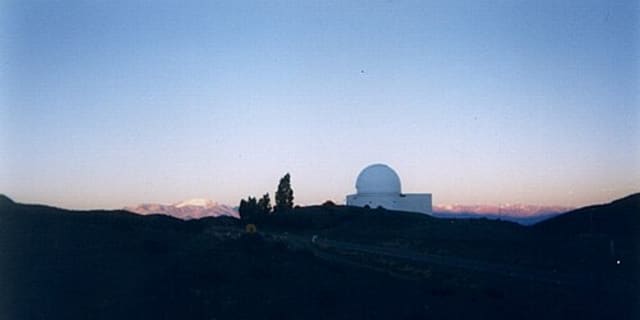 379 km
Alianza S4 observatory
astronomical observatory in San Juan Province, Argentina