
Parkes Observatory

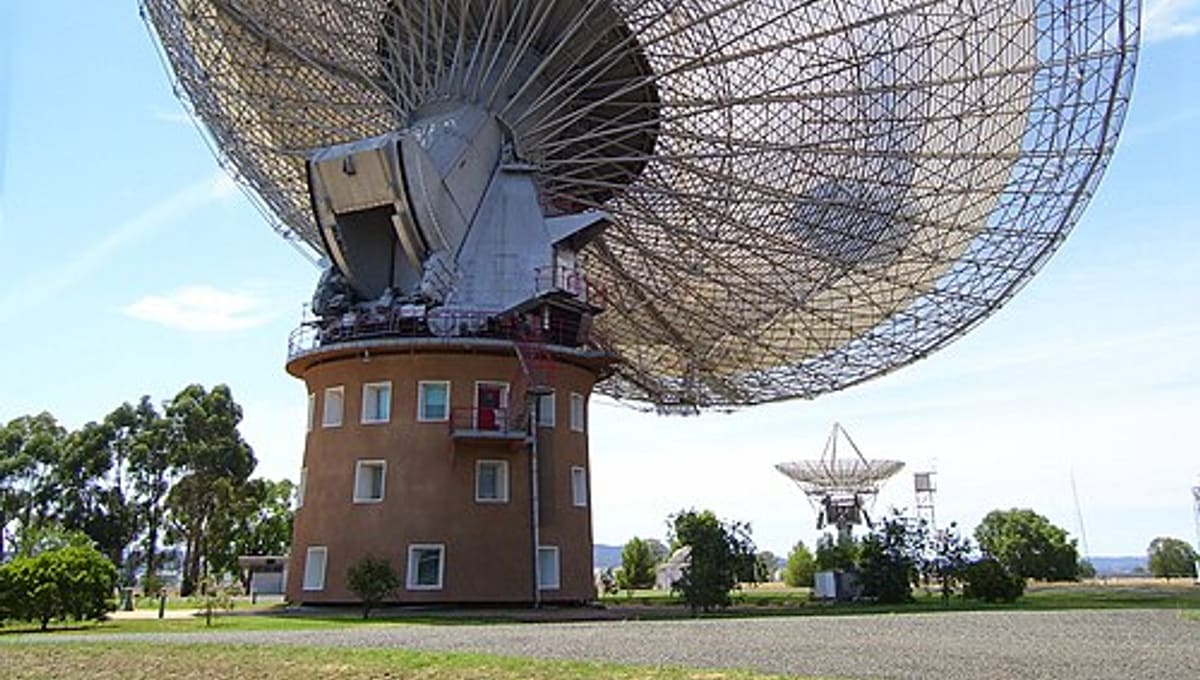
Image: Wikimedia Commons
Parkes Observatory is a radio astronomy site 20 kilometres north of the town of Parkes in New South Wales, Australia, home to the famous 64-metre dish that helped the world watch the first Moon landing.
About Parkes Observatory
The observatory hosts Murriyang, the 64-metre CSIRO Parkes Radio Telescope, widely known as "The Dish," alongside two smaller radio telescopes. It is run by the Commonwealth Scientific and Industrial Research Organisation (CSIRO) as part of the Australia Telescope National Facility (ATNF) network, and is frequently operated together with other CSIRO radio telescopes — including the Australia Telescope Compact Array near Narrabri and the Mopra dish near Coonabarabran — as well as international telescopes, to form very long baseline interferometry arrays.
History
Parkes Observatory was founded in 1961. In 1969 its 64-metre dish was one of the antennae that received live television images of the Apollo 11 Moon landing. After 40 years of operation, the ABC described it as "the most successful scientific instrument ever built in Australia," and it was added to the Australian National Heritage List on 10 August 2020.
Telescopes & research
Murriyang remains a major working radio telescope, contributing to research across radio astronomy in collaboration with CSIRO's other facilities and international observatories.
Location & getting there
The observatory sits about 20 km north of the town of Parkes, in the rural plains of New South Wales, Australia.
Visiting Parkes Observatory
Parkes Observatory welcomes public visitors; check its official website for current visitor centre opening hours and any tour details before you travel.
See your named star from here
The same radio dish that once relayed pictures from the Moon still points at a sky that includes the star you can name. Find its coordinates in our star catalogue, or explore more observatories to visit on our observatories page.
Opening hours and public-visit programs vary by season. Check the official website and Google Maps for current times before you travel.
Institutional and reference sources used to verify this guide.
Satellite imagery: Esri, Maxar, Earthstar Geographics

 206 kmSpace
Digitized Sky Survey
digitization of several astronomical surveys by the Space Telescope Science Institute

 206 km
 206 km