
Pamatai Magnetic Observatory
Satellite imagery: Esri, Maxar, Earthstar Geographics
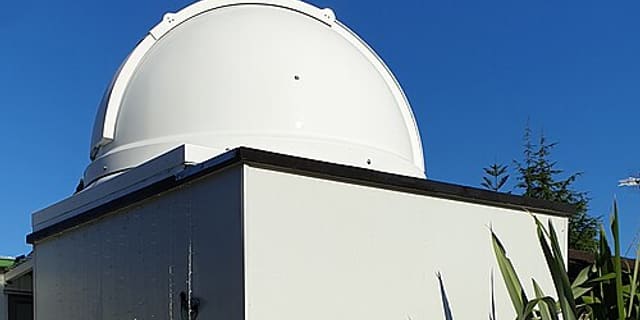
Pamatai Magnetic Observatory sits on the island of Tahiti in French Polynesia, where a small research station has tracked the invisible pulse of Earth's magnetic field for more than half a century.
About Pamatai Magnetic Observatory
Pamatai is a geomagnetic observatory that continuously records variations in the Earth's magnetic field from its site near Papeete. Rather than housing telescopes, it operates precision magnetic instruments, including a DI-flux Theodolite Zeiss 010B, and forms part of the international Observatoire Magnétique Planétaire (OMP) network of stations monitoring the planet's magnetism.
History
The observatory was created in 1968 by ORSTOM, the French research organisation for overseas territories, to give French Polynesia a permanent geomagnetic monitoring station. In 1995 responsibility passed to the Institut de physique du globe de Paris (IPGP), which continues to operate the site today.
Location & getting there
Pamatai lies on Tahiti, the largest island of French Polynesia, in the South Pacific — a world away from the light-polluted skies of many continents. The clear, dark air over the island makes the surrounding region a genuinely good place to look up at night, even though the observatory itself is a scientific instrument site rather than a viewing platform.
Visiting Pamatai Magnetic Observatory
Pamatai is primarily a working research facility rather than a public attraction, and no visitor opening hours are published. Anyone hoping to see it should contact IPGP or check current local information before planning a trip.
See your named star from here
Pamatai's instruments read the Earth's magnetism, not the night sky, but Tahiti's dark Pacific nights are still a beautiful backdrop for stargazing. If you'd like a permanent way to mark this part of the world, you can name a star and receive its exact coordinates, then browse other night-sky locations on our observatories page or search the star catalogue.
Opening hours and public-visit programs vary by season. Check Google Maps for current times before you travel.
Institutional and reference sources used to verify this guide.
Satellite imagery: Esri, Maxar, Earthstar Geographics

 4,081 km
 4,178 km