
Oscar G. Mayer Memorial Building

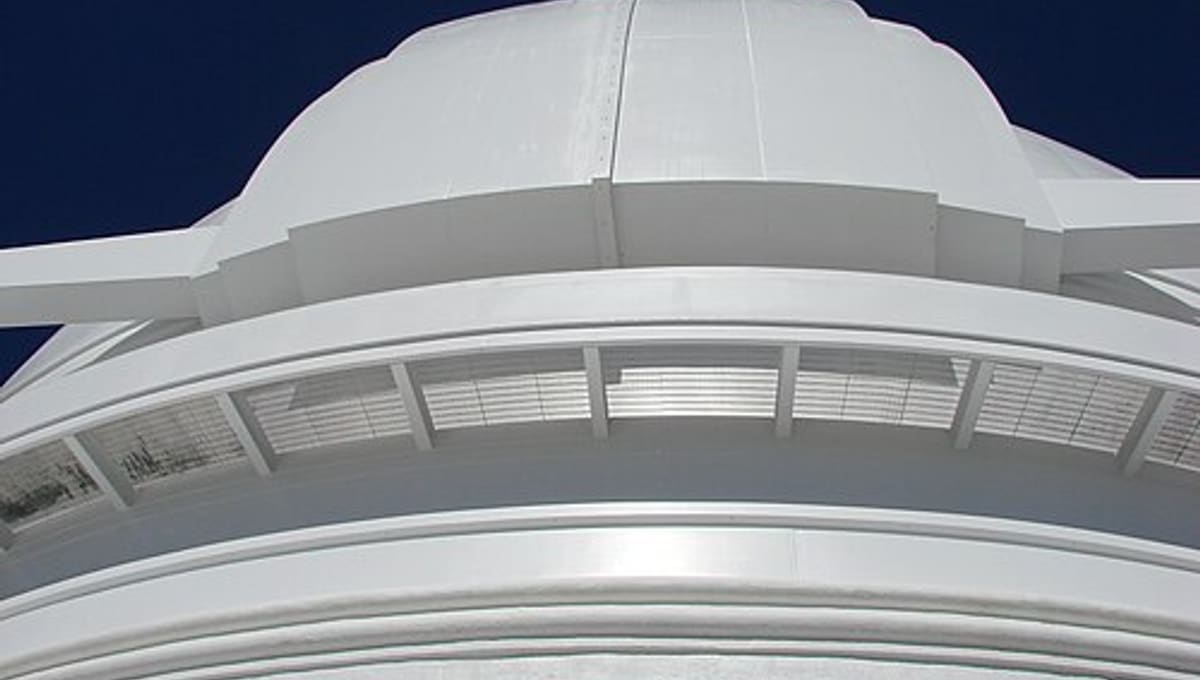
Image: Wikimedia Commons
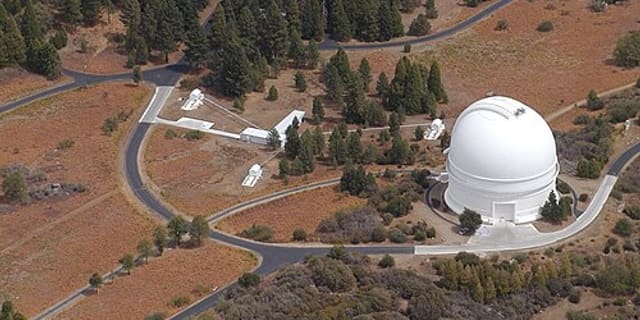
On Palomar Mountain in San Diego County, California, the Oscar G. Mayer Memorial Building houses one of the observatory's workhorse telescopes: a 60-inch reflector that has been in near-continuous use since 1970.
About Oscar G. Mayer Memorial Building
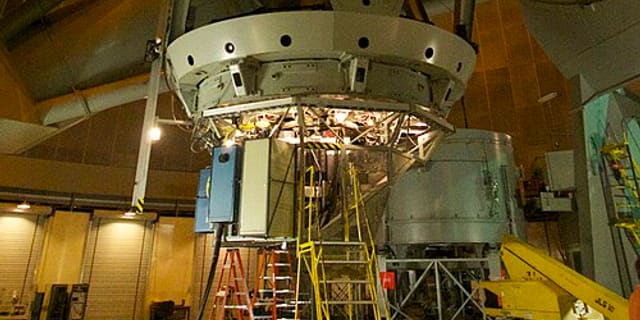
The building sits at 1,680 metres elevation within Palomar Observatory, operated by the California Institute of Technology. It houses a 60-inch Ritchey-Chrétien reflecting telescope with a primary mirror weighing 2,000 pounds.
History
The telescope was completed and dedicated on 23 October 1970, funded by gifts from the Mayer family together with grants from NASA and the NSF, and named for Oscar G. Mayer Sr. It was built to take pressure off Palomar's famous 200-inch Hale Telescope by handling a larger share of the observatory's night-time observing programme.
Telescopes and research
In October 1994, observations with the 60-inch telescope helped confirm Gliese 229B as the first brown dwarf to be indisputably identified, a landmark result for the study of objects between planets and stars. Since 2004 the telescope has operated robotically, dedicated to following up transient events. Its current instrument is the SED Machine, an integral field spectrograph used to characterise transients discovered by the Zwicky Transient Facility.
Location and getting there
Palomar Observatory sits atop Palomar Mountain in San Diego County, Southern California, at 1,680 metres above sea level, high enough, and far enough from city lights, to give the site consistently dark, steady skies.
Visiting Oscar G. Mayer Memorial Building
Palomar Observatory welcomes day visitors to its grounds and public areas, though the 60-inch telescope itself operates robotically and is generally not part of the guided tour route. Check the official Palomar Observatory website for current visiting hours before you go.
See your named star from here
The 60-inch telescope's work confirming Gliese 229B shows what precise sky coordinates can reveal. When you name a star with Star Register, you receive that same kind of coordinate data, viewable any time in our catalogue or pointed at with a telescope from a dark-sky site.
Opening hours and public-visit programs vary by season. Check Google Maps for current times before you travel.
Institutional and reference sources used to verify this guide.
Satellite imagery: Esri, Maxar, Earthstar Geographics

 under 1 kmSpace
Palomar Mountain-DSS
The Digitized Sky Survey (DSS) is a digitized version of several photographic astronomical surveys of the night sky, produced by the Space Telescope S

 1 km
1 km
 101 kmSolar