
Big Bear Solar Observatory

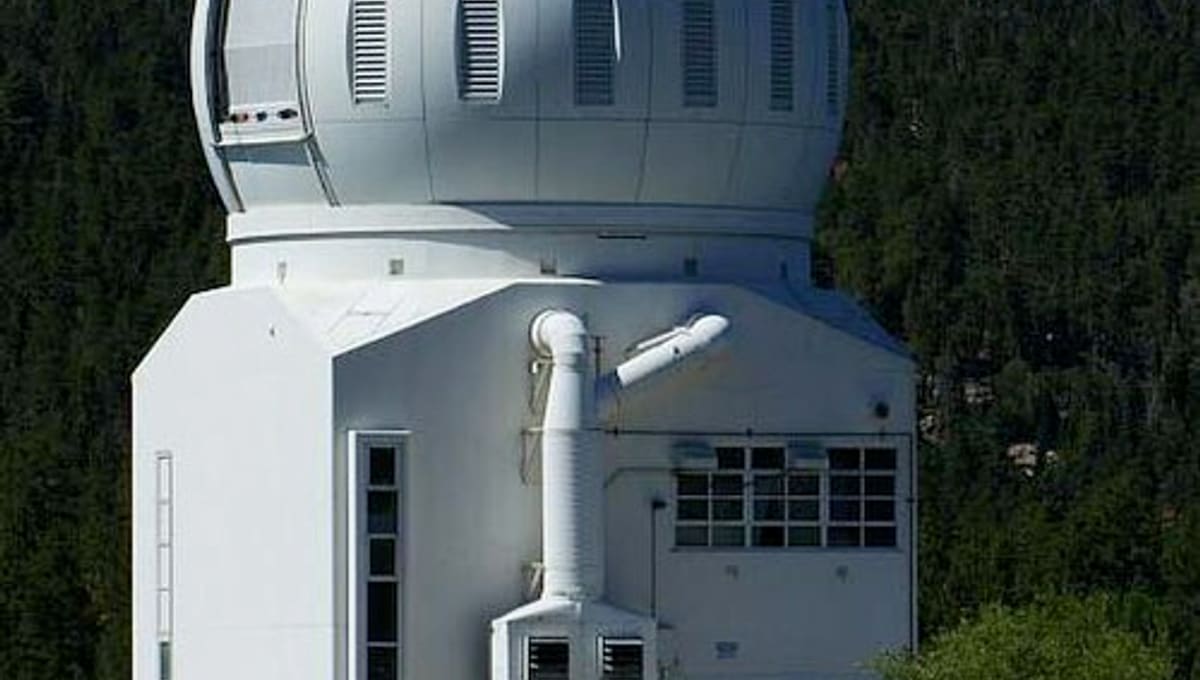
Image: Wikimedia Commons
Big Bear Solar Observatory occupies the north shore of Big Bear Lake in California's San Bernardino Mountains, where its 1.6-metre Goode Solar Telescope is dedicated entirely to watching the Sun.
About Big Bear Solar Observatory
Operated by the New Jersey Institute of Technology (NJIT), Big Bear Solar Observatory (BBSO) sits in southwestern San Bernardino County, roughly 120 kilometres east of downtown Los Angeles, at an elevation of about 2,060 metres. Every telescope and instrument on site is built specifically to study solar activity rather than night-sky targets.
Telescopes & research
The observatory's flagship instrument is the 1.6-metre Goode Solar Telescope (GST), a clear-aperture design with no central obstruction in its optical path, one of the largest solar telescopes of its kind. It is used to study solar phenomena in fine detail, from sunspots to flares.
Location & getting there
Being surrounded by water on the lake's north shore, and set high in the San Bernardino Mountains, gives BBSO unusually calm, steady air for solar observing, an advantage that has kept the site running for decades.
Visiting Big Bear Solar Observatory
BBSO runs free public tours roughly every other Thursday afternoon, though reservations are required and slots fill up well in advance. Visitors should be able to walk about 1,000 feet down a gravel road and back and climb three flights of stairs, and the tour is not recommended for children under five. Contact the observatory directly or check its website for current tour availability.
See your named star from here
BBSO's instruments are built to track the Sun, but the same principle of aiming a telescope at precise coordinates applies to any star, including one named through star-register.eu. Browse the star catalogue or see our naming packages to find yours.
Opening hours and public-visit programs vary by season. Check the official website and Google Maps for current times before you travel.
Institutional and reference sources used to verify this guide.
Satellite imagery: Esri, Maxar, Earthstar Geographics