
Lake Arrowhead observatory
Satellite imagery: Esri, Maxar, Earthstar Geographics
In the pine forests above Lake Arrowhead, California, the Robert Brownlee Observatory gives visitors a rare public window onto the night sky. Run by the Mountain Skies Astronomical Society (MSAS), the facility has hosted stargazers and students at its mountainside site since 1989.
About Lake Arrowhead Observatory
The observatory sits at roughly 6,000 feet in the San Bernardino Mountains, addressed at 27614 State Highway 18, Lake Arrowhead. It is owned and operated by the Mountain Skies Astronomical Society, a nonprofit dedicated to public astronomy education in the region.
History
MSAS founded the observatory in 1989, building a dedicated science center to bring hands-on astronomy to the local community. Since then it has grown into one of the more active public observatories in Southern California, welcoming both casual visitors and school groups.
Telescopes & research
The observatory's main instrument is a 17.2-inch computer-controlled research-grade telescope housed in a 22-foot dome, one of the larger public telescopes in the region. A secondary 5-inch solar refractor lets visitors safely observe the Sun during daytime programs.
Location & getting there
Lake Arrowhead sits in the San Bernardino National Forest east of Los Angeles. The mountain elevation of around 6,000 feet gives the site noticeably darker, clearer skies than the surrounding lowland cities.
Visiting Lake Arrowhead Observatory
MSAS runs public stargazing nights and a K-12 education program called SkyQuest at the observatory. Because sessions depend on weather and scheduling, check the Mountain Skies Astronomical Society website before visiting.
See your named star from here
Because the observatory's 17.2-inch telescope can be pointed at any set of coordinates, its operators can help you find a star you've named through Star Register. Bring your certificate's RA/Dec and, on a clear night, ask staff to help locate it. Browse the catalogue to see how coordinates map to real, visible stars.
Opening hours and public-visit programs vary by season. Check Google Maps for current times before you travel.
Institutional and reference sources used to verify this guide.
Satellite imagery: Esri, Maxar, Earthstar Geographics
Cedar Glen Observatory
astronomical observatory in California, United States

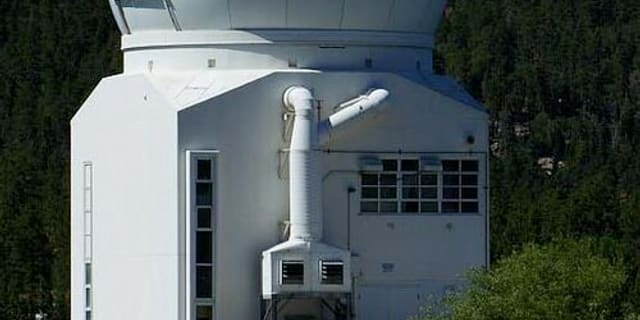 23 kmSolar
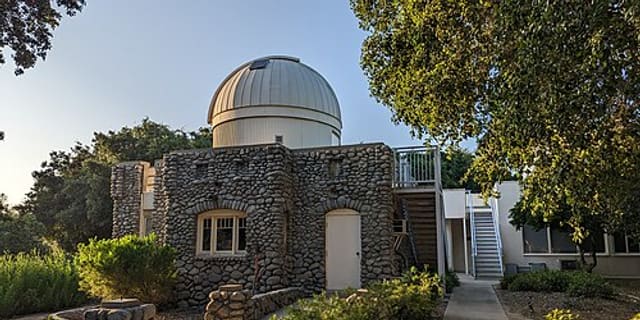 53 kmResearch