
Ondřejov Observatory

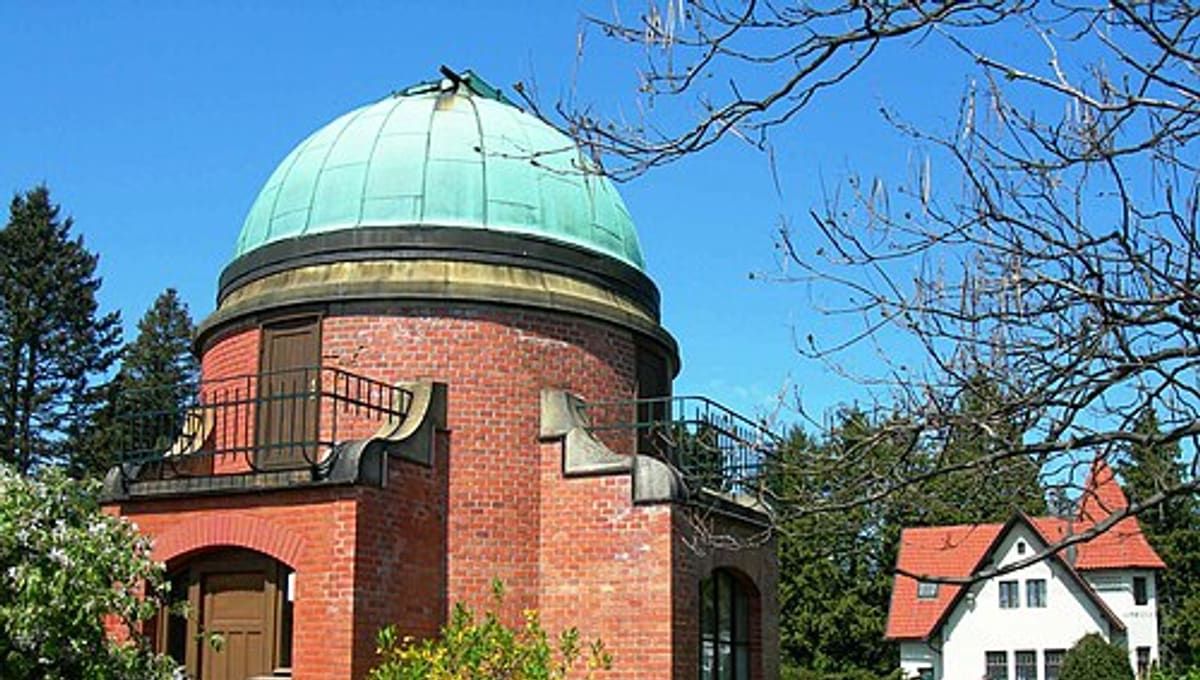
Image: Wikimedia Commons
Ondřejov Observatory sits in a wooded corner of the Czech countryside, 35 kilometres southeast of Prague, and has been the country's leading centre for astronomical research for well over a century.
About Ondřejov Observatory
Ondřejov is the principal observatory of the Astronomical Institute of the Czech Academy of Sciences. At 500 metres above sea level, the site houses a 2-metre telescope, the largest optical instrument in the Czech Republic, alongside a cluster of historic domes and research buildings.
History
The observatory was founded in 1898 by the Czech amateur astronomer Josef Jan Frič as a private research station. A main villa with laboratory and study rooms was inaugurated in 1905, and two domes in an Art Nouveau style designed by architect Josef Fanta followed between 1908 and 1912. Frič donated the observatory to the Czechoslovak state in 1928. It was administered by Charles University until 1953, when responsibility passed to the Czechoslovak Academy of Sciences, whose successor institute still runs it today.
Telescopes & research
Ondřejov's 2-metre telescope anchors a long record of observational work, and astronomers there have been credited with discovering more than 700 minor planets. The site continues to operate as an active research facility under the Astronomical Institute of the Czech Academy of Sciences.
Location & getting there
The observatory occupies a hilltop setting in the municipality of Ondřejov, Central Bohemia, a short drive from Prague. Its elevation and rural surroundings give it darker skies than the capital, which is part of why Frič chose the site more than a century ago.
Visiting Ondřejov Observatory
Ondřejov runs public viewing programmes for visitors. Details on tours and opening times are best confirmed on the institute's official visitor page before you travel, since schedules can change with the seasons.
See your named star from here
Because Ondřejov's astronomers work with precise sky coordinates every day, a visit here is a fitting way to picture where your named star actually sits in the night sky. Name a star of your own or browse the star catalogue to find its right ascension and declination, then ask an observatory or planetarium to help you locate it.
Opening hours and public-visit programs vary by season. Check the official website and Google Maps for current times before you travel.
Institutional and reference sources used to verify this guide.
Satellite imagery: Esri, Maxar, Earthstar Geographics

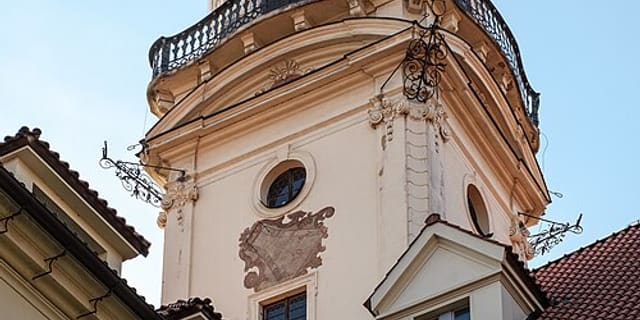 33 km
33 km
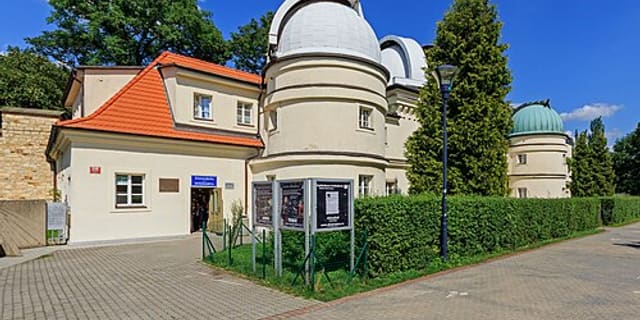 33 km
33 km
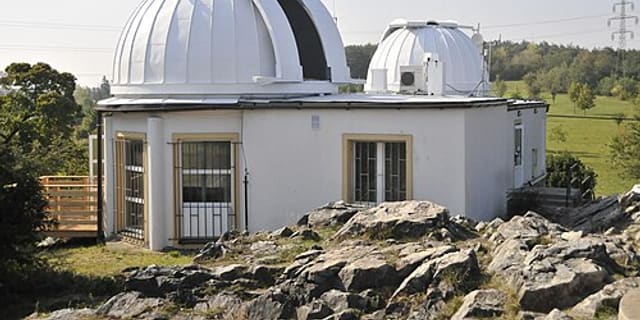 34 km
34 km
 70 km
70 km