
Astronomical Tower in Clementinum Prague

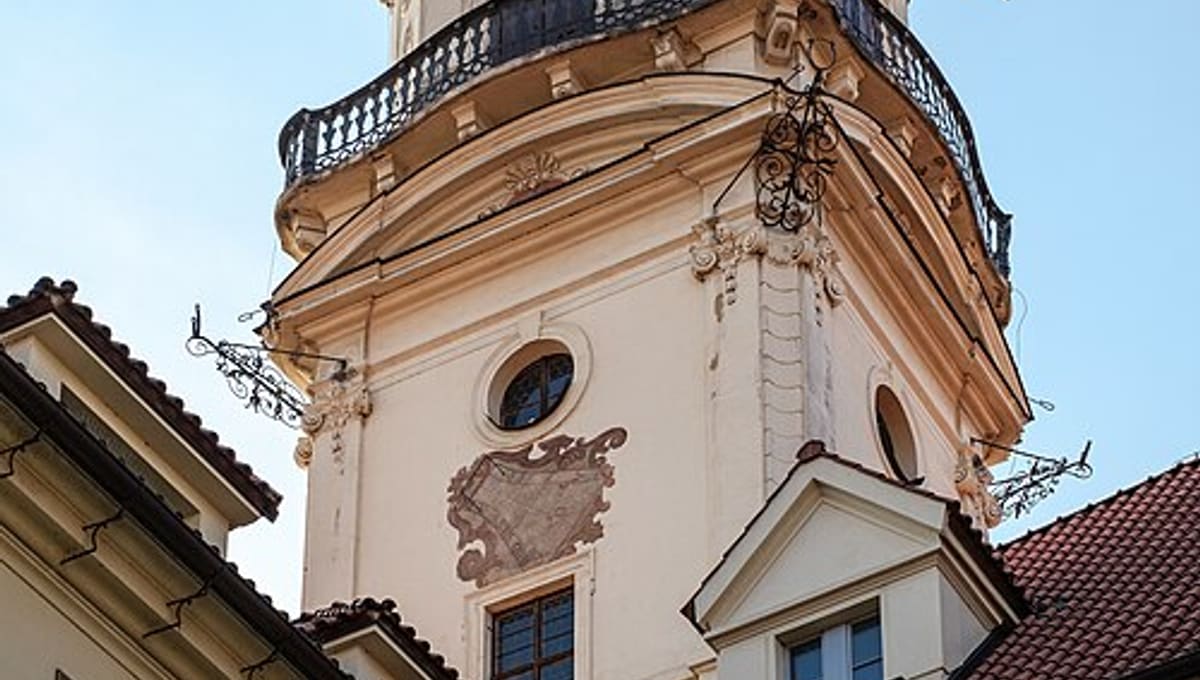
Image: Wikimedia Commons
Rising above the historic Clementinum complex in the heart of Prague, Czech Republic, the Astronomical Tower has watched the sky since 1722. Climb its 172 steps and you follow in the footsteps of astronomers who have used this building for science, timekeeping, and public spectacle for three centuries.
About the Astronomical Tower
The tower stands 68 metres tall, with a public viewing balcony at 52 metres offering panoramic views over Prague's Old Town. Its architects are thought to include František Maxmilián Kaňka or Kilián Ignác Dientzenhofer, and its roof is topped by a striking 2.4-metre lead sculpture of Atlas, weighing around 600 kilograms, carrying a celestial sphere on his shoulders.
History
Completed in 1722, the tower includes a Meridian Hall on its second floor that was historically used for precise timekeeping. From 1775, mathematician and physicist Antonín Strnad began systematic meteorological and climate measurements here — records that have continued without interruption to the present day, making the Clementinum's dataset unique in Europe (even Berlin's comparable records were interrupted). From 1842, the tower announced local noon by waving a flag, a signal that from 1891 to 1926 was accompanied by a cannon salute fired from Hradčany Castle.
Location & getting there
The tower sits within the Clementinum complex in central Prague, Czech Republic, easily reached on foot from Charles Bridge and the Old Town Square as part of the historic city core.
Visiting the Astronomical Tower
The tower is open to visitors as part of Clementinum tours, which typically combine the climb to the viewing balcony with the complex's Baroque Library Hall and Mirror Chapel. Check the official Clementinum visitor information before travelling, since opening hours and tour times can change seasonally.
See your named star from here
A star named through Star Register comes with its own coordinates on the celestial sphere — not unlike the one held aloft by Atlas atop this tower. While the Astronomical Tower itself is a historic monument rather than a working observation site, its long tradition of watching the sky is a fitting reminder that anyone can look up and find their own star. Browse the catalogue to see how coordinates are recorded for every named star.
Opening hours and public-visit programs vary by season. Check Google Maps for current times before you travel.
Institutional and reference sources used to verify this guide.
Satellite imagery: Esri, Maxar, Earthstar Geographics

 1 km
1 km
 7 km
7 km
 33 km
33 km
 50 km
50 km