
Odesa Astronomical Observatory

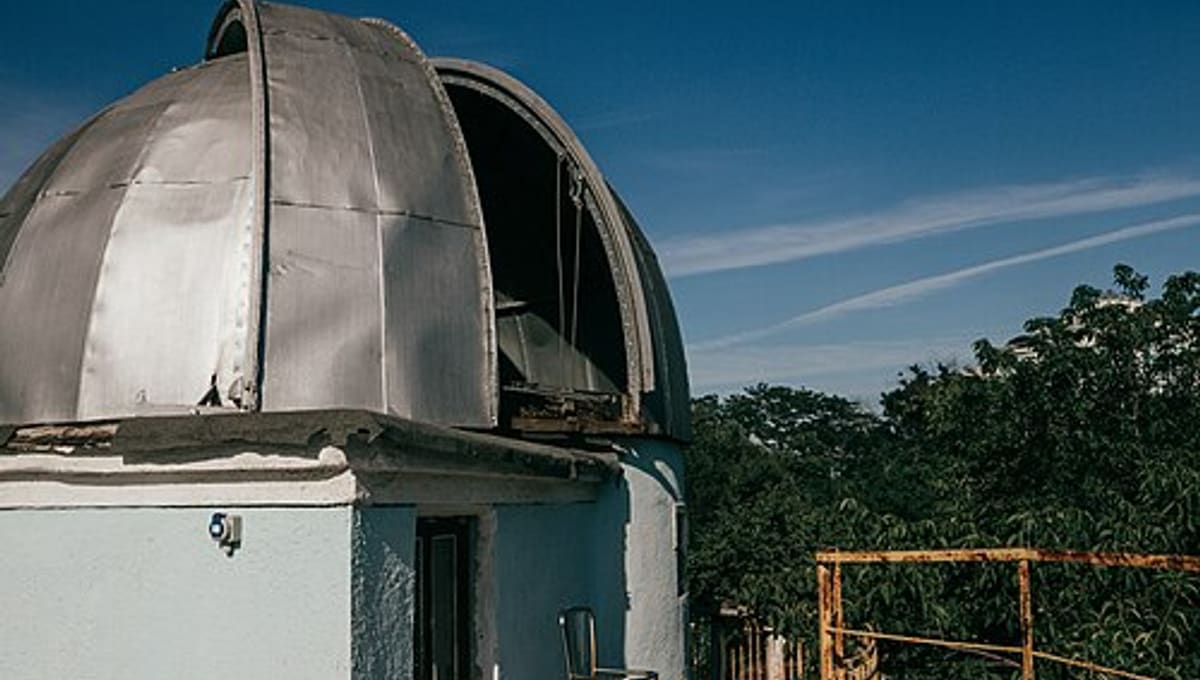
Image: Wikimedia Commons
The Odesa Astronomical Observatory has watched the skies over southern Ukraine since 1871, and its archive of glass plates remains one of the largest in the world. Located in Odesa on the Black Sea coast, it is still an active research institute of Odesa National University.
About Odesa Astronomical Observatory
The observatory was built in 1871 to a design by architect Alexander Bernardazzi, and its main building occupies about 1.4 hectares. It has functioned continuously since then as one of Ukraine's leading centres for positional astronomy and astrophysics.
History
In 1886 the observatory installed a unique telescope from the British firm Cook and Sons, which for decades anchored its programme of precise stellar measurement. Over the following century, astronomers here built up an archive of more than 107,000 photographic plates spanning the 19th and 20th centuries — the third-largest such collection in the world after Harvard and Sonneberg.
Telescopes & research
Odesa's astronomers have specialised in positional star determinations, solar research, variable stars, meteor studies and spectroscopy. The observatory contributed eight high-accuracy stellar catalogues to the Pulkovo system, a body of work still referenced by positional astronomers today.
Location & getting there
The observatory sits within the city of Odesa, Ukraine, making it accessible as part of a visit to the city rather than a remote expedition. As with any facility in the region, check current travel advisories and the observatory's own channels before planning a trip.
Visiting Odesa Astronomical Observatory
Because opening hours and public access can change, it's best to check the observatory's website or search for current visiting information before travelling.
See your named star from here
Every star named through Star Register comes with precise coordinates, so an observatory like this one — with more than a century of experience pointing telescopes at exact positions in the sky — is well placed to locate it. Name a star or browse the star catalogue to see what's already been registered.
Opening hours and public-visit programs vary by season. Check the official website and Google Maps for current times before you travel.
Institutional and reference sources used to verify this guide.
Satellite imagery: Esri, Maxar, Earthstar Geographics

 38 km
38 km
 108 km
 237 kmRadio