
Observatory of the Collegio Romano

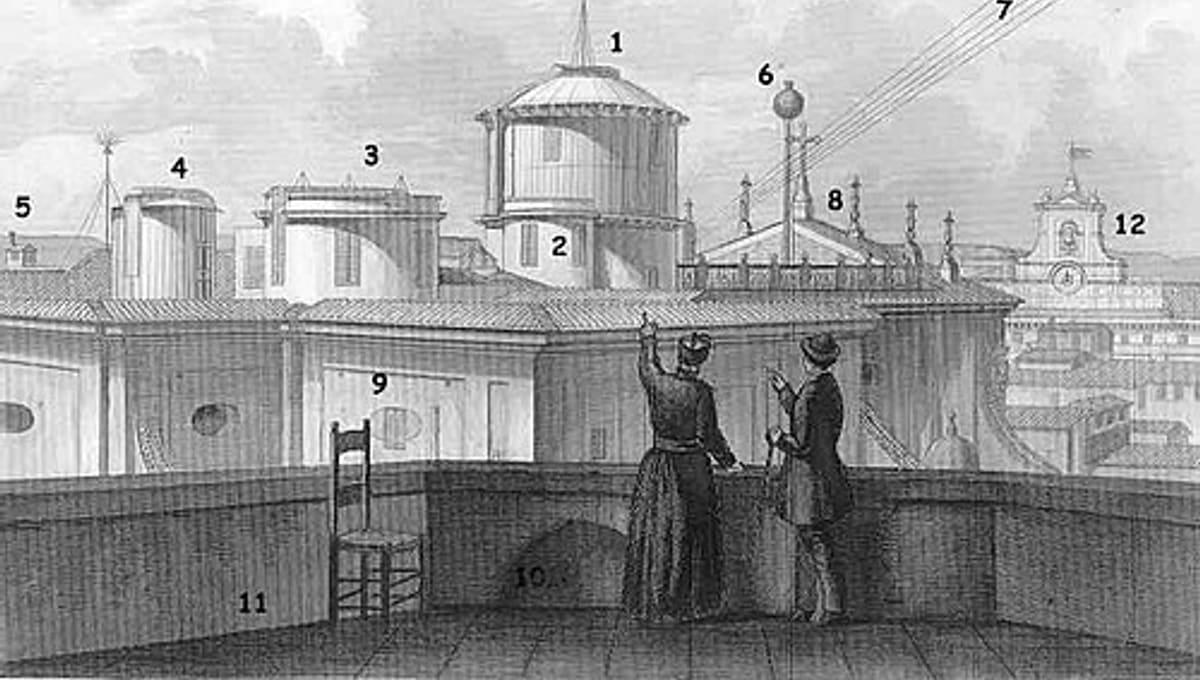
Image: Wikimedia Commons
The Observatory of the Collegio Romano occupies a tower in the heart of Rome, Italy, above the historic Collegio Romano building. Its story stretches from the Jesuit order's astronomical work in the 18th century through one of the most influential figures in the history of astrophysics.
About the Observatory of the Collegio Romano
The observatory tower rises 67 metres above the city and was built in 1787 under Cardinal Francesco Saverio de Zelada, above the church of Sant'Ignazio di Loyola. It became internationally significant when Father Angelo Secchi relocated the observatory to the top of the church and turned it into a leading centre of astrophysical research.
History
The Pontifical Observatory was established in 1774, the year after the suppression of the Jesuit order. The 67-metre tower followed in 1787. Under Angelo Secchi in the 19th century, the site became a hub for pioneering work in astrophysics. Political change caught up with it in 1870, when the capture of Rome brought the observatory under Italian government control; it was formally nationalised in 1878, the year of Secchi's death, and renamed the Regio Osservatorio al Collegio Romano. The Vatican's own observatory later moved to Castel Gandolfo, where it continues today.
Location & getting there
The observatory sits in central Rome, Italy, within the historic Collegio Romano complex — a landmark easily reached on foot from the city's main sights rather than a dedicated astronomical site outside town.
Visiting the Observatory of the Collegio Romano
As a historic building within an active institutional complex, access can vary. Check current opening arrangements with the site or a local tourism authority before planning a visit.
See your named star from here
Rome's long observing tradition, from Secchi's era to today, is a fitting backdrop for thinking about the night sky in personal terms. A star named through Star Register comes with exact coordinates that any telescope, anywhere, can be aimed at. Name a star or explore the catalogue of stars already named.
Opening hours and public-visit programs vary by season. Check Google Maps for current times before you travel.
Institutional and reference sources used to verify this guide.
Satellite imagery: Esri, Maxar, Earthstar Geographics

 4 km
4 km
 41 km
41 km