
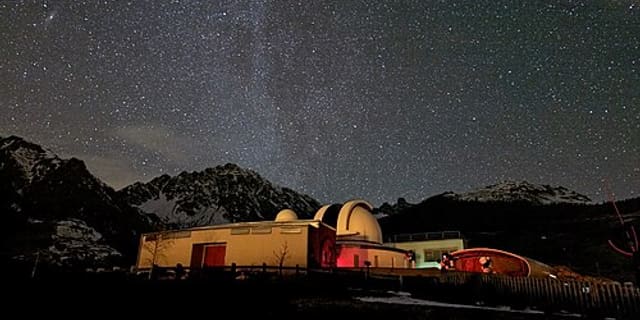
Observatory of Geneva

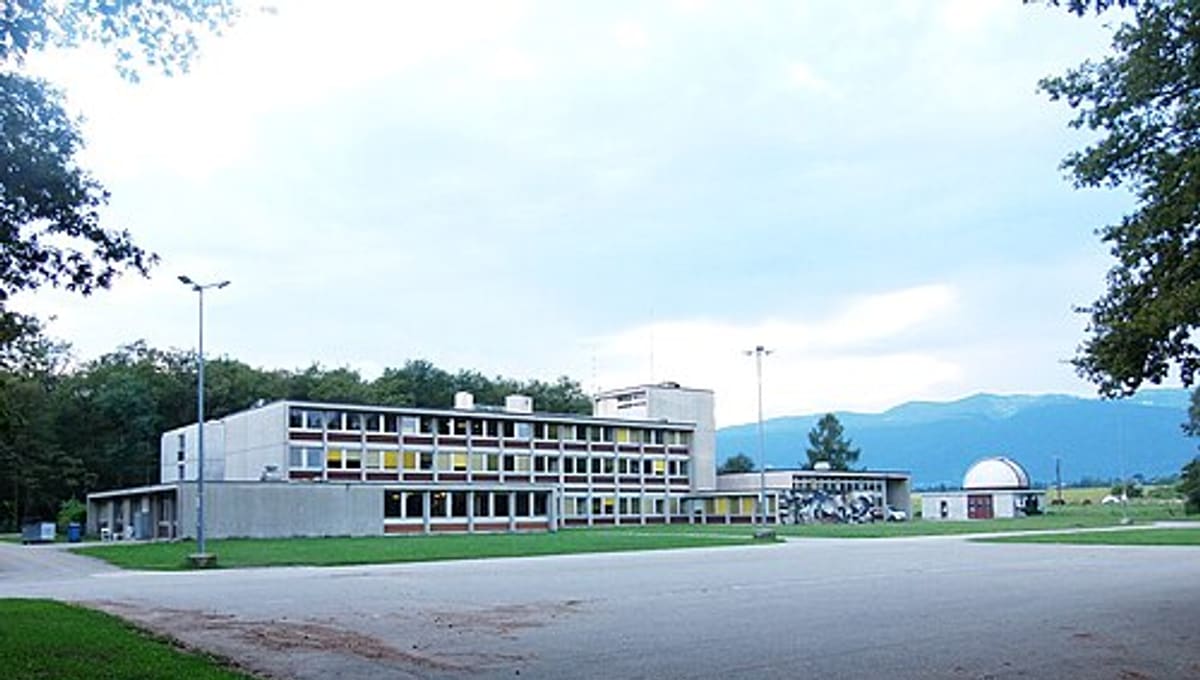
Image: Wikimedia Commons
Geneva Observatory, in the municipality of Versoix near Geneva, Switzerland, is one of Europe's most scientifically significant astronomical institutions, home to the team that discovered the first exoplanet orbiting a Sun-like star.
About Geneva Observatory
Sitting at 472 metres elevation at Sauverny, Geneva Observatory shares its buildings with the astronomy department of the École Polytechnique Fédérale de Lausanne. It has been active in exoplanet discovery, stellar photometry, and modelling stellar evolution, and has contributed to several European Space Agency missions including Hipparcos, INTEGRAL, Gaia, and Planck.
History
The observatory traces its origins to 1772, giving it one of the longest continuous histories of any astronomical institution in Europe. Its defining modern achievement came in 1995, when astronomers Michel Mayor and Didier Queloz discovered 51 Pegasi b, the first exoplanet found orbiting a main-sequence star, using the radial velocity method with the 1.9-metre telescope at Haute-Provence Observatory in France. The pair were awarded half of the Nobel Prize in Physics in 2019 for the discovery.
Telescopes & research
Geneva Observatory owns a 1-metre telescope at the French Haute-Provence Observatory and operates the 1.2-metre Leonhard Euler Telescope. In partnership with the University of Liège in Belgium, it also supports TRAPPIST, a 0.6-metre telescope specialised in observing comets and exoplanets; both the Euler and TRAPPIST telescopes are sited at ESO's La Silla Observatory in northern Chile. In 2010, TRAPPIST took part in the closely watched size comparison of the dwarf planets Eris and Pluto. The observatory also participates in the Next-Generation Transit Survey, an international collaboration based at Paranal Observatory in Chile that began science operations in 2015.
Location & getting there
Geneva Observatory is located at Sauverny in the municipality of Versoix, Canton of Geneva, Switzerland, at 472 metres elevation, a short distance from the city of Geneva itself.
Visiting Geneva Observatory
As a working research institution affiliated with a university astronomy department, opening arrangements for public visits can vary. It is best to check the observatory's official website before planning a trip.
See your named star from here
An institution behind the discovery of the first exoplanet around a Sun-like star knows precisely how far a set of sky coordinates can go. Name a star with Star Register to receive its exact right ascension and declination, and explore existing entries in our catalogue.
Opening hours and public-visit programs vary by season. Check the official website and Google Maps for current times before you travel.
Institutional and reference sources used to verify this guide.
Satellite imagery: Esri, Maxar, Earthstar Geographics

 99 km
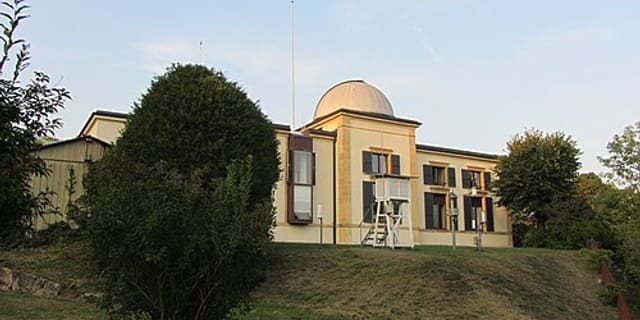
99 kmCantonal observatory of Neuchâtel
astronomical and chronometric observatory in the city of Neuchâtel, Switzerland

 105 km
 114 km
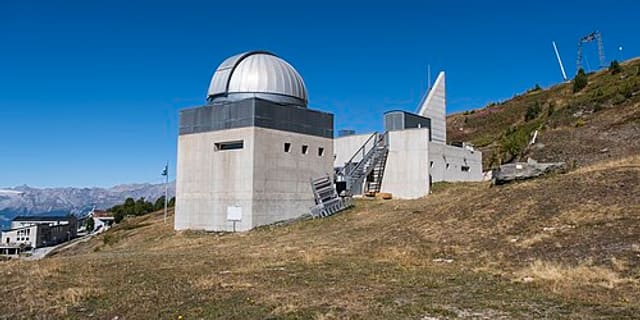
François-Xavier Bagnoud Observatory
Astronomical observatory in St-Luc, Switzerland

 119 km