
Cantonal observatory of Neuchâtel

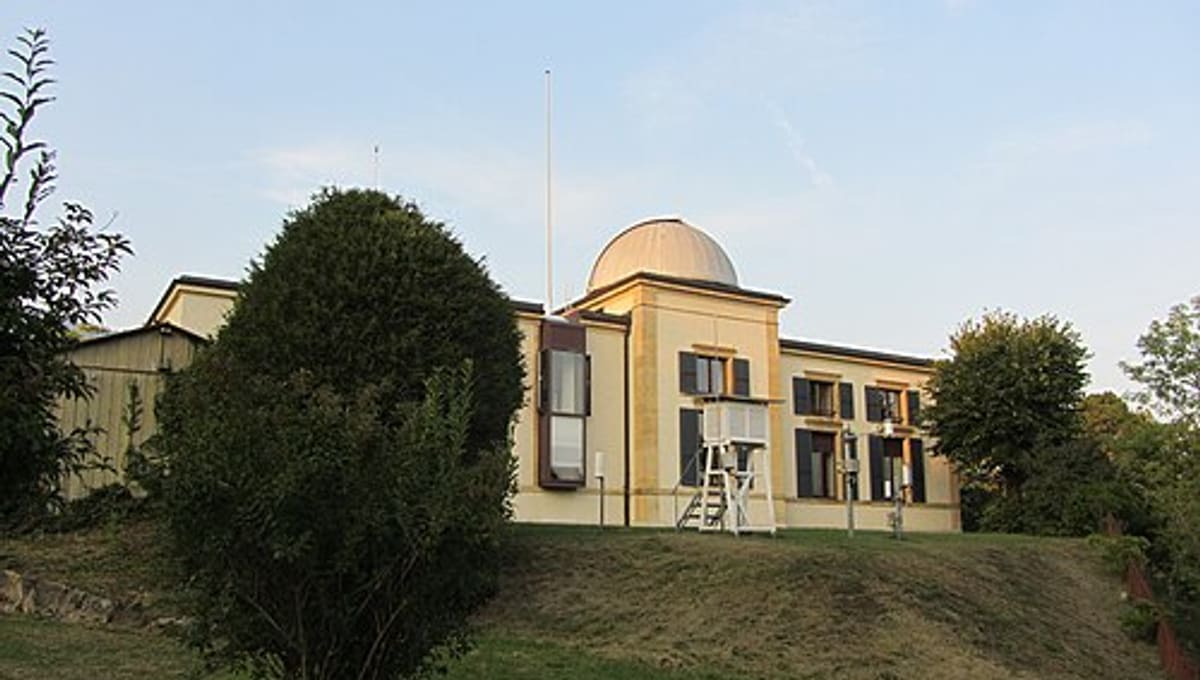
Image: Wikimedia Commons
The Cantonal Observatory of Neuchâtel has watched over the Swiss city of Neuchâtel since 1858, funded by the canton's Public Economy Department and built as much for precision timekeeping as for astronomy.
About the Cantonal Observatory of Neuchâtel
Sitting at an elevation of 486 metres, the observatory was led by its first director, the German-born Swiss astronomer Adolphe Hirsch. Alongside astronomical observation, it became known for its work with clock calibration: before 1967, when a second was still defined by Earth's rotation, Neuchâtel's astronomers used the observatory's instruments to calibrate clocks with scientific precision.
History
Founded in 1858, the observatory's timekeeping role faded once atomic clocks took over official time calibration, but its historic telescope has found new life with local amateur astronomers rather than falling silent.
Telescopes & research
Today the Société Neuchâteloise d'Astronomie uses the site's historic telescope for amateur observation, and the adjoining Hirsch Pavilion houses the EspaceTemps museum space, telling the story of the observatory's astronomical and horological past.
Location & getting there
The observatory stands within the city of Neuchâtel, in the canton of the same name in western Switzerland, at 486 metres above sea level.
Visiting the Cantonal Observatory of Neuchâtel
The site runs observation evenings for beginners and enthusiasts, including telescope introductions and viewings of its meteorite collection, though visits require advance reservation and are not free. The EspaceTemps museum space in the Hirsch Pavilion opens on selected Saturdays and for group bookings; check the observatory's official website for current dates before planning a visit.
See your named star from here
The amateur astronomers who run Neuchâtel's observation evenings can aim the historic telescope at specific sky coordinates, the same kind used to record every star named through Star Register. Look up your star's exact position in our star catalogue ahead of a visit.
Opening hours and public-visit programs vary by season. Check Google Maps for current times before you travel.
Institutional and reference sources used to verify this guide.
Satellite imagery: Esri, Maxar, Earthstar Geographics
Observatory - Planetarium SIRIUS
observatory in Sigriswil in the canton of Bern, Switzerland

 78 km
78 km