
Muensterschwarzach Observatory
Satellite imagery: Esri, Maxar, Earthstar Geographics
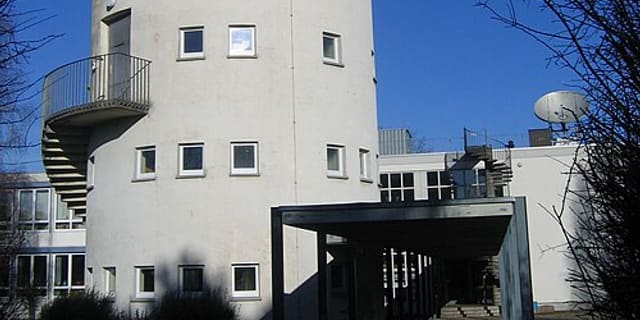
At Abtei Münsterschwarzach in Bavaria, Germany, a Benedictine monastery runs its own working astronomical observatory - known locally as the Klostersternwarte, or "monastery observatory."
About Muensterschwarzach Observatory
The Klostersternwarte is operated by the monks of Abtei Münsterschwarzach and carries the Minor Planet Center station code K74, a sign that its measurements are taken seriously by the professional astronomy community despite its unusual home. Alongside asteroid work, the observatory's astronomers also study faint nebulae, galaxies and star clusters.
History
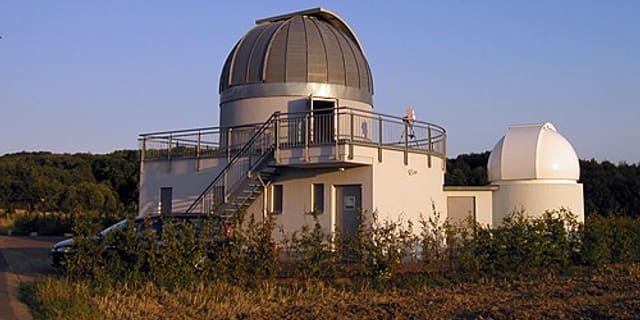
The observatory has operated from its current site for more than 20 years, and around 2019 it gained a new dome fitted with automatic tracking, letting its telescope follow objects across the sky without constant manual adjustment.
Telescopes & research
Its core research focus is determining the positions and orbits of asteroids, comets and near-Earth objects - precise measurement work that feeds into the wider international effort to track objects that could pass close to Earth. That work sits alongside observation of fainter deep-sky targets like nebulae and galaxies.
Location & getting there
The observatory is part of Abtei Münsterschwarzach, in Münsterschwarzach, Bavaria, Germany - a working monastery that combines religious life with a genuine research astronomy program.
Visiting Muensterschwarzach Observatory
The monastery incorporates scientific tours of the observatory into astronomy courses held at its guest house, giving visitors a rare chance to see a working research telescope in a monastic setting. Check the observatory's official website for current course dates and booking details before you travel.
See your named star from here
An observatory built for tracking asteroids and mapping faint galaxies is also perfectly equipped to point at the precise coordinates of a named star. If you've named one through star-register.eu, look up its position in our catalogue, or start a new naming with one of our packages, and ask about viewing it on a future course visit.
Opening hours and public-visit programs vary by season. Check Google Maps for current times before you travel.
Institutional and reference sources used to verify this guide.
Satellite imagery: Esri, Maxar, Earthstar Geographics

 20 kmPublic
 42 kmPublic