
Mount Burnett Observatory


Image: Wikimedia Commons
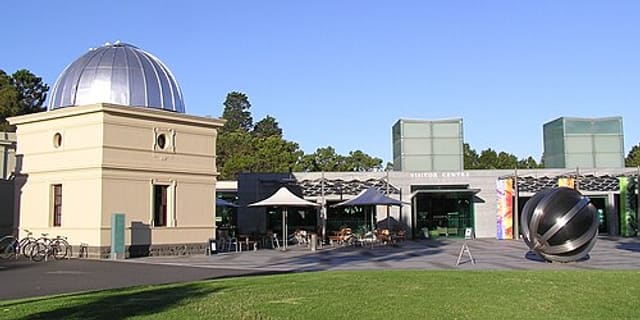
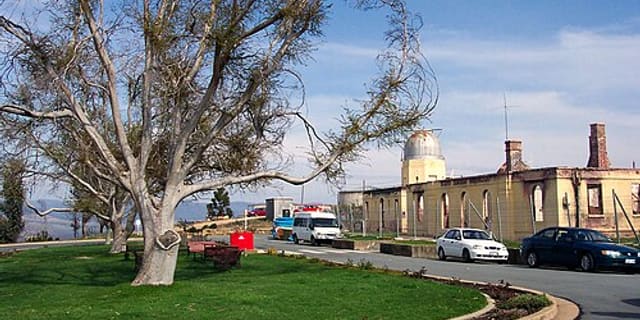
Mount Burnett Observatory is a community-run astronomical observatory in Mount Burnett, Victoria, that began life as Monash University's main research site and has since been reborn as a public astronomy hub.
About Mount Burnett Observatory
The observatory was built in 1972 to serve as Monash University's principal astronomical facility. Its original instrument was a 16-inch Newtonian reflector built by L. Jeffree of Bendigo, and observer's quarters followed in 1975 with support from the William Buckland Foundation.
History
A second, 10-inch Newtonian reflector was added in a separate building in the early 1980s, and in 1985 the original 16-inch was replaced with a 0.45-metre Newtonian/Cassegrain telescope. By the late 2000s the site had fallen into disuse and suffered from encroaching light pollution, leading to decommissioning. In 2011, Mt Burnett Observatory Inc. was formed by Perry Vlahos, James Murray, Barry Cleland, Ray Schmidt and Ken Beard to take over the lease and reopen it to the public, restoring both telescopes and adding more equipment for an on-site astronomy classroom by 2012.
Telescopes & research
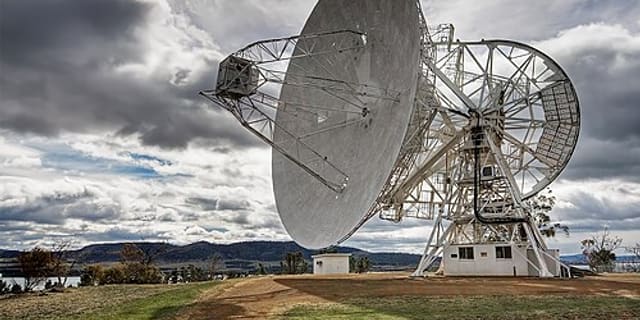
The observatory has since grown its public and educational programs: it won National Science Week grants in 2014 and 2015 for astronomy roadshows and a light festival, and by 2022 had more than 500 members with active public and member programs. A second dome, added in May 2017, houses an automated 14-inch Cassegrain telescope, and the roof of the observer's quarters now carries several radio telescopes.
Location & getting there
The observatory is located in Mount Burnett, Victoria, Australia, in the Oceania region.
Visiting Mount Burnett Observatory
Mount Burnett Observatory runs regular public and member events as a community-operated site; check with Mt Burnett Observatory Inc. for the current program before visiting.
See your named star from here
Whether it's the restored 16-inch-turned-0.45-metre reflector or the automated 14-inch Cassegrain, Mount Burnett's telescopes can be aimed at precise sky coordinates, the same kind that come with your named star. Name a star and find its position in the catalogue to plan a viewing.
Opening hours and public-visit programs vary by season. Check Google Maps for current times before you travel.
Institutional and reference sources used to verify this guide.
Satellite imagery: Esri, Maxar, Earthstar Geographics

 48 km
48 km
 430 km
 562 kmRadio