
Mount Pleasant Radio Observatory

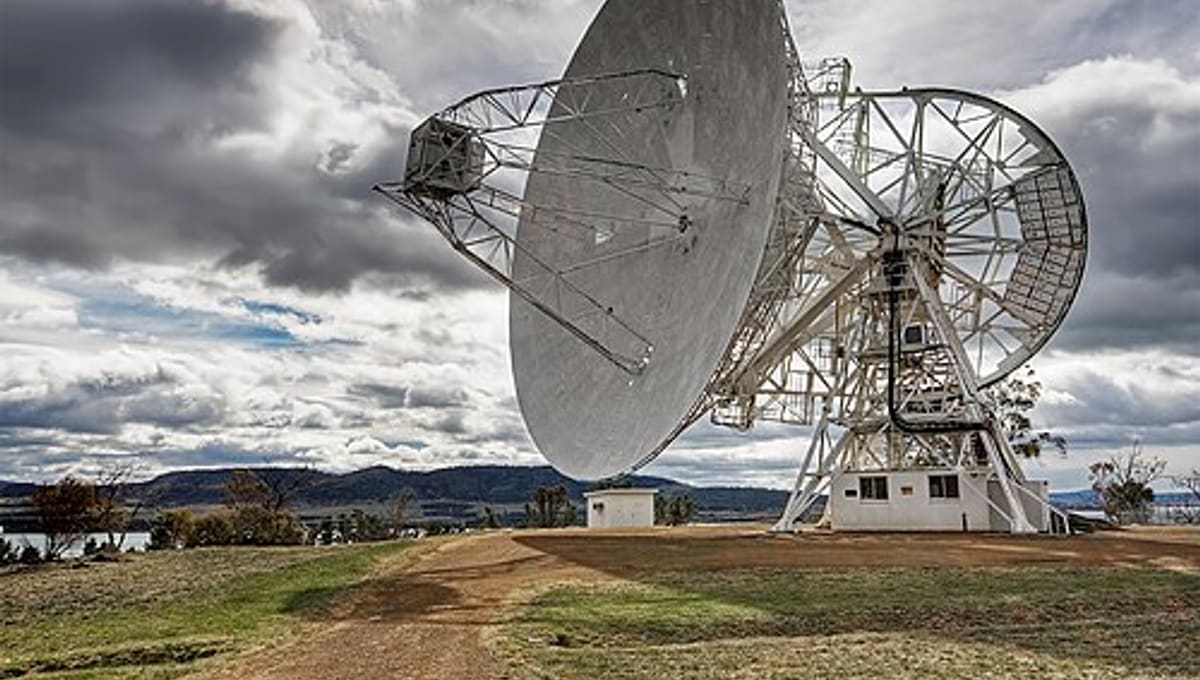
Image: Wikimedia Commons
Mount Pleasant Radio Observatory lies in Cambridge, Tasmania, about 20 kilometres east of Hobart, where the University of Tasmania runs one of Australia's key radio-astronomy sites.
About Mount Pleasant Radio Observatory
Owned and operated by the University of Tasmania, the observatory was established on 13 May 1986 and today forms part of Australia's very long baseline interferometry (VLBI) network, in which radio dishes spread across the continent combine their signals to study distant astronomical sources with extreme precision.
History
The site's main 26-metre antenna began life elsewhere: it originally served at the Orroral Valley Tracking Station before being relocated to Mount Pleasant. A 14-metre instrument, the Vela telescope, was built in 1981 and used for pulsar observation until it was decommissioned in 2006.
Telescopes & research
Today the observatory's core instruments are the 26-metre antenna and a 12-metre AuScope VLBI antenna, both contributing to national and international radio-astronomy and geodetic VLBI programs. The site also houses the Grote Reber Museum, named for the radio astronomy pioneer, which includes a 3D theatre and draws around 5,000 visitors a year.
Location & getting there
At just 43 metres above sea level, Mount Pleasant sits on relatively flat ground close to Hobart, in Cambridge, Tasmania, making it an easy day trip from the city rather than a remote mountain expedition.
Visiting Mount Pleasant Radio Observatory
The Grote Reber Museum at the site welcomes public visitors, with around 5,000 people touring the observatory each year. Check the University of Tasmania's observatory pages for current opening times before you go.
See your named star from here
Mount Pleasant's dishes are tuned to radio waves rather than visible starlight, but the site's role in Australia's astronomy network makes it a fitting stop for anyone curious about how the sky is studied. Name a star of your own and look it up on the star catalogue.
Opening hours and public-visit programs vary by season. Check the official website and Google Maps for current times before you travel.
Institutional and reference sources used to verify this guide.
Satellite imagery: Esri, Maxar, Earthstar Geographics

 591 km
 843 km