
Manuel Foster Observatory

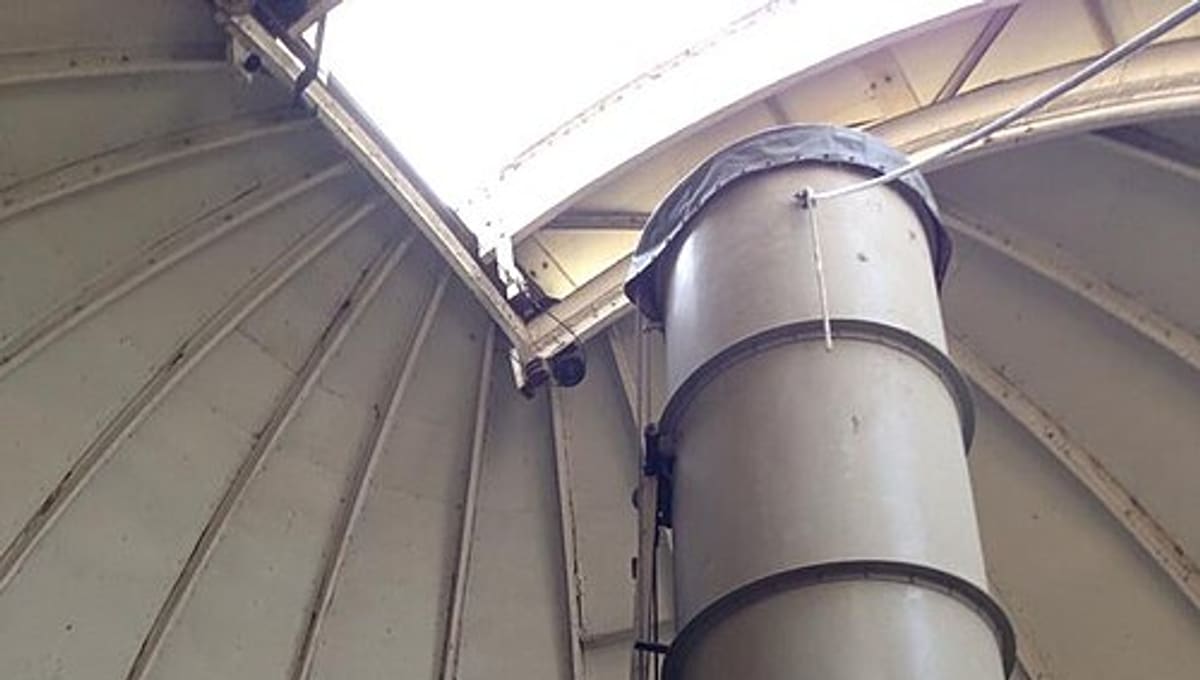
Image: Wikimedia Commons
Perched on Cerro San Cristóbal above Santiago, Manuel Foster Observatory has stood watch over Chile's capital since 1903, when it began life as an outpost of California's Lick Observatory.
About Manuel Foster Observatory
Manuel Foster Observatory sits within Santiago's Metropolitan Park at an elevation of about 850 metres and has been a Chilean national monument since 2010. It was originally known as the D. O. Mills Observatory, honouring the philanthropist Darius Ogden Mills whose funding made it possible.
History
The observatory was built in 1903 as a southern-hemisphere outpost of the Lick Observatory, intended for astronomer W. W. Campbell's project to determine the apex of the Sun's motion through space. After Campbell was seriously injured, his assistant William H. Wright took over the expedition; by October 1905 the team had collected 800 spectrograms. Heber D. Curtis assumed operations in March 1906, and further Mills funding allowed improvements to the site. Campbell finally completed his study of the Sun's motion in 1926, and observations continued until 1928, when Chilean lawyer Manuel Foster Recabarren purchased the observatory for the Universidad Católica de Chile.
Telescopes & research
The main instrument is a 0.93 m (3.1 ft) cassegrain reflector on an equatorial mount, housed inside a rotating dome — the same design used for the observatory's original spectroscopic survey of southern stars.
Location & getting there
The observatory stands on Cerro San Cristóbal within Santiago's Metropolitan Park, one of the Chilean capital's best-known green spaces, at roughly 850 metres above sea level.
Visiting Manuel Foster Observatory
Operated today by the Universidad Católica de Chile, the observatory is reachable via the Metropolitan Park; check the university's website for current public observation sessions and hours before visiting.
See your named star from here
Manuel Foster Observatory's telescope was purpose-built to study stars from the southern hemisphere — a fitting spot to look for one bearing your own dedication. If you've named a star with Star Register, its coordinates are yours to explore, or browse our full star catalogue.
Opening hours and public-visit programs vary by season. Check the official website and Google Maps for current times before you travel.
Institutional and reference sources used to verify this guide.
Satellite imagery: Esri, Maxar, Earthstar Geographics

 61 km
61 km
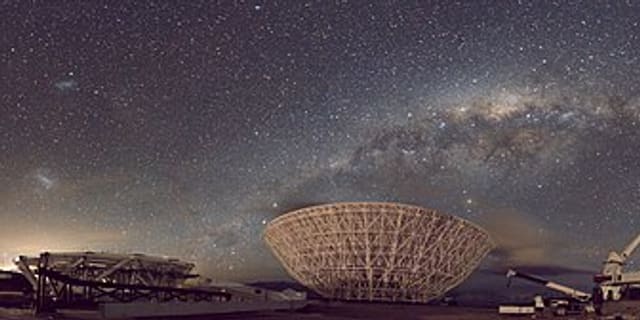 218 km
MASTER-OAFA Observatory
astronomical observatory in San Juan Province, Argentina

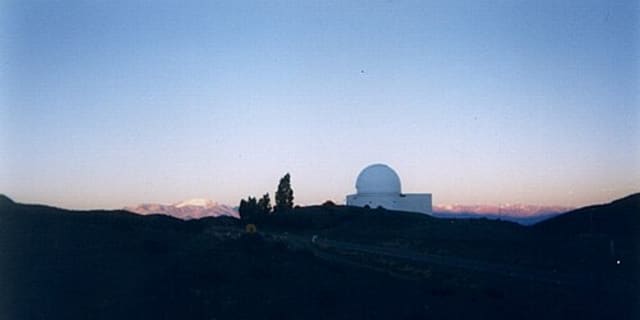 220 km
Alianza S4 observatory
astronomical observatory in San Juan Province, Argentina