
Lilienthal Observatory


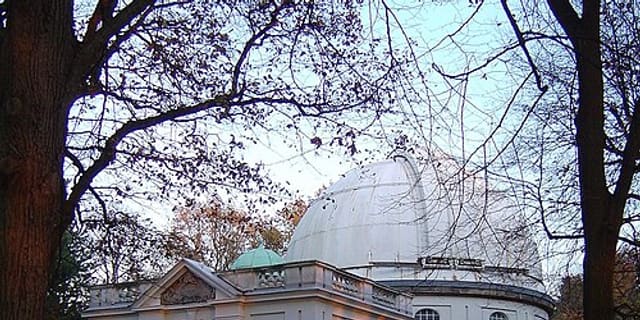
Image: Wikimedia Commons
In the small town of Lilienthal near Bremen, in Lower Saxony, Germany, an unassuming site once housed one of the most important private observatories in Europe. Lilienthal Observatory was the home and workplace of astronomer Johann Hieronymus Schröter, whose meticulous observations shaped planetary astronomy at the turn of the 19th century.
About Lilienthal Observatory
Schröter, who served as Lilienthal's chief magistrate from 1782, built his first observing facility, named Uranienlust, in 1785. Over the following years he expanded the site into one of the best-equipped observatories on the European continent, eventually housing around ten telescopes of varying sizes, including 7-, 12-, and 13-foot reflectors.
History
Lilienthal's most celebrated instrument was a 50-centimetre (20-inch) reflecting telescope completed in 1793, with a focal length of 7.9 metres, at the time one of the largest telescopes anywhere in Europe. In 1795 Schröter added the Urania-Tempel building to house a 10-foot Dollond refractor. In 1800, Schröter co-founded the Vereinigte Astronomische Gesellschaft (United Astronomical Society), whose members went on to discover the asteroids Pallas, Juno, and Vesta, alongside Ceres.
Location & getting there
Lilienthal lies a short distance northeast of Bremen in Lower Saxony, in the flat countryside typical of northern Germany. The original observatory buildings no longer function as a working research site, but the town retains its connection to Schröter's legacy and to the early history of systematic asteroid hunting.
Visiting Lilienthal Observatory
As the historic observatory is no longer an active research facility, anyone hoping to learn more about Schröter's work or visit any surviving heritage sites in Lilienthal should check locally or with the town's historical societies before travelling, since public access details can change.
See your named star from here
Schröter's era was defined by carefully recorded coordinates for newly found objects in the sky, a tradition Star Register continues today. Every star named through us comes with its own right ascension and declination, ready to be located from a telescope anywhere on Earth. Explore the naming packages or browse the star catalogue to find a star of your own.
Opening hours and public-visit programs vary by season. Check Google Maps for current times before you travel.
Institutional and reference sources used to verify this guide.
Satellite imagery: Esri, Maxar, Earthstar Geographics

 96 km
96 km
 133 kmPublic