
Kew Observatory

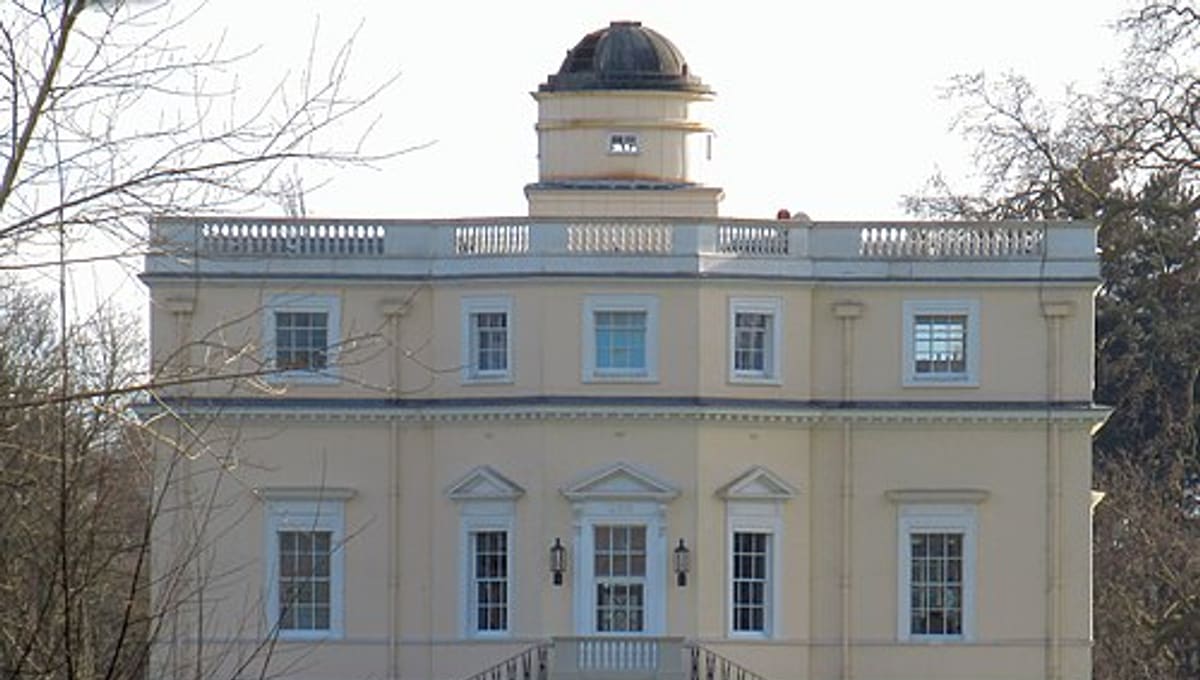
Image: Wikimedia Commons
Overlooking Richmond in south-west London, the King's Observatory — long known as Kew Observatory — is a Grade I listed building whose elegant design still bears witness to its royal astronomical origins.
About Kew Observatory
The observatory was founded by King George III and completed in 1769 specifically so the king could observe the transit of Venus on 3 June that year. It was designed by the architect Sir William Chambers, and its design proved influential enough to shape two later Irish observatories, Armagh Observatory in Northern Ireland and Dunsink Observatory near Dublin.
History
Originally built near Richmond Lodge, a royal residence occupied between 1764 and 1771, the observatory initially also housed a schoolhouse for the royal children along with mathematical instruments and natural history collections. In 1842 it passed to the British Association for the Advancement of Science, with Francis Ronalds serving as its first Honorary Director for more than a decade. The Royal Society took over in 1871, and the National Physical Laboratory was established there in 1900. From 1910 until its closure in 1980, the site also housed the Meteorological Office. Today the building has been converted into a private dwelling.
Location & getting there
The observatory stands in Richmond, in the London Borough of Richmond upon Thames, within easy reach of central London by train or car.
Visiting Kew Observatory
As a private residence, the King's Observatory is not generally open for public tours; check current arrangements before planning any visit, as access may be limited to special occasions.
See your named star from here
A site built to track a single rare astronomical event is a fitting place to think about the fixed coordinates of a named star. Name a star and find its exact position in our catalogue.
Opening hours and public-visit programs vary by season. Check Google Maps for current times before you travel.
Institutional and reference sources used to verify this guide.
Satellite imagery: Esri, Maxar, Earthstar Geographics

 13 km
13 km
 22 kmMuseum
 39 km
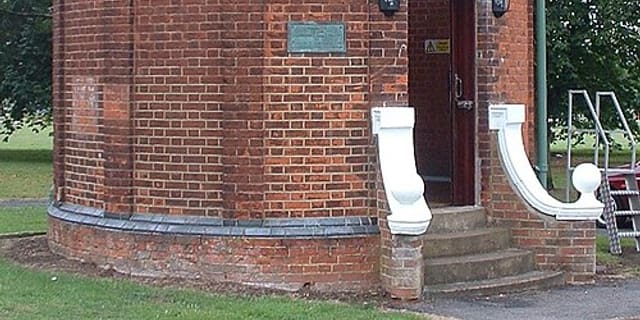
39 kmAldershot Observatory
grade II listed refracting telescope in Aldershot, United Kingdom
Observatory At South Wing, St Ibbs, 90 Metres To West South West Of House
observatory in St. Ippolyts, North Hertfordshire, England, UK