
Kenwood Astrophysical Observatory

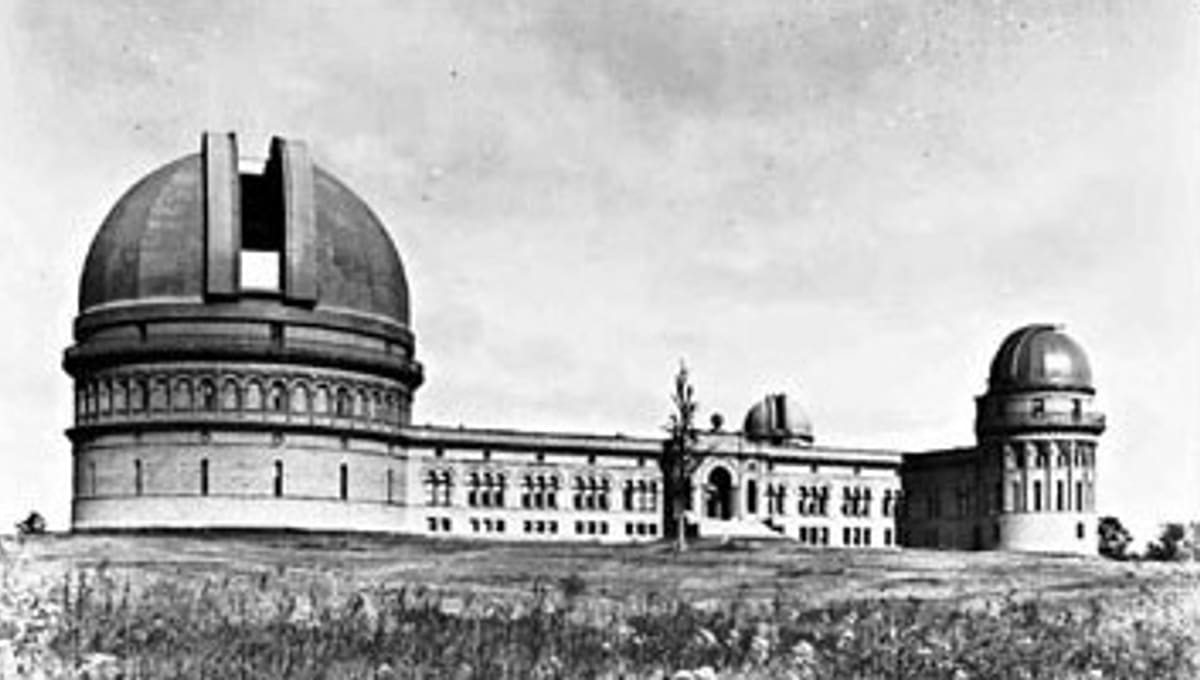
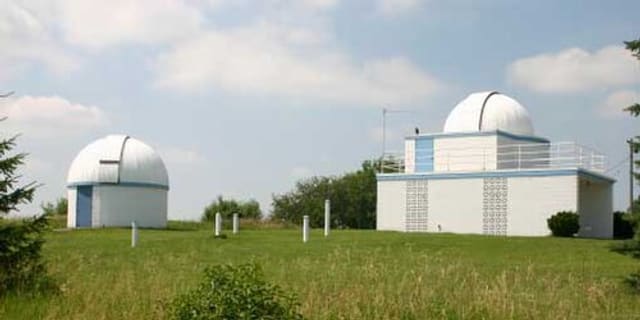
Image: Wikimedia Commons
Kenwood Astrophysical Observatory once stood in the Kenwood section of Chicago, a private observatory built in 1890 that would go on to shape the course of American astrophysics.
About Kenwood Astrophysical Observatory
The observatory was built by William E. Hale at the family home for his son, George Ellery Hale, who would become one of the most influential astronomers of his era. Its principal instrument was a twelve-inch refractor telescope, paired with a Rowland grating as part of a spectroheliograph — an instrument for photographing the sun in a single wavelength of light.
History
It was at Kenwood that Hale first put his spectroheliograph, which he had invented while at MIT, to practical scientific use, and it was here that he founded the Astrophysical Journal, a publication still central to the field today. Hale hired Ferdinand Ellerman as his assistant from 1892, and together they recorded over 3,000 spectroheliograms of the sun. As Hale's reputation grew, the University of Chicago hired him as a professor of astronomy, and advanced students began using the Kenwood instruments. When Yerkes Observatory was established in 1897, Kenwood's equipment, including the twelve-inch refractor, was donated to the university and relocated to Yerkes' north dome in Williams Bay, Wisconsin.
Location & getting there
Kenwood Astrophysical Observatory was located in the Kenwood neighbourhood on Chicago's South Side; its instruments have long since moved on to Yerkes Observatory in Wisconsin.
See your named star from here
Kenwood's story is a reminder of how much can be discovered with a well-placed telescope and a curious eye. Name a star in that same spirit, and look up its coordinates in our catalogue.
Opening hours and public-visit programs vary by season. Check Google Maps for current times before you travel.
Institutional and reference sources used to verify this guide.
Satellite imagery: Esri, Maxar, Earthstar Geographics

 28 kmResearch
 28 kmResearch
Lindheimer Astrophysical Research Center
former astrophysical observatory in Evanston, Illinois

 55 km
55 km
 108 km