
Jantar Mantar


Image: Wikimedia Commons
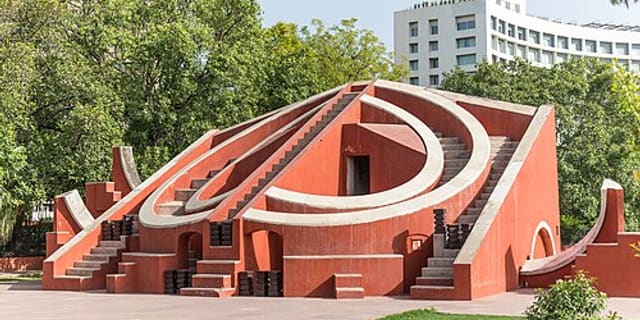
Jantar Mantar in Jaipur, Rajasthan, India is a UNESCO World Heritage Site and a collection of 19 astronomical instruments built by the Rajput king Sawai Jai Singh, the founder of Jaipur.
About Jantar Mantar (Jaipur)
Completed in 1734, the monument features the world's largest stone sundial and stands near Jaipur's City Palace and Hawa Mahal. Its instruments allow astronomical positions to be observed with the naked eye, representing an example of Ptolemaic positional astronomy shared across many historical civilisations.
History
The site was damaged during the 19th century, and early restoration work was carried out under the supervision of Major Arthur Garrett, a keen amateur astronomer serving as Assistant State Engineer for the Jaipur District. UNESCO has described the observatory as the most significant and best-preserved historic observatory in India, representing the astronomical and cosmological knowledge of the late Mughal period.
Telescopes & research
The monument's instruments operate across three main classical celestial coordinate systems: the horizon-zenith local system, the equatorial system, and the ecliptic system. One instrument, the Kanmala Yantraprakara, is notable for allowing direct transformation of coordinates between two of these systems.
Location & getting there
Jantar Mantar sits in the centre of Jaipur, Rajasthan, close to the City Palace and Hawa Mahal, making it an easy addition to a visit of the city's historic core.
Visiting Jantar Mantar (Jaipur)
As a UNESCO World Heritage Site, Jantar Mantar in Jaipur is open to visitors year-round. Check official Rajasthan tourism sources for current opening hours and ticket prices before visiting.
See your named star from here
Jaipur's Jantar Mantar was built to read the sky without a single lens, using scale and precision to map the heavens above Rajasthan. After you name a star with Star Register, you'll have its exact coordinates to seek out over this historic city. Browse the star catalogue to find yours.
Opening hours and public-visit programs vary by season. Check Google Maps for current times before you travel.
Institutional and reference sources used to verify this guide.
Satellite imagery: Esri, Maxar, Earthstar Geographics

 234 km
 465 km
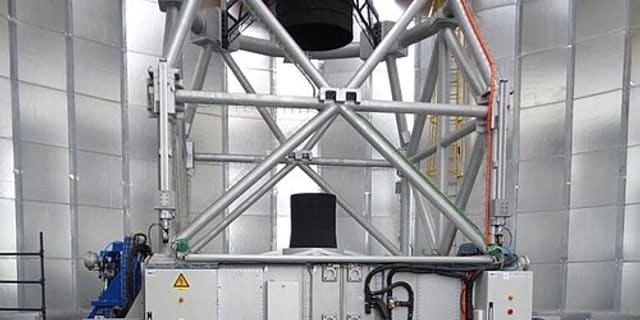
Devasthal Observatory
observatory center under department of science and technology government of India situated at Uttrakhand India