
Hermanus Magnetic Observatory
Satellite imagery: Esri, Maxar, Earthstar Geographics
On the coast of South Africa's Western Cape, Hermanus Magnetic Observatory has spent more than eighty years quietly recording the invisible pull of Earth's own magnetic field.
About Hermanus Magnetic Observatory
Rather than studying stars, this observatory monitors geomagnetism, the science of Earth's magnetic field. It is currently operated by SANSA Space Science, the South African National Space Agency.
History
The site's lineage stretches back to 1841, when the original magnetic recording station was set up at the Cape of Good Hope. It moved to the University of Cape Town in 1932, then relocated to Hermanus in 1941 to escape interference from the area's electric railway. In 1960, the observatory also took over magnetic monitoring duties from a Norwegian station as part of the SANAE 1 Antarctic Expedition.
Telescopes & research
The observatory's instruments measure fluctuations in Earth's magnetic field rather than collecting starlight, contributing data used in space weather monitoring and geomagnetic research both in South Africa and, through the Antarctic connection, further afield.
Location & getting there
Hermanus sits on South Africa's Western Cape coast, a scenic stretch of coastline known also for whale watching, making the town a worthwhile stop for visitors travelling along the Cape.
Visiting Hermanus Magnetic Observatory
As a working scientific facility, access may be limited; anyone interested in visiting should check with SANSA Space Science directly for current information before travelling.
See your named star from here
Earth's magnetic field is part of what makes life here possible, a good reminder of how much is happening above and around us. If you've named a star, look up its exact position in our star catalogue next time you're under South Africa's dark coastal skies.
Opening hours and public-visit programs vary by season. Check Google Maps for current times before you travel.
Institutional and reference sources used to verify this guide.
Satellite imagery: Esri, Maxar, Earthstar Geographics

 271 km
 271 km
 271 km
 271 km
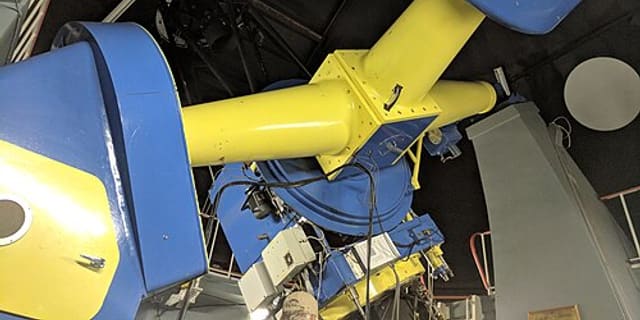
ATLAS–SAAO observatory
astronomical observatory at Sutherland Observatory in South Africa