
Helmut Ullrich Astronomical Observatory
Satellite imagery: Esri, Maxar, Earthstar Geographics
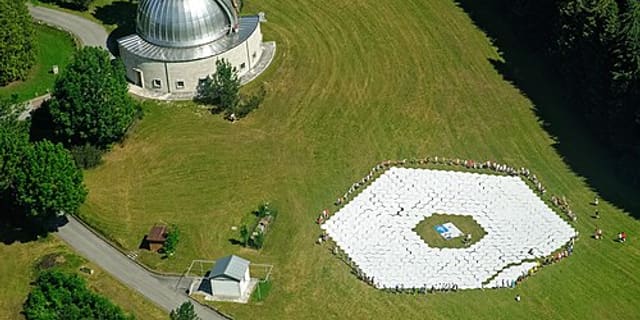
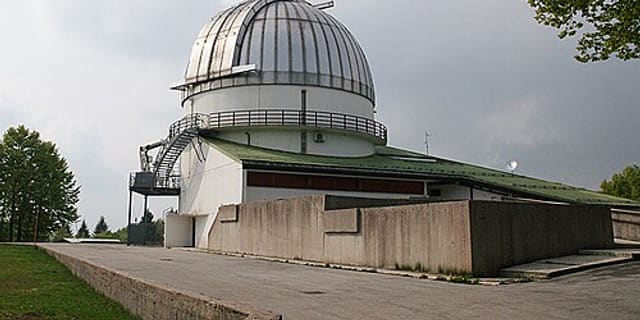
High on Col Drusciè, a peak in the Italian Dolomites within Cortina d'Ampezzo, the Helmut Ullrich Astronomical Observatory has spent decades scanning distant galaxies for exploding stars.
About Helmut Ullrich Astronomical Observatory
The observatory is run by the Associazione Astronomica Cortina, a group of amateur astronomers who established it in 1972. It sits at an elevation of 1,780 metres above sea level and includes two domes.
History
Since its founding in 1972, the observatory has become known for its supernova-hunting work through the CROSS program, short for Col Drusciè Remote Observatory Supernovae Search. Astronomers here have discovered 30 supernovae and one minor planet, designated 50240 Cortina.
Telescopes & research
The two domes house a 20-inch Newtonian telescope and an 11-inch Schmidt-Cassegrain telescope. The observatory also runs "Sky on the Web," a remote control system that lets users operate the telescopes, capture and process images, and monitor weather conditions from their own computers.
Location & getting there
Col Drusciè rises above Cortina d'Ampezzo in the Dolomites, one of Italy's most scenic mountain regions. In both summer and winter, the peak is reachable by the Freccia nel Cielo cable car, which also serves skiers and hikers heading up the mountain.
Visiting Helmut Ullrich Astronomical Observatory
Because access is tied to the cable car and the observatory's own event schedule, it's best to check the Associazione Astronomica Cortina's website for open evenings or guided visits before making the trip up the mountain.
See your named star from here
An observatory with a real supernova-discovery record is a fitting place to think about your own named star. Look up its coordinates in our star catalogue, and see how it compares to the distant galaxies this Dolomites observatory has spent decades watching.
Opening hours and public-visit programs vary by season. Check the official website and Google Maps for current times before you travel.
Institutional and reference sources used to verify this guide.
Satellite imagery: Esri, Maxar, Earthstar Geographics

 87 kmMuseum
 87 km
87 km