
Great Shefford Observatory
Satellite imagery: Esri, Maxar, Earthstar Geographics
Great Shefford Observatory is a private research observatory in West Berkshire, England, known internationally for its work tracking near-Earth asteroids and comets.
About Great Shefford Observatory
Operated by astronomer Peter Birtwhistle, the observatory has been fully operational since 26 May 2002 and holds the Minor Planet Center observatory code J95, assigned that same June.
History
The observatory began with a 12-inch telescope and CCD camera. In 2005 both were upgraded, to a 16-inch telescope and an enhanced CCD camera, improving its ability to track fainter objects. That year the work also earned support from the Planetary Society's Gene Shoemaker NEO Grant and the British Astronomical Association's Ridley Grant.
Telescopes & research
Great Shefford Observatory focuses on tracking and refining the orbits of near-Earth objects, along with observing dimmer comets, gamma-ray bursts, supernovae, unusual satellites, and deep-sky objects.
Location & getting there
The observatory is located in West Berkshire, roughly 60 miles west of London, within the Europe region Star Register tracks alongside other observatories.
Visiting Great Shefford Observatory
As a private research observatory, Great Shefford is not set up for public tours; anyone interested in its work should look for current contact details before reaching out.
See your named star from here
The precise coordinates included with every star named through Star Register are exactly the kind of data an observatory like this uses to track objects each night. Explore the packages or browse the catalogue to name your own.
Opening hours and public-visit programs vary by season. Check Google Maps for current times before you travel.
Institutional and reference sources used to verify this guide.
Satellite imagery: Esri, Maxar, Earthstar Geographics

 37 kmRadio
 53 km
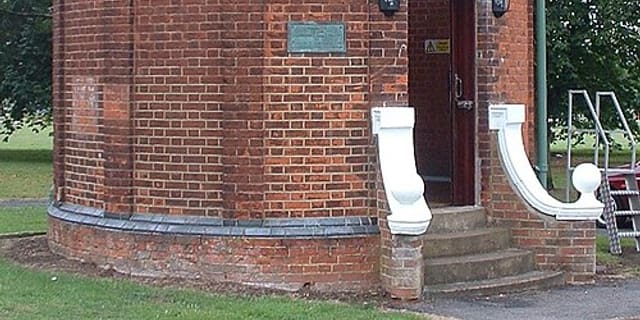
53 kmAldershot Observatory
grade II listed refracting telescope in Aldershot, United Kingdom

 78 km
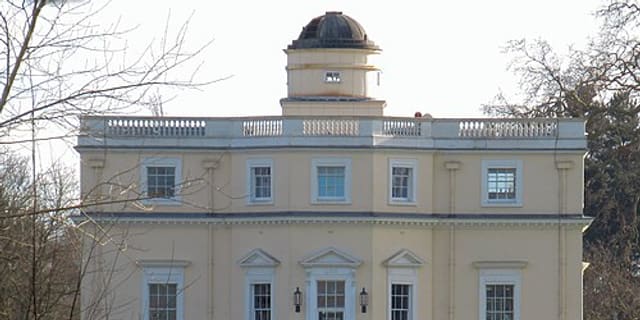
78 kmKew Observatory
Grade I listed architectural structure in London Borough of Richmond upon Thames, United Kingdom