
Fringilla Field Station

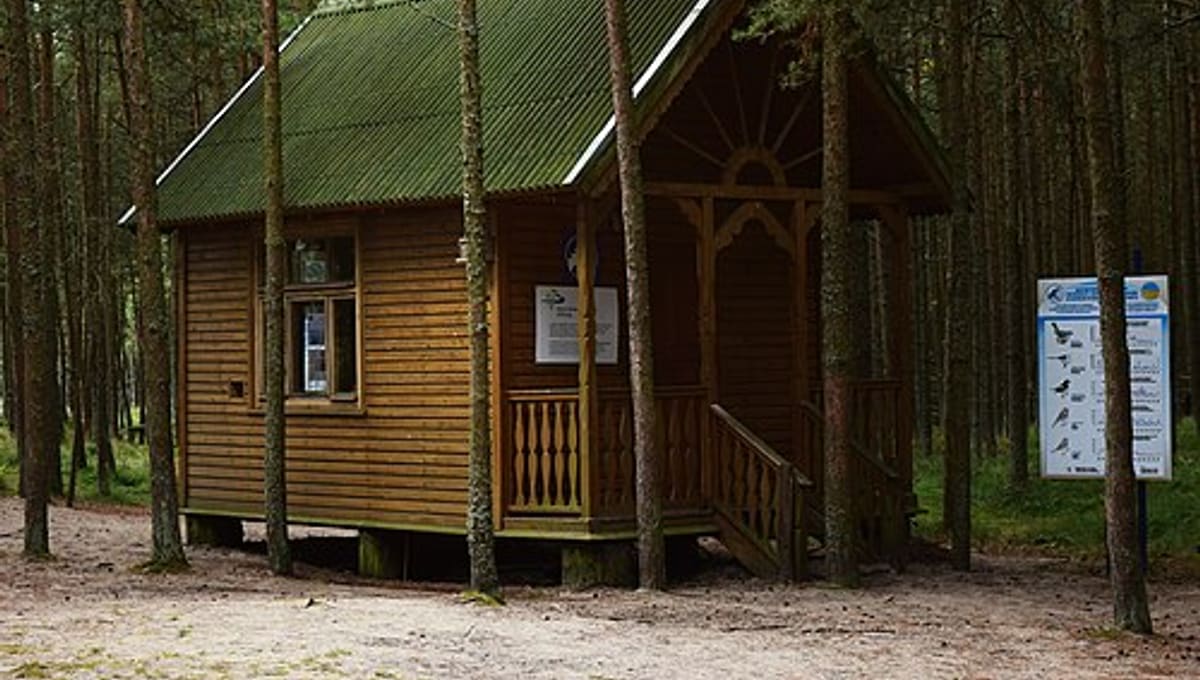
Image: Wikimedia Commons
Fringilla Field Station is not an astronomical observatory but an ornithological research site on the Curonian Spit in Kaliningrad Oblast, Russia, continuing one of the world's longest-running bird migration studies.
About Fringilla Field Station
The station is part of the Zoological Institute of the Russian Academy of Sciences in St. Petersburg. It sits about 11 kilometres southwest of Rybachye and studies the millions of migratory birds that funnel along the narrow Curonian Spit each year.
History
Fringilla continues a tradition dating back to 1901, when German ornithologist Johannes Thienemann established a bird-ringing observatory at nearby Rossitten. The station reopened under Russian control in 1956 and formally took the Fringilla name in 1957.
Telescopes & research
Rather than telescopes, the station uses some of the world's largest bird-nets, up to 50 feet high, to capture, ring and release migrating birds. Its database now holds records on more than three million individual birds across roughly 200 species, including sex, age, morphology and moulting data, and the station operates every year from April 1 to November 1.
Location & getting there
The station is located on the Curonian Spit in Kaliningrad Oblast, Russia, part of the Asia region in our directory, on a narrow strip of land between the Baltic Sea and the Curonian Lagoon.
Visiting Fringilla Field Station
We don't have confirmed public tour information for this working research station; check current local sources before planning a visit, and note it operates seasonally between April and November.
See your named star from here
Fringilla studies birds rather than stars, but the Curonian Spit's open skies are still there after dark. You can use our catalogue to find the coordinates of a star you've named with Star Register and locate it yourself with a telescope or stargazing app.
Opening hours and public-visit programs vary by season. Check Google Maps for current times before you travel.
Institutional and reference sources used to verify this guide.
Satellite imagery: Esri, Maxar, Earthstar Geographics

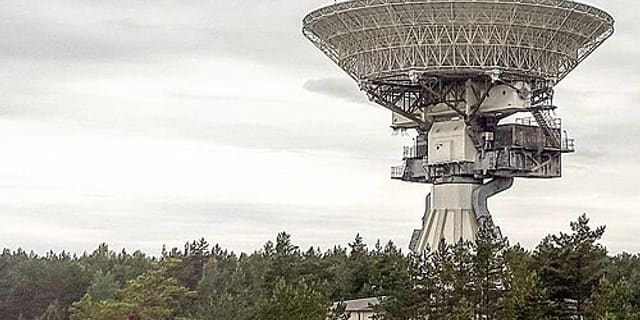 283 kmRadio
Ventspils International Radio Astronomy Center
radio astronomy institute and installation in Latvia

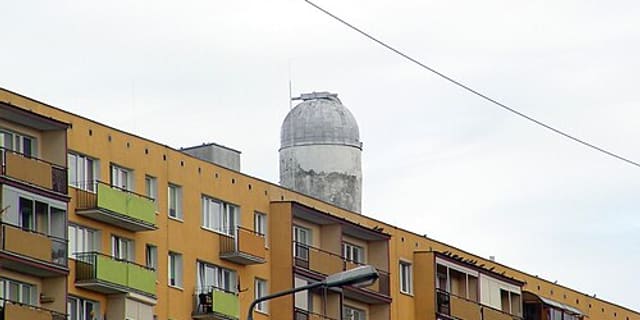 294 km
Astronomic Observatory in Włocławek
observatory on the roof of block of flats at 16 Fredry Street in Włocławek.