
Félix Aguilar Observatory

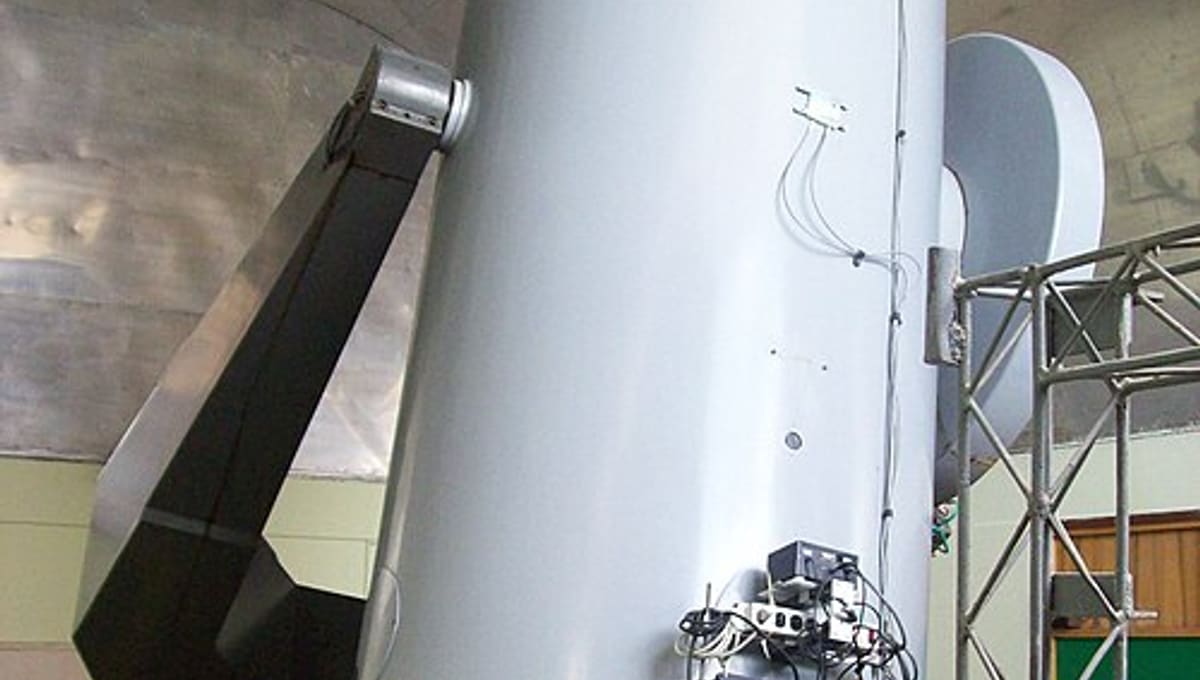
Image: Wikimedia Commons
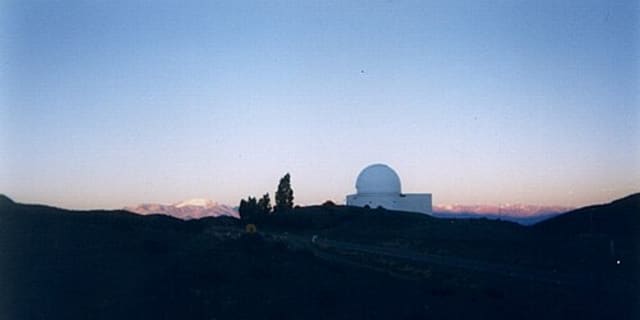
Félix Aguilar Observatory is an astronomical observatory established in 1953 in San Juan Province, Argentina, with its primary observing facility at 2,348 metres elevation in El Leoncito National Park.
About Félix Aguilar Observatory
Known in Spanish as Observatorio Astronómico Félix Aguilar (OAFA), the observatory is operated by the School of Physical and Natural Sciences at the National University of San Juan. It is named after Félix Aguilar (1884-1943), an Argentine astronomer and engineer who twice directed the La Plata Astronomical Observatory. Its original buildings are in the city of San Juan, while the main observing site lies at El Leoncito.
History
Founded in 1953, the observatory's El Leoncito facility became operational in 1960 with initial funding of $750,000 from the Ford Foundation and a partnership with Yale University through the Yale-Columbia Southern Observatory. In 1974 the El Leoncito station was renamed the Carlos Ulrrico Cesco Astronomical Station (EACUC), honouring Cesco's contributions to founding and running the observatory. In 1997 the observatory transitioned from photographic plates to a CCD detector system. The main-belt asteroid 3083 OAFA was named after the observatory, with the naming citation published on 21 November 1991.
Telescopes & research
The observatory's main instrument is a double astrograph with two 20-inch (50.8cm) lenses, one for blue light and one for yellow light, complemented by a 0.8m reflector and solar telescopes. Its research has centred on cataloguing stellar positions and studying the structure of the Milky Way.
Location & getting there
The main observing site sits at 2,348 metres elevation in El Leoncito National Park, San Juan Province, in Argentina's South America region, alongside the neighbouring Leoncito Astronomical Complex.
Visiting Félix Aguilar Observatory
No verified public opening hours or tour details are available. Contact the National University of San Juan or check locally for the latest visiting information before travelling to El Leoncito.
See your named star from here
With decades of experience cataloguing precise stellar positions across the Milky Way, Félix Aguilar Observatory's instruments are exactly suited to locating a star by its right ascension and declination. Name a star or browse the catalogue to find one.
Opening hours and public-visit programs vary by season. Check Google Maps for current times before you travel.
Institutional and reference sources used to verify this guide.
Satellite imagery: Esri, Maxar, Earthstar Geographics

 under 1 km
MASTER-OAFA Observatory
astronomical observatory in San Juan Province, Argentina
Alianza S4 observatory
astronomical observatory in San Juan Province, Argentina

 3 km
3 km