
Erraid Shore Station

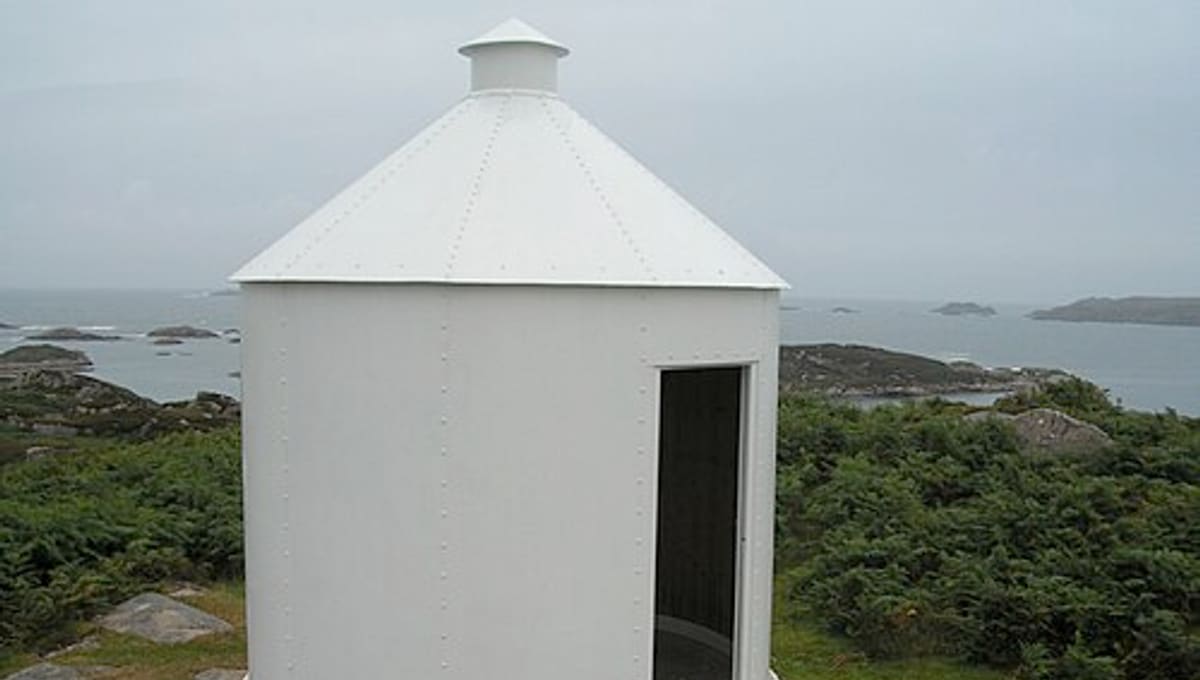
Image: Wikimedia Commons
On the tidal island of Erraid, off the Ross of Mull in Scotland, a small white cast-iron "observatory" was never built to study the stars — it was a lighthouse keepers' watch station with a striking name.
About Erraid Shore Station
Erraid Shore Station was established by engineer Thomas Stevenson in 1869 as the shore base supporting construction of the Dubh Artach Lighthouse. Its distinctive feature is a white cast-iron building known locally as "the observatory," built at the top of Cnoc Mor, the island's highest point.
History
Despite its name, the structure functioned as a circular cast-iron signal house rather than an astronomical facility: off-duty lighthouse keepers used it to communicate with the offshore lighthouses by semaphore and to confirm visually that the lights were operating correctly. In 1892, families from the Skerryvore lighthouse joined the station, and it remained in use until the Northern Lighthouse Board abandoned it in 1952. In 1978, the Findhorn Foundation took over as custodians, restoring the cottages and founding the community that still lives on Erraid today.
Location & getting there
Erraid is a small tidal island off the Ross of Mull, in Argyll and Bute, Scotland, reachable on foot at low tide. Its remote, sparsely populated setting is part of what makes it distinctive.
Visiting Erraid Shore Station
The island is now home to the Findhorn Foundation community, which maintains the restored cottages and welcomes visitors with advance arrangement. Because access depends on tides and the community's own schedule, it's best to check current visiting information before making the trip.
See your named star from here
Erraid's "observatory" was built to watch for lighthouse beams rather than starlight, but its remote island location, far from major light pollution, still makes for genuinely dark night skies. If you've named a star through Star Register, its coordinates are documented in our catalogue — worth having on hand if you ever find yourself looking up from this quiet corner of Scotland.
Opening hours and public-visit programs vary by season. Check Google Maps for current times before you travel.
Institutional and reference sources used to verify this guide.
Satellite imagery: Esri, Maxar, Earthstar Geographics

 135 km
 156 kmPublic
 201 kmMuseum
 201 km