
Embry-Riddle Observatory


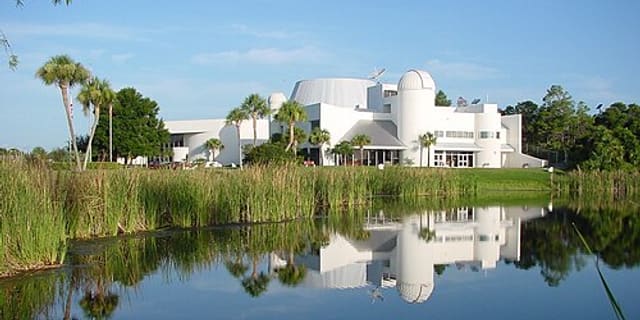
Image: Wikimedia Commons
Perched on the roof of the College of Arts & Sciences building at Embry-Riddle Aeronautical University in Daytona Beach, Florida, the Embry-Riddle Observatory brings research-grade astronomy right into the heart of campus.
About Embry-Riddle Observatory
The observatory is owned and operated by Embry-Riddle Aeronautical University and serves as a working research facility for faculty and students studying the solar system and beyond. Rather than sitting on a remote mountaintop, it occupies a rooftop platform, giving the university a permanent astronomical outpost on its Daytona Beach campus.
Telescopes & research
The observatory's primary instrument is a 1-meter Ritchey-Chrétien reflecting telescope built in 2014 by DFM Engineering — described as the largest university-based research telescope in Florida. A dozen smaller portable telescopes round out the equipment, supporting hands-on training alongside the main instrument. Researchers and students use the facility to study planets, moons and asteroids in our own solar system, exoplanet systems around other stars, the structure and ages of stars, and nearby galaxies.
Location & getting there
The observatory sits in Daytona Beach, Florida, in the southeastern United States, integrated into the Embry-Riddle Aeronautical University campus rather than a standalone dark-sky site. Its coastal Florida setting makes it an easy stop for visitors already exploring the Daytona Beach area.
Visiting Embry-Riddle Observatory
The university opens the observatory to the public through free Astronomy Open House events held during the fall and spring semesters, giving visitors a chance to look through the 1-meter telescope and smaller instruments alongside students and staff. Because these events follow the academic calendar, it's worth checking the official website or Google for current dates before planning a trip.
See your named star from here
Every star named through Star Register comes with precise coordinates, and staff at an observatory like this one can point a telescope at those exact coordinates to find it in the sky. If you've named — or are thinking about naming — a star, browse the catalogue to see how it's documented, then bring the coordinates along on your next visit here.
Opening hours and public-visit programs vary by season. Check Google Maps for current times before you travel.
Institutional and reference sources used to verify this guide.
Satellite imagery: Esri, Maxar, Earthstar Geographics

 94 kmPlanetarium
 355 kmPlanetarium