
Dwingeloo Radio Observatory

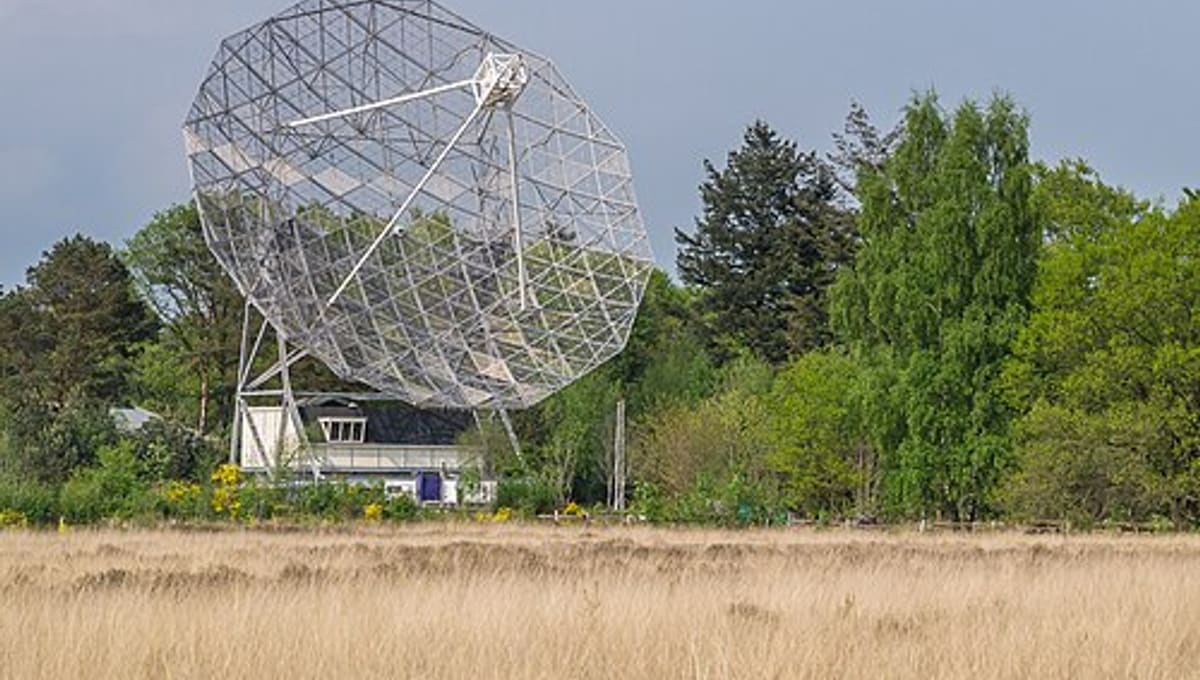
Image: Wikimedia Commons
Rising out of the heathland near the village of Dwingeloo in the northeastern Netherlands, the Dwingeloo Radio Observatory's 25-metre dish was once the largest radio telescope on Earth.
About Dwingeloo Radio Observatory
Construction began in 1954 and the single-dish radio telescope was completed in 1956, briefly holding the title of the world's largest radio telescope until it was overtaken in 1957 by the 76-metre Lovell Telescope in the UK. The site is owned by ASTRON, the Netherlands Institute for Radio Astronomy, and also houses most of ASTRON's staff along with a test site for the Low Frequency Array (LOFAR) radio telescope.
History
The telescope stopped operating in an official scientific capacity around 2000. In August 2009 it was designated a national heritage site (rijksmonument), and in June 2012 its dish was removed for restoration before being remounted that November. The restoration was carried out by the "C.A. Muller Radio Astronomy Station" foundation, known as CAMRAS, which brought the telescope back to working order. Two galaxies, Dwingeloo 1 and Dwingeloo 2, are named in the telescope's honour after being discovered in observations from the site.
Telescopes & research
Today the restored dish is used by radio amateurs alongside amateur and professional astronomers for projects such as Earth-Moon-Earth communication, or "moonbounce," in which radio signals are bounced off the Moon's surface to link operators on different parts of the globe. It has also supported "Visual Moonbounce," an artistic research project by Daniela De Paulis exploring image transmission via the Moon at amateur-radio frequencies.
Location & getting there
The observatory sits on open heathland near the village of Dwingeloo in the northeastern Netherlands, an area known for its dark, low-light-pollution skies.
Visiting Dwingeloo Radio Observatory
Check the CAMRAS foundation and ASTRON channels for current opening times and tour information before planning a visit, as access to the historic dish is organised around restoration and amateur radio activity.
See your named star from here
While Dwingeloo's dish listens to radio waves rather than visible light, the Netherlands' dark heathland skies around it are well suited to viewing a named star with an optical telescope. Look up its coordinates in our star catalogue.
Opening hours and public-visit programs vary by season. Check Google Maps for current times before you travel.
Institutional and reference sources used to verify this guide.
Satellite imagery: Esri, Maxar, Earthstar Geographics

 2 kmPlanetarium
 34 kmRadio
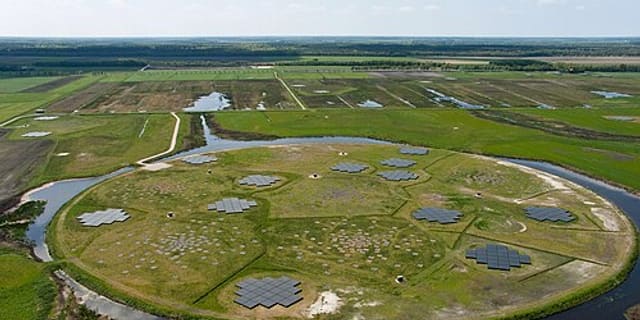
LOFAR
large radio telescope network between Ireland and Poland, located mainly in the Netherlands

 49 km
49 km
 117 km