
Detroit Observatory

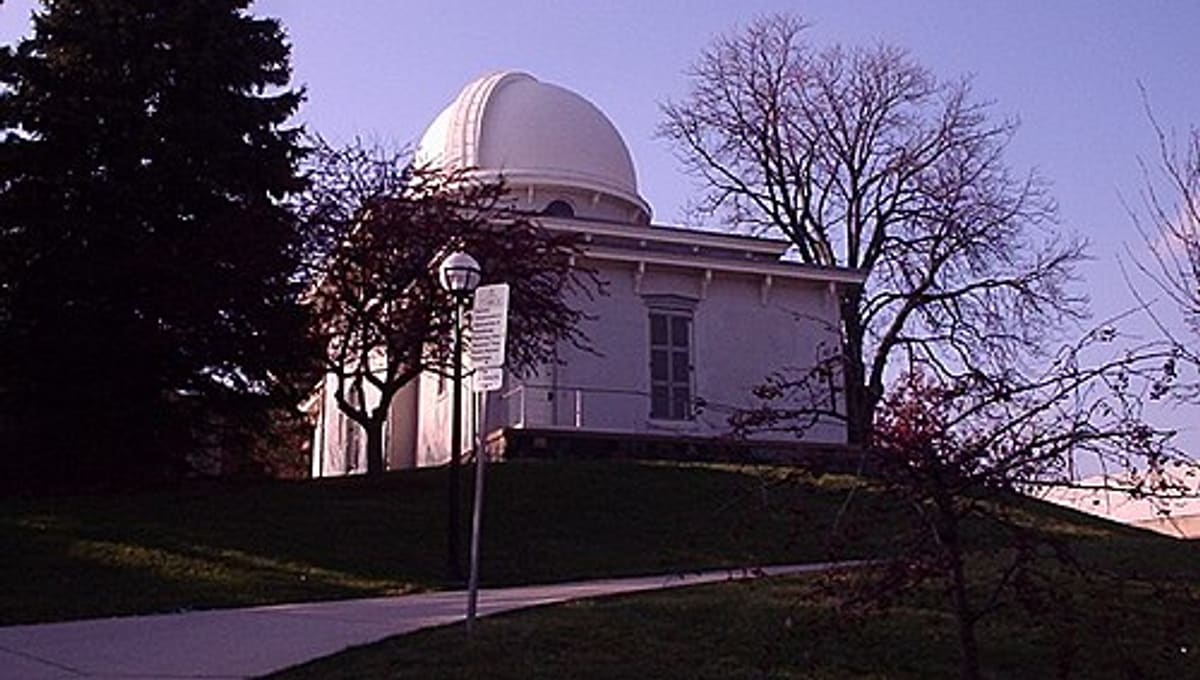
Image: Wikimedia Commons
The Detroit Observatory is a historic 19th-century observatory on the University of Michigan campus in Ann Arbor, Michigan - one of the oldest astronomical research buildings still standing in the United States.
About Detroit Observatory
The Detroit Observatory stands on a hill above the Huron River valley in Ann Arbor, Michigan, at the corner of Ann Street and its namesake Observatory Street. Built in 1854, it was the University of Michigan's first scientific research facility and remains one of the oldest observatories of its kind in the country, at an elevation of about 294 metres.
History
The observatory was designed by Richard Harrison Bull, a New York University civil-engineering professor and amateur astronomer, with construction supervised by George Bird of New York. Its centrepiece was a 12⅝-inch Henry Fitz Jr. refracting telescope installed in 1857 - the third-largest in the world at the time - later joined by a 6-inch Pistor & Martins meridian circle in the building's east wing. The astronomy department moved out in 1963, and the building was named a Michigan State Historic Site in 1958 and added to the National Register of Historic Places in 1973. It was restored in 1997–1998, became part of the university's Bentley Historical Library in 2005, and reopened in April 2022 after accessibility improvements.
Telescopes & research
The observatory's two-storey, hip-roofed building - about 33 feet to a side, built of brick and stucco under a 21-foot wooden-and-canvas revolving dome - was purpose-built to house its refractor and meridian circle for positional astronomy. Though research long ago moved to modern facilities, the original telescope and instruments remain part of the historic site.
Location & getting there
Detroit Observatory sits on the University of Michigan's central campus in Ann Arbor, in the North America region on Star Register's map, overlooking the Huron River valley from its hilltop site.
Visiting Detroit Observatory
The observatory is operated by the University of Michigan and is open for tours and public visits. Hours can vary by term and event schedule, so check current opening times on the university's website before visiting.
See your named star from here
Detroit Observatory's own 19th-century refractor was built to point at exact celestial coordinates - the same right ascension and declination that comes with every star named through Star Register. Name a star today or browse already-named stars in our catalogue.
Opening hours and public-visit programs vary by season. Check the official website and Google Maps for current times before you travel.
Institutional and reference sources used to verify this guide.
Satellite imagery: Esri, Maxar, Earthstar Geographics

 under 1 kmResearch
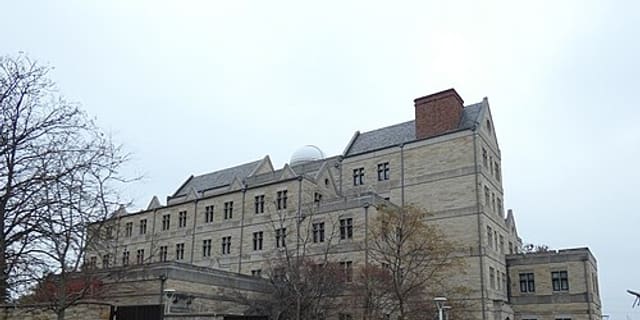
Angell Hall Observatory
astronomical observatory at the University of Michigan

 91 km
91 km
 153 km