
Dark Sky Observatory
Satellite imagery: Esri, Maxar, Earthstar Geographics
Dark Sky Observatory is Appalachian State University's research and teaching facility in the mountains east of Boone, North Carolina, just off the Blue Ridge Parkway. Established in 1981, it pairs a serious research telescope with regular public viewing nights for anyone curious about the sky.
About Dark Sky Observatory
The observatory is owned and operated by Appalachian State University (ASU) and sits about 9 kilometers (5.6 miles) east of Deep Gap, North Carolina, and roughly 32 kilometers (20 miles) from the university's Boone campus. Since 1981 it has served three roles at once: a research site for faculty and students, a teaching lab for astronomy courses, and a venue for public stargazing events.
Telescopes & research
The observatory's primary instrument is a 32-inch (0.81 meter) Ritchey-Chretien telescope built by DFM Engineering, mounted on an equatorial fork mount and fitted with spectrographic instrumentation. Three additional telescopes support CCD imaging and photometry, giving students and researchers hands-on access to a range of observing techniques on a single site.
Location & getting there
Dark Sky Observatory sits in the mountains east of Deep Gap, off the Blue Ridge Parkway, in the North America region of the United States. The Blue Ridge Parkway setting keeps the site well away from city lights, which is part of why ASU chose it for research-grade observing.
Visiting Dark Sky Observatory
The Cline Visitors' Center, completed in 2011, supports the observatory's public viewing events, where visitors can look through the facility's telescopes under mountain skies. Because public nights depend on weather and Appalachian State's academic calendar, check the university's current schedule before planning a visit.
See your named star from here
Dark Sky Observatory's 32-inch Ritchey-Chretien telescope is exactly the kind of instrument that can track down a single named star once it has coordinates to work with. Name a star through star-register.eu and you'll get its precise right ascension and declination, ready to bring along to a public viewing night here or share with any other observatory. Explore more of the night sky in our star catalogue.
Opening hours and public-visit programs vary by season. Check Google Maps for current times before you travel.
Institutional and reference sources used to verify this guide.
Satellite imagery: Esri, Maxar, Earthstar Geographics

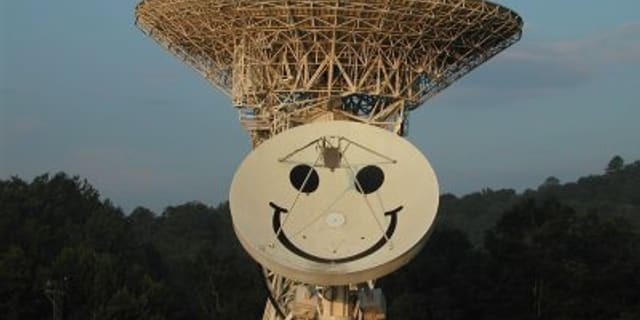 176 kmResearch
Pisgah Astronomical Research Institute
astronomical observatory near Asheville, NC

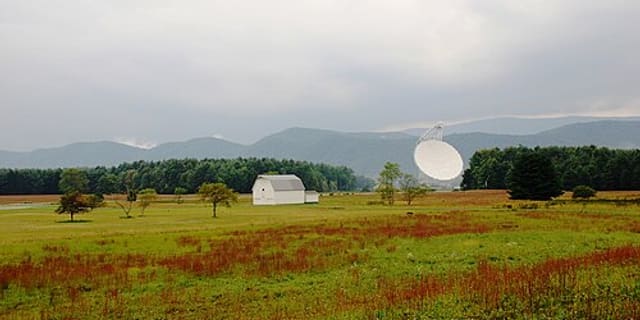 280 km
Green Bank Observatory
astronomical observatory in Green Bank, West Virginia, United States