
California Volcano Observatory

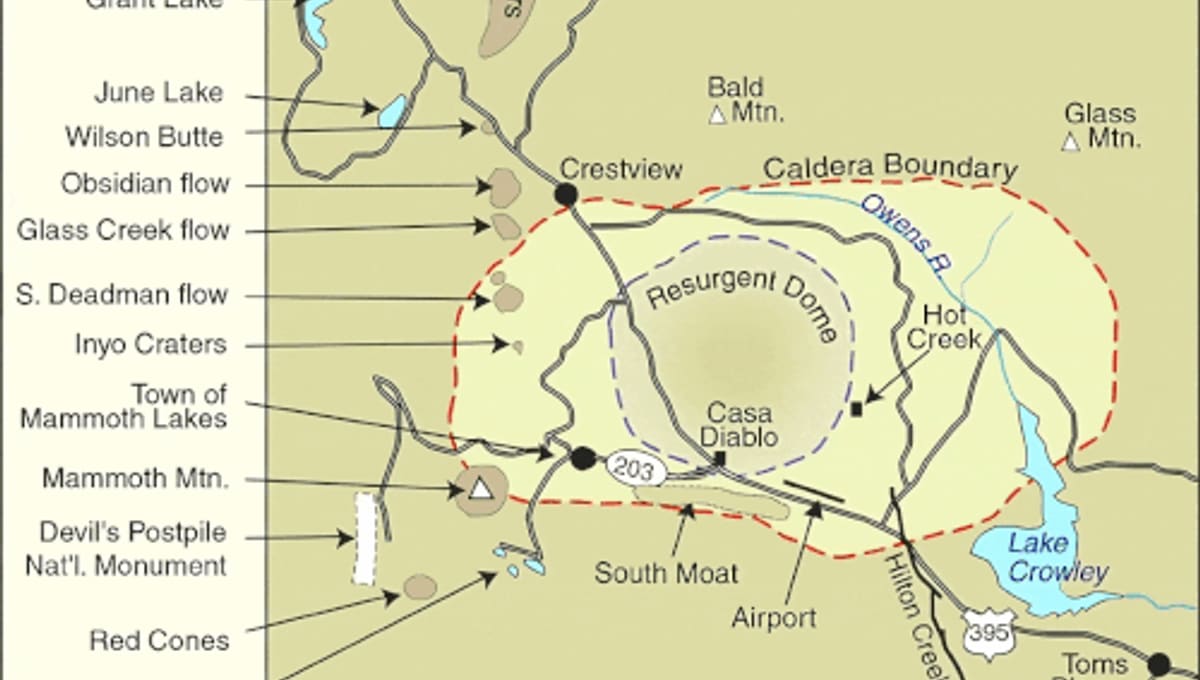
Image: Wikimedia Commons
California Volcano Observatory isn't a stargazing site but a U.S. Geological Survey program that keeps watch over the active volcanic terrain of eastern California and Nevada, including Long Valley Caldera and Mammoth Mountain.
About California Volcano Observatory
The California Volcano Observatory (CalVO) is part of the USGS Volcano Hazards Program, monitoring volcanic and geologic activity across California and Nevada. It grew out of the earlier Long Valley Observatory, which watched over Long Valley Caldera, Mammoth Mountain, and the Mono-Inyo Craters east of the Sierra Nevada in Mono County.
History
CalVO was formed in 2012 when the Long Valley Observatory was expanded into a statewide program covering all of California and Nevada, including the southern Cascade Range volcanoes previously monitored by the Cascades Volcano Observatory.
Location & getting there
CalVO's monitored region centres on the volcanic terrain of Mono County in eastern California, around Long Valley Caldera and the Mono-Inyo Craters.
Visiting California Volcano Observatory
CalVO is a scientific monitoring program rather than a visitor site, so there is no telescope, dome, or tour to book here. The volcanic landscape it studies, including Mammoth Mountain and the Mono-Inyo Craters, is public land that can be explored independently; check current conditions with the U.S. Forest Service or USGS before visiting.
See your named star from here
CalVO's instruments watch the ground, not the sky, so it isn't a place to view a named star through a telescope. For that, look up your star's coordinates in the catalogue and find a working observatory near you, or name a star to get started.
Opening hours and public-visit programs vary by season. Check the official website and Google Maps for current times before you travel.
Institutional and reference sources used to verify this guide.
Satellite imagery: Esri, Maxar, Earthstar Geographics