
Brukkaros Solar Observatory
Satellite imagery: Esri, Maxar, Earthstar Geographics
High on the rim of an extinct volcanic crater in southern Namibia, the ruins of the Brukkaros Solar Observatory mark one of astronomy's more remote 20th-century experiments.
About Brukkaros Solar Observatory
Brukkaros Solar Observatory was a solar observatory installed on Brukkaros Mountain in the ǁKaras Region of Namibia. It was financed and operated jointly by the American National Geographic Society and the Smithsonian Institution, and was active between 1926 and 1931, built to measure the intensity of solar radiation reaching Earth. Its structure was a shallow tunnel about 10.5 metres long, blasted into the crater rock and extended with cemented stone walls and a concrete roof, divided into three small rooms with a stone instrument platform out front.
History
The station operated for only five years before it was abandoned: the mountain's relatively low elevation meant atmospheric absorption of sunlight was substantial and variable, and unexpectedly strong, dust-carrying winds disturbed the instruments, making accurate solar measurements impossible.
Location & getting there
Brukkaros Mountain rises in the ǁKaras Region of southern Namibia, roughly 100km north-northwest of Keetmanshoop and near the Nama town of Berseba.
Visiting Brukkaros Solar Observatory
There is no active facility today, but the mountain is a hiking and camping destination; visitors who climb to the crater rim can still find the observatory's ruins and its shallow instrument tunnel. Check current access and route conditions locally before setting out, as this is a remote, unstaffed site.
See your named star from here
Brukkaros's history is about the Sun, not the stars, but its dark, unpopulated setting on a Namibian crater rim is a fitting place to look up at night. If you make the hike, bring your Star Register certificate's coordinates and a stargazing app to find your named star in one of the clearest, least light-polluted skies in southern Africa. Get started at /#packages or explore the catalogue of named stars.
Opening hours and public-visit programs vary by season. Check Google Maps for current times before you travel.
Institutional and reference sources used to verify this guide.
Satellite imagery: Esri, Maxar, Earthstar Geographics

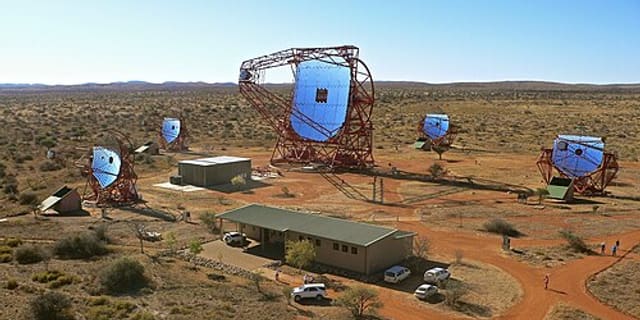 318 km
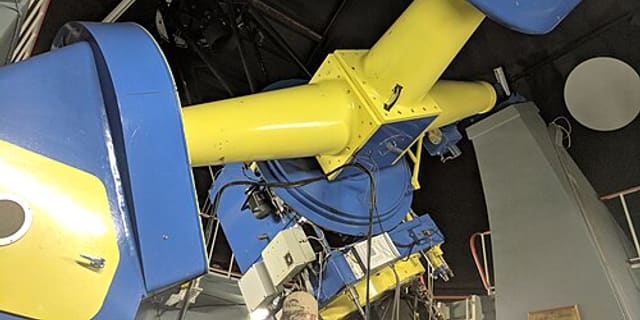 780 km
ATLAS–SAAO observatory
astronomical observatory at Sutherland Observatory in South Africa

 780 km
 780 km