
Bordeaux Observatory

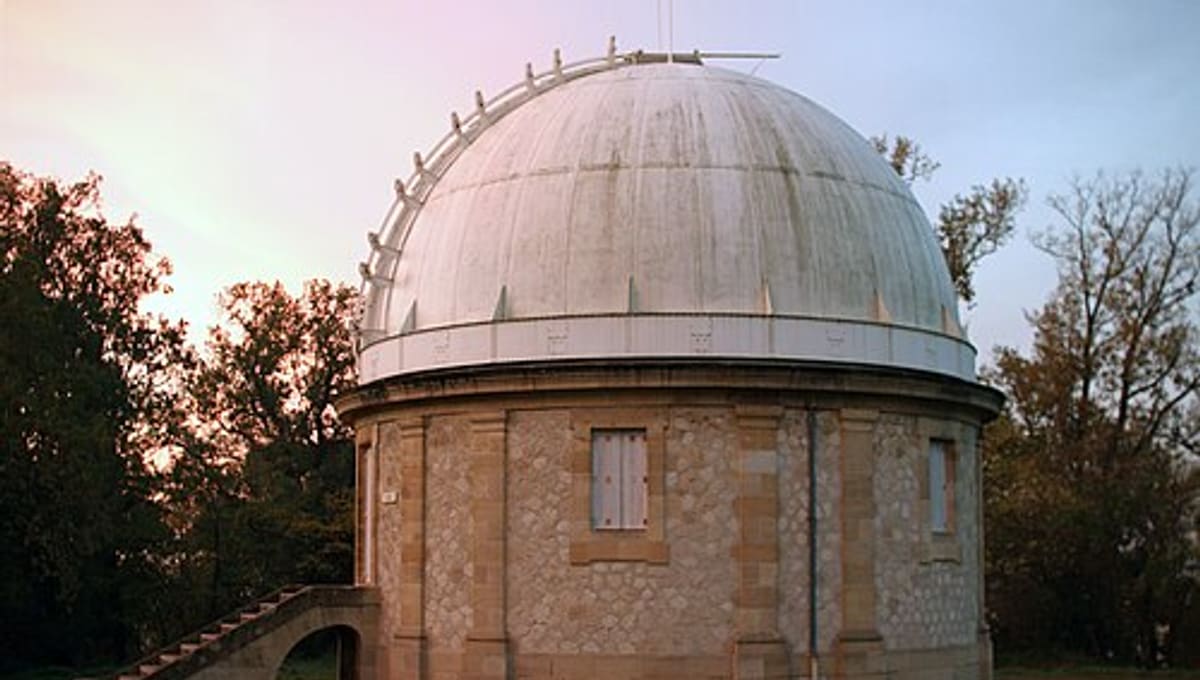
Image: Wikimedia Commons
Founded in 1878 and built at Floirac in 1893, Bordeaux Observatory spent well over a century mapping the southern sky before its university department moved on, leaving behind a dome that now hosts guided tours and even contemporary art.
About Bordeaux Observatory
Bordeaux Observatory is an astronomical observatory affiliated with the University of Bordeaux, known in French as the Observatoire de Bordeaux. Its lenses were historically focused on stars between +11 and +17 degrees declination, and until 1970 it had taken over 4,000 photographic plates.
History
The observatory was founded in 1878, and its building at Floirac, on the outskirts of Bordeaux, went up in 1893. It remained in active use until 2016, when the university's astronomy department relocated to a new site, bringing to a close well over a century of continuous observation from Floirac.
Telescopes & research
Bordeaux Observatory is home to a large collection of instruments and archives spanning its long working life, including its grand équatorial telescope. The site's large dome now also displays an installed artwork by Suzanne Treister, shown to visitors alongside the historic equipment.
Location & getting there
The observatory sits at Floirac, just southeast of Bordeaux city centre in southwestern France.
Visiting Bordeaux Observatory
The Sirius association, together with Bordeaux Métropole, the town of Floirac and the University of Bordeaux, runs free guided tours of the observatory on Saturday mornings from 10:30 to 11:30, covering the site's history and instruments before finishing at the Treister artwork in the large dome. The visit isn't recommended for children under 7, involves a 300-metre walk to reach the buildings, and the dome is reached by stairs that aren't accessible to wheelchairs or strollers. Check the Sirius association's website for the current visit calendar.
See your named star from here
A morning at the old dome in Floirac is a fitting way to trace the history of stargazing before looking for your own named star. Take the coordinates from the catalogue after you name a star, and check our observatories directory for a nearby facility that can help you find it in the sky.
Opening hours and public-visit programs vary by season. Check Google Maps for current times before you travel.
Institutional and reference sources used to verify this guide.
Satellite imagery: Esri, Maxar, Earthstar Geographics

 189 kmMuseum
 218 km
Pic du Midi Observatory
astronomical observatory in Bagnères-de-Bigorre (Hautes-Pyrénées)