
Bidston Observatory

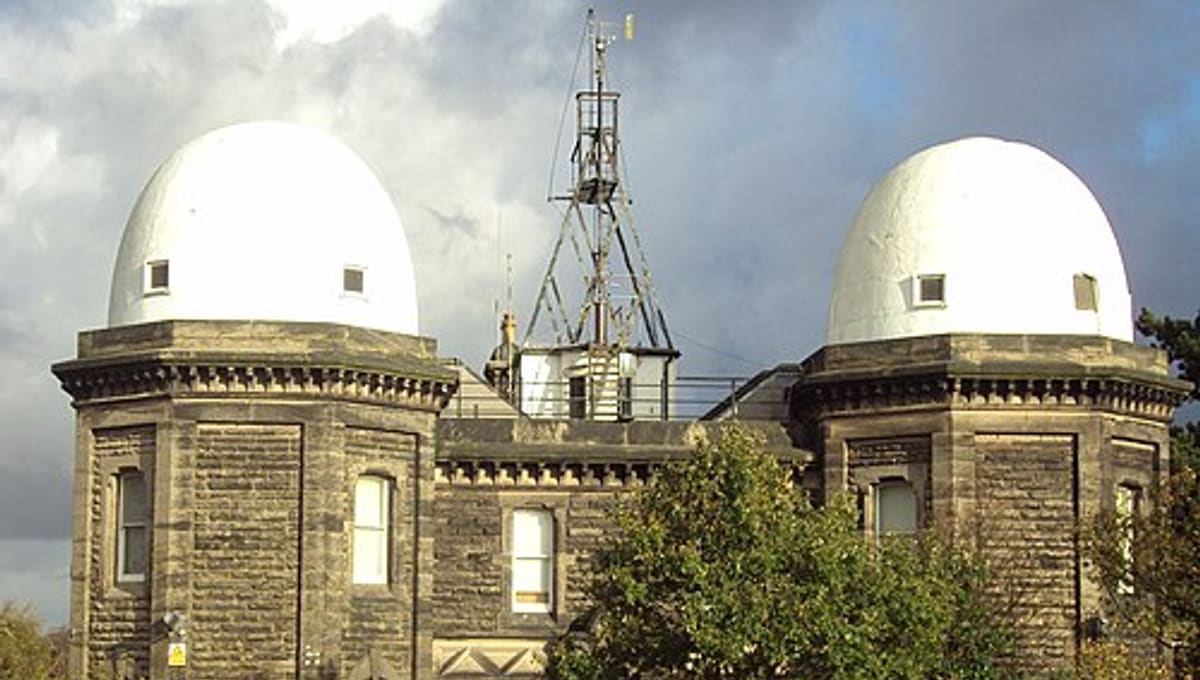
Image: Wikimedia Commons
Perched on Bidston Hill above the River Mersey, Bidston Observatory is a Grade II listed sandstone building in Wirral, Merseyside, England, that once anchored Britain's tidal and timekeeping research.
About Bidston Observatory
Built from local sandstone and opened in 1866 under its first director, John Hartup, Bidston Observatory combined an equatorial telescope in its west dome, used for comet observation, with a transit telescope in the east dome, which kept precise time for ships and the wider region.
History
For over a century the observatory fired the electrically triggered "One O'Clock Gun" to give Merseyside's mariners and residents an exact daily time signal, a tradition that continued until 18 July 1969. In 1929 it merged with the University of Liverpool Tidal Institute, and staff there, including scientists Joseph Proudman and Arthur Doodson, pioneered tidal-flow analysis methods still referenced today. Their work was put to historic use predicting the tides for the D-Day landings during the Second World War. The Natural Environment Research Council took over the site in 1969.
Location & getting there
The observatory sits on Bidston Hill, a wooded sandstone ridge in Wirral overlooking the Mersey estuary, within easy reach of Birkenhead and Liverpool. As a listed historic building, opening arrangements can change, so check locally or with heritage groups before visiting.
Visiting Bidston Observatory
Bidston Observatory is no longer a working scientific institution, but its distinctive domes remain a landmark on Bidston Hill. Because public access varies, it is worth checking current opening details before making a special trip.
See your named star from here
A star named through Star Register comes with exact coordinates that any telescope, anywhere, can be pointed toward, including one set up on Bidston Hill's clear vantage point above the Mersey. Browse the star catalogue to find a star to name for someone special.
Opening hours and public-visit programs vary by season. Check Google Maps for current times before you travel.
Institutional and reference sources used to verify this guide.
Satellite imagery: Esri, Maxar, Earthstar Geographics

 55 km
55 km
 56 km
56 km
 58 km
58 km