
Astronomical Research Observatory, Charleston
Satellite imagery: Esri, Maxar, Earthstar Geographics
Near Charleston, Illinois, the Astronomical Research Institute (ARI) built the observatory that would go on to become one of the world's most productive trackers of near-Earth objects.
About the observatory
ARI is a non-profit founded in 2002 by Robert Holmes, who personally reported 11,593 asteroid and near-Earth object observations to the Minor Planet Center. Its Charleston site was equipped by 2008 with 24-inch (0.61m) and 32-inch (0.81m) robotic telescopes.
History
The Charleston facility, in partnership with Eastern Illinois University, gave students direct access to research-grade telescope time. Between 2008 and 2009, ARI relocated its main operations 12 miles west to Westfield, Illinois, in search of darker skies, though the Charleston site marks the institute's original home.
Telescopes & research
ARI's core mission is tracking near-Earth objects, asteroids whose orbits bring them within Earth's own orbit; the institute has at times supplied more than half of the world's NEO tracking data.
Location & getting there
The site is located near Charleston, Illinois, in the American Midwest, close to Eastern Illinois University's campus.
Visiting
ARI's public role is largely educational, offering students observation time on its telescopes; check with the institute directly for current access arrangements.
See your named star from here
An institute built for tracking faint, fast-moving objects has the equipment and expertise to find the fixed coordinates of a named star too. Look up your star's position in the star catalogue before getting in touch.
Opening hours and public-visit programs vary by season. Check the official website and Google Maps for current times before you travel.
Institutional and reference sources used to verify this guide.
Satellite imagery: Esri, Maxar, Earthstar Geographics
Eastern Illinois University observatory
astronomical observatory in Illinois, United States

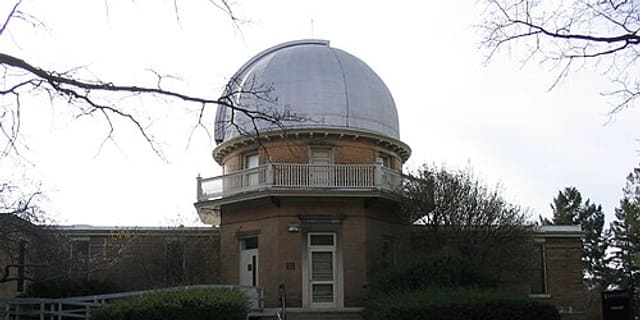 69 kmResearch
Astronomical Observatory
observatory at the University of Illinois Urbana-Champaign

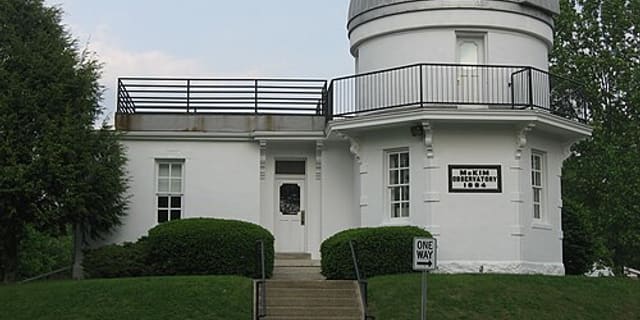 112 km
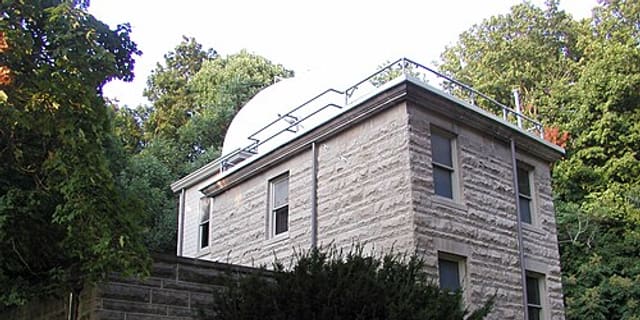 144 km
Kirkwood Observatory
astronomical observatory near Bloomingon, in the US state of Indiana