
Astronomical Observatory

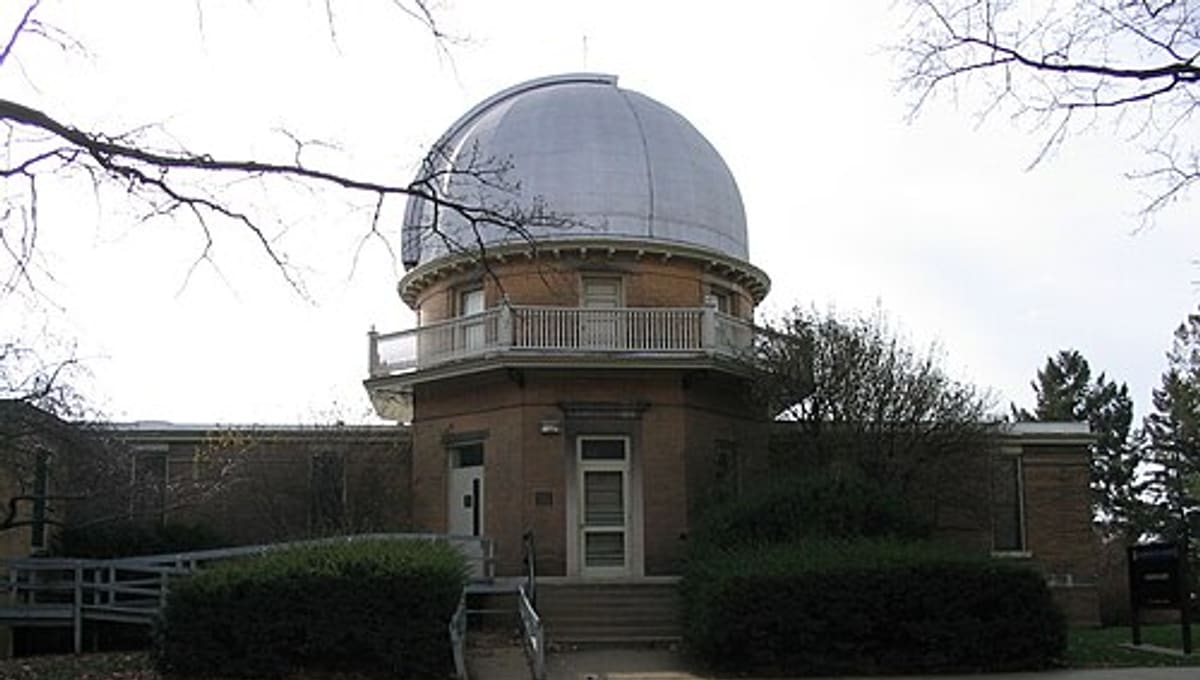
Image: Wikimedia Commons
Built in 1896 on the University of Illinois campus in Urbana, the Astronomical Observatory is a National Historic Landmark that still lets visitors look through the same 12-inch refractor astronomers used more than a century ago.
About the Astronomical Observatory
Designed by architect Charles A. Gunn and erected at the request of the Illinois General Assembly, the observatory was built to give the university's Department of Astronomy a dedicated home. It was listed on the National Register of Historic Places in 1986 and designated a National Historic Landmark in 1989.
History
From 1907 to 1922, astronomer Joel Stebbins carried out pioneering research at the observatory in astronomical photometry - measuring the brightness of stars - work that helped shape the direction of modern astrophysics. Stebbins was succeeded by other noted directors, including Robert Horace Baker. The building served as the university's astronomy department until 1979, when the growing department moved to a larger, purpose-built facility.
Telescopes & research
None of the observatory's original instruments are used for professional research today, but its 12-inch Brashear refractor - now well over 125 years old - is still in working order and remains the centrepiece of public viewing nights.
Location & getting there
The observatory sits at 901 S. Mathews Avenue on the University of Illinois Urbana-Champaign campus, easy to reach on foot from anywhere in central campus.
Visiting the Astronomical Observatory
The Astronomical Society at the University of Illinois runs free public open houses on the second Friday of each month during the fall and spring semesters. Viewing typically runs from 8 to 10 PM in spring, summer and fall, and 7 to 9 PM in winter, with visitors invited to look through the historic 12-inch refractor and smaller telescopes; even on cloudy nights the group offers tours and talks about the building's history. Email [email protected] to join the mailing list for schedule updates.
See your named star from here
The same coordinates - right ascension and declination - that Stebbins once used to catalogue the brightness of stars are exactly what comes with every star named through our register, ready to be found through a telescope like Illinois's own Brashear refractor. Name a star, or browse our star catalogue.
Opening hours and public-visit programs vary by season. Check Google Maps for current times before you travel.
Institutional and reference sources used to verify this guide.
Satellite imagery: Esri, Maxar, Earthstar Geographics
Eastern Illinois University observatory
astronomical observatory in Illinois, United States

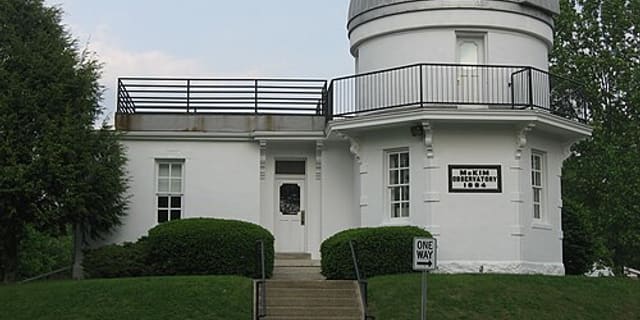 128 km
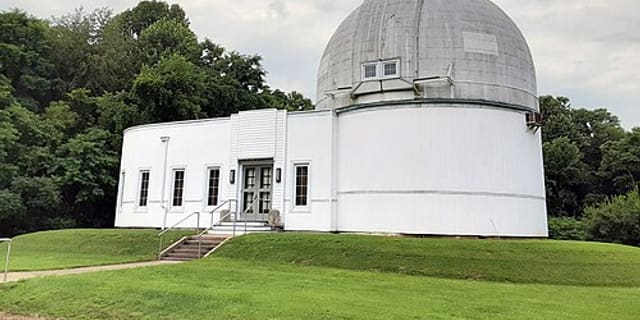 168 km