
Astronomical Observatory of the Infante D. Luís Geophysical Institute

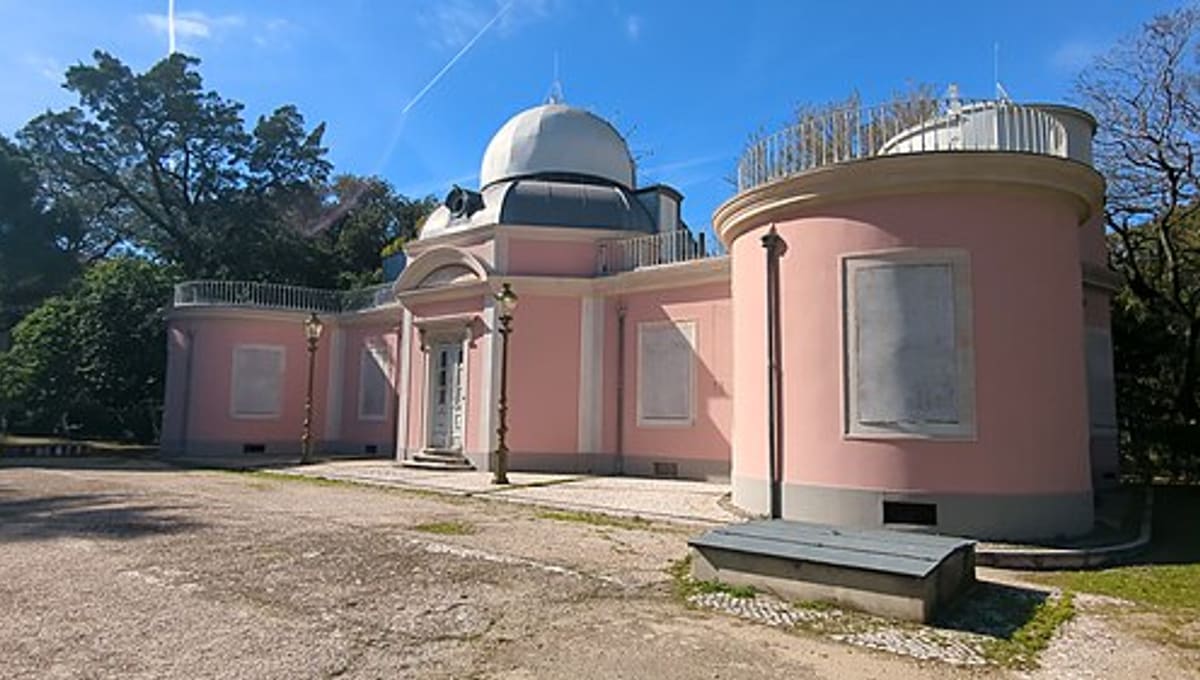
Image: Wikimedia Commons
In Lisbon, Portugal, the Astronomical Observatory of the Infante D. Luís Geophysical Institute has been recording the sky and the atmosphere since 1854, making it one of the country's longest-running scientific institutions.
About the observatory
Founded as the Prince Luís Meteorological Observatory in 1854, it became one of the leading Portuguese centres for meteorological and geomagnetic research during the second half of the 19th century. Today it operates as the Geophysical Institute of Infante D. Luís.
History
Between 1871 and 1880, the observatory ran a daily solar photography programme to study the relationship between sunspot activity and Earth's magnetic field, led by director João Carlos de Brito Capello. Following a solar eclipse expedition in 1870, the observatory acquired an equatorial telescope, and from 1863 it published its findings regularly in the 'Annaes do Observatório do Infante D. Luiz'.
Telescopes & research
The observatory's 19th-century solar photography work remains its best-documented scientific legacy. In its modern role, the institute uses the Cloud Atlas (1956 edition) for cloud observation and coding, and transmits meteorological data as part of an international network.
Location & getting there
The observatory and institute are located in Lisbon, Portugal, in a city with a long tradition of maritime and scientific observation.
Visiting
As a working meteorological and geophysical institute, it's best to check current opening arrangements directly with the institute before planning a visit.
See your named star from here
An institution with over 170 years of astronomical and meteorological record-keeping is a fitting backdrop for tracking down a named star. Look up your star's coordinates in the star catalogue before enquiring about a visit.
Opening hours and public-visit programs vary by season. Check Google Maps for current times before you travel.
Institutional and reference sources used to verify this guide.
Satellite imagery: Esri, Maxar, Earthstar Geographics

 3 km
3 km
 175 kmResearch