
Astronomical observatory of Palermo

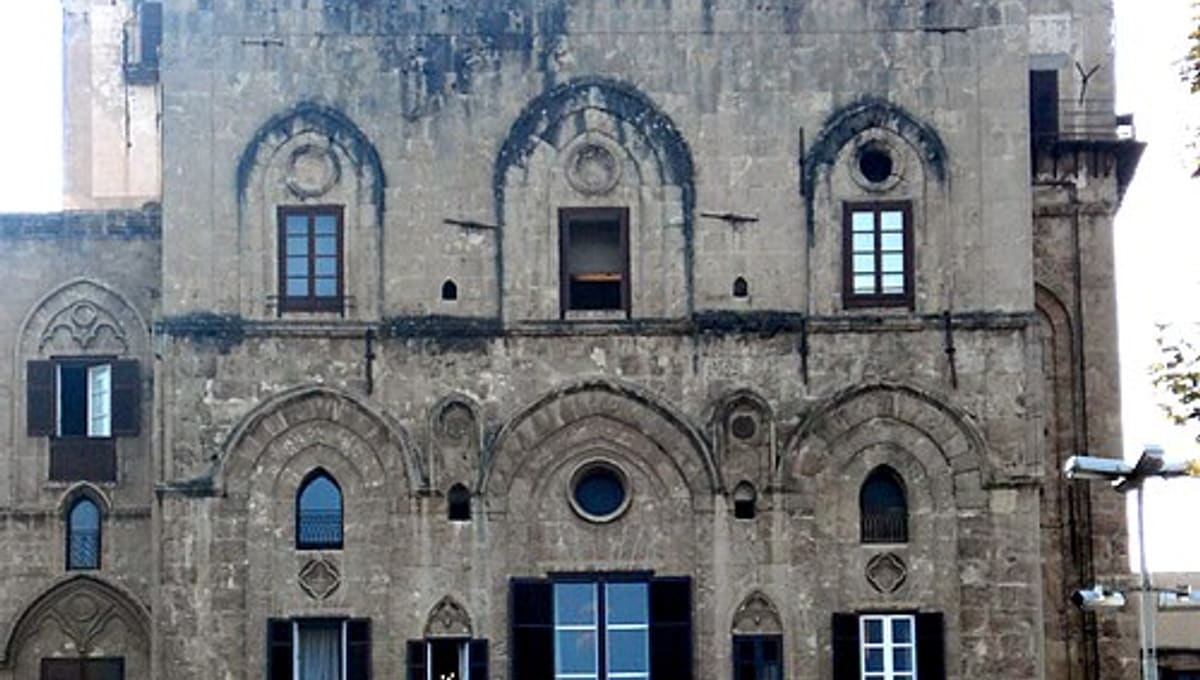
Image: Wikimedia Commons
Overlooking Palermo's historic centre from inside the Palazzo dei Normanni, the Palermo Astronomical Observatory has watched the Sicilian sky since 1790. Officially named for astrophysicist Giuseppe S. Vaiana, it remains one of Italy's oldest working observatories and a research site of the National Institute of Astrophysics (INAF).
About Astronomical observatory of Palermo
The observatory occupies rooms inside the Palazzo dei Normanni, the historic seat of Sicily's regional parliament, and is one of INAF's national network of research institutes. Its astronomers study solar and stellar coronas, stellar evolution including the birth of stars, and the remnants left behind by supernovae.
History
Founded in 1790, the observatory earned a lasting place in astronomical history on 1 January 1801, when its director Giuseppe Piazzi discovered Ceres, the first object of its kind ever identified and today classified as a dwarf planet. The observatory's museum, the Museo della Specola, preserves instruments and records from this era.
Telescopes & research
Historic instruments on display include a Ramsden Circle and a Fraunhofer refractor, both maintained as part of the Specola Museum's collection. Alongside this heritage, INAF scientists based at the site continue modern research into stellar coronas, stellar evolution and supernova remnants.
Location & getting there
The observatory sits atop the Palazzo dei Normanni in the heart of Palermo, Sicily, within easy walking distance of the city's historic centre and its Cappella Palatina.
Visiting Astronomical observatory of Palermo
The observatory and its Specola Museum are generally open to visitors Tuesday to Sunday, with museum access by reservation and guided tours available in Italian and English for an additional fee; the site is wheelchair accessible. Because opening times can shift around palace events, it's worth checking the observatory's official website or calling ahead before travelling.
See your named star from here
If you've named a star with Star Register, an observatory like this one can help you find it: staff or amateur astronomers can point a telescope toward its exact coordinates. Look up your star's right ascension and declination in the star catalogue before your visit to Sicily.
Opening hours and public-visit programs vary by season. Check the official website and Google Maps for current times before you travel.
Wheelchair accessible
Institutional and reference sources used to verify this guide.
Satellite imagery: Esri, Maxar, Earthstar Geographics

 150 km
 164 km