
Astronomical Observatory of Padova

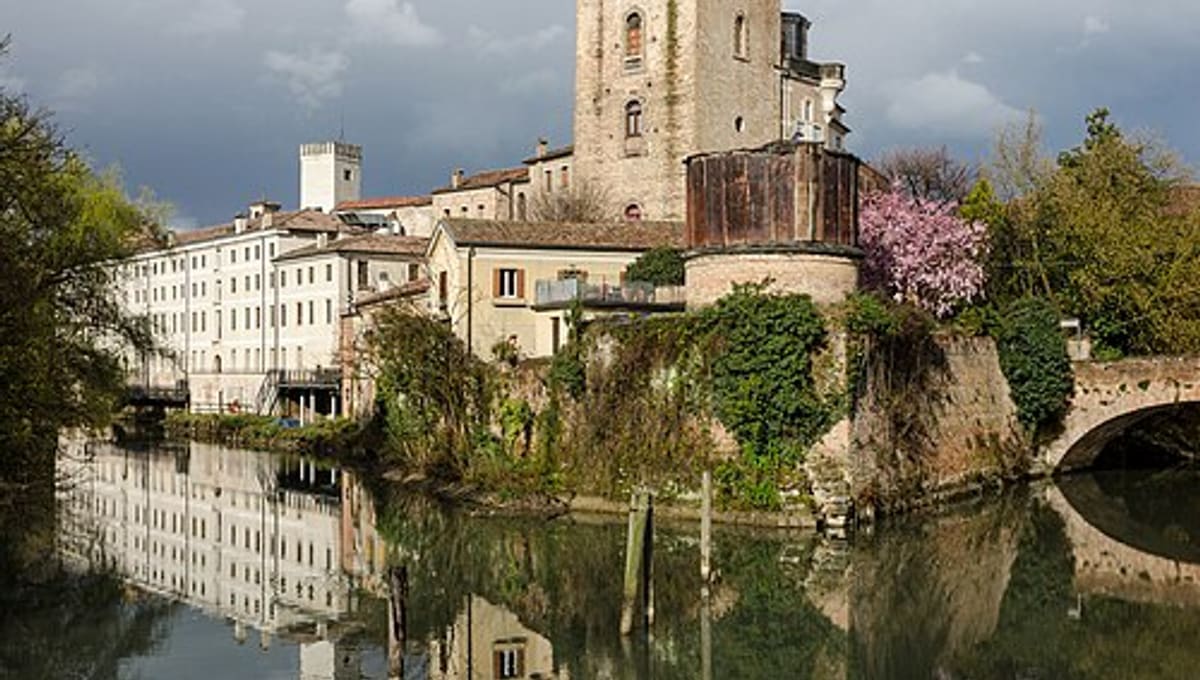
Image: Wikimedia Commons
Housed in a converted medieval tower known as La Specola, the Astronomical Observatory of Padova is one of Italy's oldest astronomical institutions, with roots reaching back to the 18th century.
About Astronomical Observatory of Padova
The observatory takes its historic form from La Specola, a 14th-century tower that was originally part of a medieval castle in Padua, in Italy's Veneto region, before being converted for astronomical use. Today the institution operates as part of Italy's National Institute for Astrophysics (INAF).
History
The observatory dates to 1777, when the tower was adapted into a working observation post, giving Padova one of the longest continuous traditions of astronomical work in Europe.
Telescopes & research
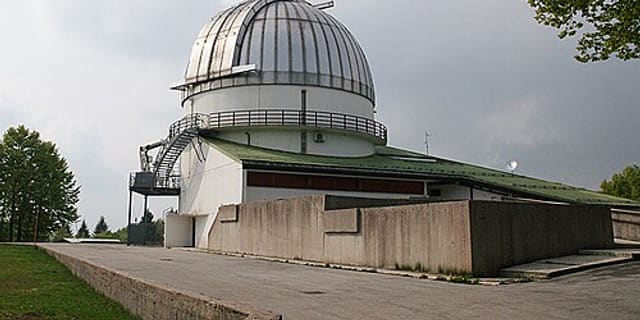
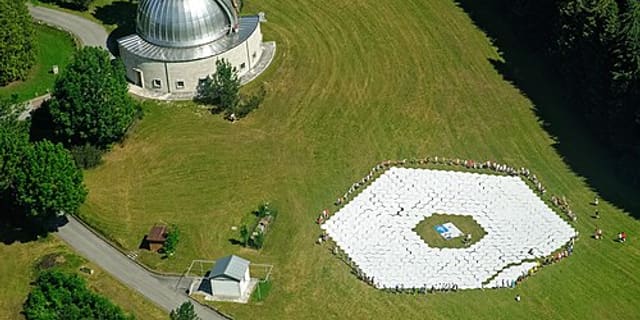
Beyond its historic Padova headquarters, the observatory also operates a modern research site at Asiago, home to the 182 cm Copernico telescope equipped with the AFOSC instrument and an Echelle spectrograph, as well as a Schmidt telescope. The institution combines this research work with public science outreach and teaching alongside the University of Padova.
Location & getting there
The historic La Specola building sits in the centre of Padua, Italy, at Vicolo Osservatorio 5, while the observatory's modern instruments are based further away at its Asiago site.
Visiting Astronomical Observatory of Padova
La Specola operates as a museum open to visitors, with guided tours available; check the observatory's website for current information and opening hours before planning a trip.
See your named star from here
A named star's coordinates, its right ascension and declination, are exactly the kind of data an observatory's telescope operators use to locate any object in the sky. If you've reserved a star via our packages, its position is listed in the catalogue for a future viewing here.
Name a star of your own
Whether or not you can visit Astronomical Observatory of Padova, you can dedicate a real, visible star through Star-Register. Name a star to receive its exact coordinates, or browse the star catalogue to look one up.
Opening hours and public-visit programs vary by season. Check the official website and Google Maps for current times before you travel.
Institutional and reference sources used to verify this guide.
Satellite imagery: Esri, Maxar, Earthstar Geographics

 55 km
55 km
 58 kmMuseum