
Astronomical Observatory of Lviv University
Satellite imagery: Esri, Maxar, Earthstar Geographics
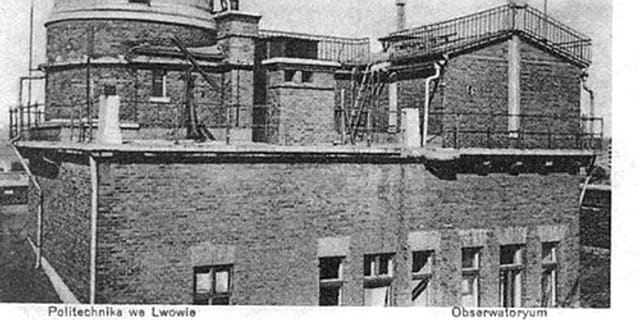
Founded in 1771, the Astronomical Observatory of Lviv University in Lviv, Ukraine, is one of the oldest astronomical institutions still operating in Europe today.
About Astronomical Observatory of Lviv University
The observatory belongs to Ivan Franko National University of Lviv and is recognised as the 17th oldest observatory in Europe. Its telescope complex has been designated a national heritage site, and the institute today focuses on observational and theoretical work in cosmology, relativistic astrophysics, and stellar astrophysics.
History
The observatory was established in 1771 by the Jesuit college of Lviv, but closed around 1783. It was revived in 1900 as part of Lviv University's Astronomical Institute, formally reopened as an Observatory in 1912, and its work was interrupted by the Second World War. It became part of the University of Lviv again in 1945 and has operated continuously since.
Telescopes & research
Researchers at the observatory work on cosmology, relativistic astrophysics, and stellar astrophysics, using a telescope complex that is itself protected as a national heritage site.
Location & getting there
The observatory is located in Lviv, in western Ukraine, a historic city that has long served as a centre for science and higher education in the region.
Visiting Astronomical Observatory of Lviv University
The observatory offers excursions to visitors, bookable through its website, though specific hours and booking procedures are best confirmed directly with the university before arriving.
See your named star from here
Every named star has a fixed right ascension and declination, the same kind of coordinates an observatory's telescope is pointed at every clear night. Name one through our star-naming packages, then check the catalogue for its exact position before a visit here.
Name a star of your own
Whether or not you can visit Astronomical Observatory of Lviv University, you can dedicate a real, visible star through Star-Register. Name a star to receive its exact coordinates, or browse the star catalogue to look one up.
Opening hours and public-visit programs vary by season. Check the official website and Google Maps for current times before you travel.
Institutional and reference sources used to verify this guide.
Satellite imagery: Esri, Maxar, Earthstar Geographics

 1 km
1 km
 222 km
 280 km
 283 km