
Argentine Institute of Radio Astronomy

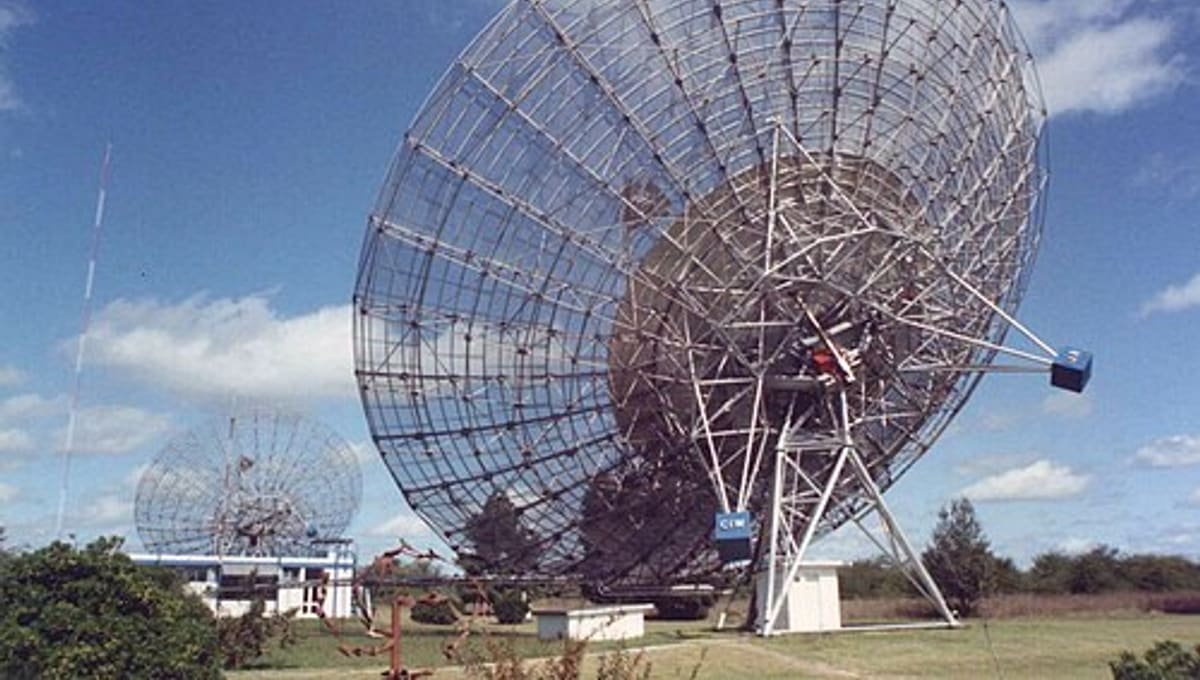
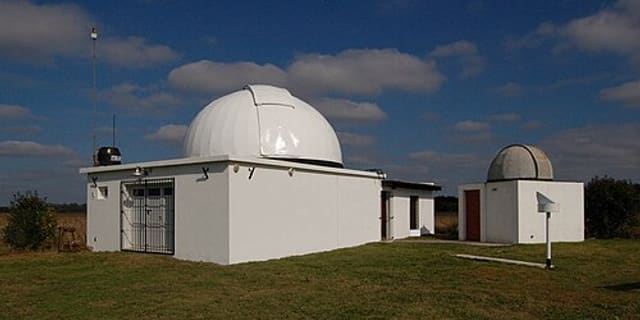
Image: Wikimedia Commons
The Argentine Institute of Radio Astronomy (Instituto Argentino de Radioastronomía, IAR) is one of South America's leading centres for astronomical research and technological development. Founded in 1962 through collaboration between CONICET, CIC, and the universities of La Plata and Buenos Aires, the institute continues over 60 years of scientific innovation.
About the Argentine Institute of Radio Astronomy
The IAR operates under the authority of CONICET (National Council of Scientific and Technical Research), the Scientific Research Commission of Buenos Aires Province, and the National University of La Plata. As a major centre for astronomical research and technology transfer, IAR contributes original, innovative research with national and international impact to advance astronomy and astrophysics.
History
Founded in 1962 through an agreement between Argentina's leading scientific agencies and universities, the IAR was established to promote and coordinate radio astronomy research in Argentina. The Carnegie Institution of Washington assisted in the initial years by providing components for the first antenna. Today, the institute remains a cornerstone of Argentine astronomy.
Telescopes & Research
The IAR operates two twin radio telescopes, each with a 30-metre reflective dish operating at 1420 MHz. The second antenna was entirely built at the institute, demonstrating Argentine technical expertise. Current instruments and projects include the MIA interferometric array and LARA (Lunar Antenna for Radio Astronomy), expanding the institute's capabilities for sky observations. Research encompasses high-energy astrophysics and compact objects, gravitation and numerical relativity, interstellar medium, planetary science, pulsar astronomy, massive stars, and machine learning for signal processing.
Location & Getting There
Located near Buenos Aires at latitude -34.87 degrees south and longitude -58.14 degrees west at 20 metres elevation, the institute sits in Argentina's heartland. The site benefits from reliable atmospheric conditions suitable for radio astronomy observations.
Visiting the Institute
As a research institution, the IAR operates primarily for scientific work. For information about research collaboration, visiting researchers, or educational programmes, contact the institute at iar.unlp.edu.ar or through official channels at the National University of La Plata.
See Your Named Star from Here
Radio astronomy techniques allow observation of celestial objects using their RA and Dec coordinates. A named star from our star-naming packages can be studied through radio observations. Explore our star catalogue to discover your named star and how modern radio astronomy reveals its properties.
Opening hours and public-visit programs vary by season. Check the official website and Google Maps for current times before you travel.
Institutional and reference sources used to verify this guide.
Satellite imagery: Esri, Maxar, Earthstar Geographics

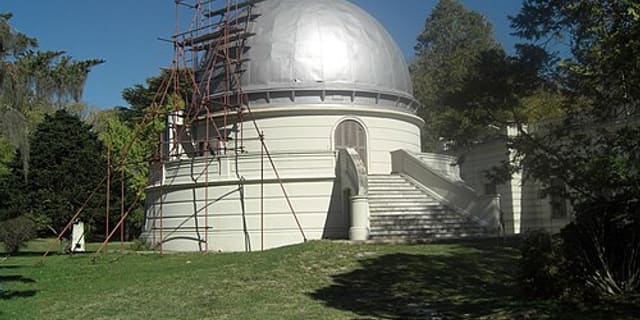 19 km
19 km
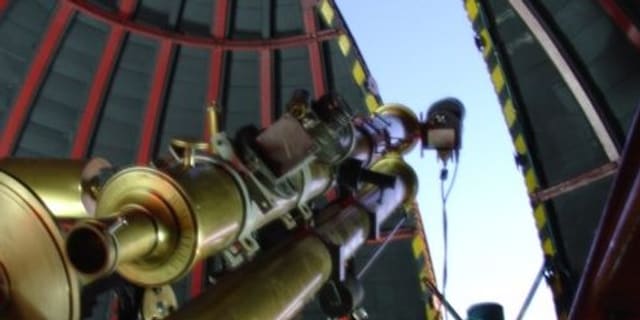 37 km
37 km
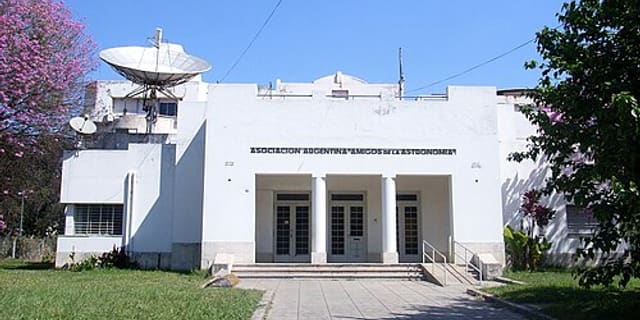 40 km
40 kmArgentine Association of Amateur Astronomers
Argentine amateur astronomy civil association

 121 km