
Abu Rayhan al-Biruni Observatory

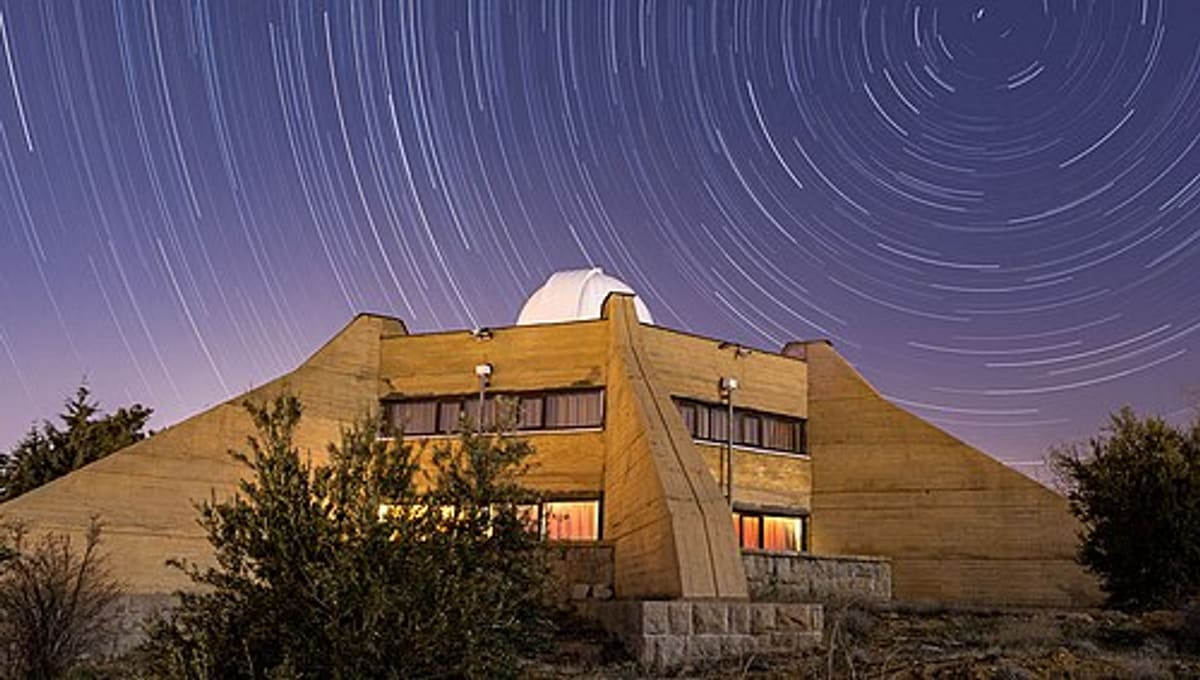
Image: Wikimedia Commons
Abu Rayhan al-Biruni Observatory is Iran's foremost astronomical research facility, located on the outskirts of Shiraz in Fars Province and operated by Shiraz University. Named after the renowned medieval Persian scholar Abu Rayhan al-Biruni, the observatory houses the country's largest active telescope and serves as a central hub for professional astronomical research and solar studies.
History of Biruni Observatory
Construction of the observatory began in 1973, with scientific operations commencing in March 1977, making it Iran's second major observatory after Maragheh. Over decades of operation, the facility has evolved as a leading centre for astronomical research and observation in the Middle East.
Telescopes and Instruments
The observatory is equipped with three major telescopes: a 40-centimetre reflector, a 60-centimetre telescope, and a modern 24-inch (61-centimetre) active telescope added in 2016. Each instrument is housed within a separate three-storey dome with specialised features to minimise atmospheric interference and enhance observational precision. The facility contains the largest active telescope in Iran.
Research Focus
Biruni Observatory specialises in solar studies and professional astronomical observations. As one of the largest active astronomical research centres in Iran, it contributes to understanding solar phenomena and conducts high-resolution sky observations.
Location & Getting There
Situated to the north-west of Shiraz in Fars Province, the observatory benefits from the region's relatively clear skies and relatively high elevation. The location places it in one of Iran's key cultural and scientific centres.
See Your Named Star from Here
The observatory's telescopes can be directed to any coordinates to view celestial objects. Register a star through our star-naming packages and use our star catalogue to find its coordinates for observation.
Opening hours and public-visit programs vary by season. Check Google Maps for current times before you travel.
Institutional and reference sources used to verify this guide.
Satellite imagery: Esri, Maxar, Earthstar Geographics
Sharjah Observatory
astronomical observatory in Sharjah, United Arab Emirates

 577 km
Al Sadeem Observatory
astronomical observatory in Abu Dhabi, United Arab Emirates
Al-Khatim Observatory
astronomical observatory in Abu Dhabi, United Arab Emirates