
Wyoming Infrared Observatory

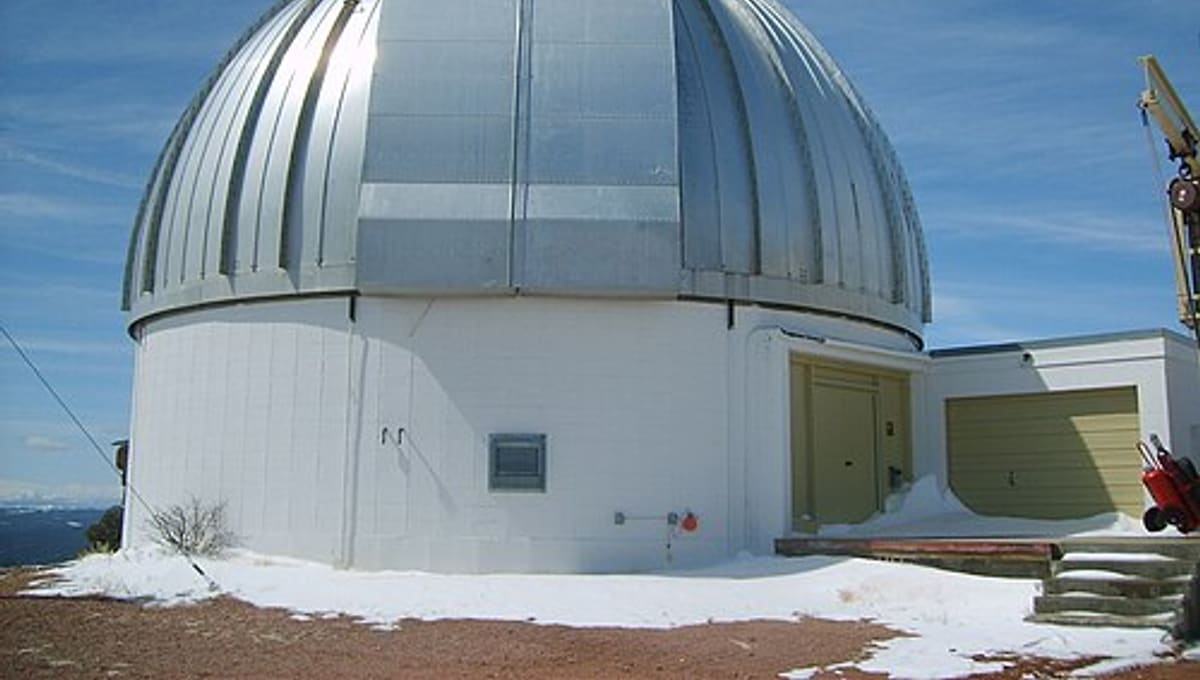
Image: Wikimedia Commons
The Wyoming Infrared Observatory sits atop Jelm Mountain, about 25 miles southwest of Laramie, Wyoming, where the University of Wyoming has studied the infrared sky since the 1970s.
About the Wyoming Infrared Observatory
Known as WIRO, the observatory is owned and operated by the University of Wyoming. It sits at an elevation of 2,943 metres (9,656 feet) on Jelm Mountain, high enough to keep the site above much of the atmosphere's moisture and light pollution that can interfere with infrared observations.
History
WIRO was founded in 1975, and its first observations began in 1977. For roughly three years afterward, from 1977 to about 1980, its telescope was the largest functional infrared telescope in the world.
Telescopes & research
The observatory's main instrument is a 2.3-metre Cassegrain reflector built specifically for infrared work, supported by the WIRO-Prime imaging camera (a 2048x2048 CCD) and the WIRO-Long Slit spectrograph. Astronomers here have searched for runaway stars, monitored short-term brightness changes in blazars, and tracked massive binary star systems. More recent work, done in collaboration with the Spitzer Space Telescope, has helped identify a globular cluster and detect around 100 fast-moving stars.
Location & getting there
Jelm Mountain rises above the forests southwest of Laramie in southeastern Wyoming, a high, dry setting typical of research observatories built across the American West. Use the map and directions button above to plan your route.
Visiting the Wyoming Infrared Observatory
As a working university research facility, WIRO isn't generally open for casual walk-in visits. Check with the University of Wyoming's astronomy department for any public tours or open-house events before planning a trip.
See your named star from here
A star named through star-register.eu comes with precise coordinates, the same kind of data professional telescopes like WIRO's 2.3-metre reflector use to find their targets. Explore the catalogue to see stars already named by our customers.
Opening hours and public-visit programs vary by season. Check Google Maps for current times before you travel.
Institutional and reference sources used to verify this guide.
Satellite imagery: Esri, Maxar, Earthstar Geographics

 180 km
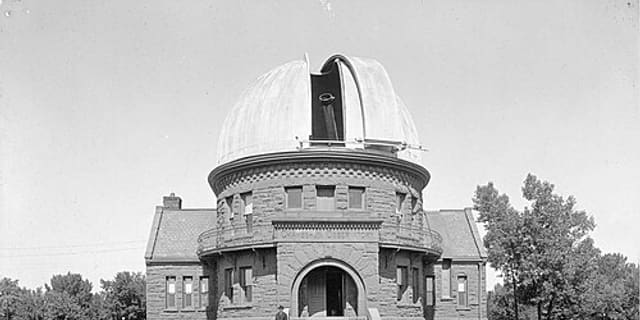
Chamberlin Observatory
astronomical observatory in Denver, United States of America
Rapid City observatory
astronomical observatory in South Dakota, United States