
Warner and Swasey Observatory


Image: Wikimedia Commons
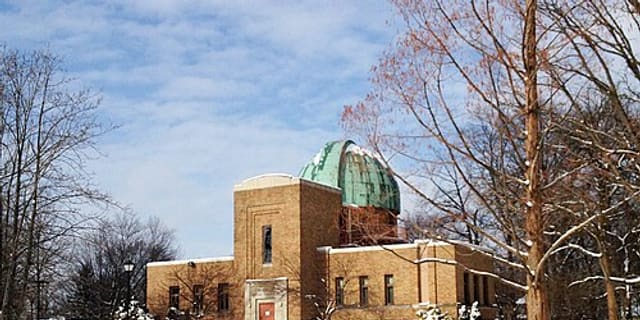
Warner and Swasey Observatory is the astronomical observatory of Case Western Reserve University, named after its benefactors Worcester R. Warner and Ambrose Swasey and rooted in Cleveland, Ohio for more than a century.
About Warner and Swasey Observatory
The observatory was built at the beginning of the 20th century on Taylor Road in East Cleveland and originally housed a 9.5-inch refractor. It was donated in 1919 to the Case School of Applied Science, the forerunner of today's Case Western Reserve University, and a larger 24-inch Burrell Schmidt telescope followed in 1939.
History
As Cleveland's lights brightened through the mid-20th century, the university established a darker outstation, Nassau Station, in Geauga County's Montville Township during the 1950s. The Burrell Schmidt was later moved on to Kitt Peak National Observatory in Arizona, where it remains in service, while Nassau Station itself was equipped with a 36-inch robotic telescope and eventually passed to the Geauga Park District in 2008. The original Taylor Road site was sold in 1983.
Telescopes & research
Today the observatory operates two instruments in very different settings: the historic 9.5-inch refractor, now known as the rooftop telescope, at the university's University Circle campus in Cleveland, and the 24-inch Burrell Schmidt telescope at Kitt Peak National Observatory in Arizona.
Location & getting there
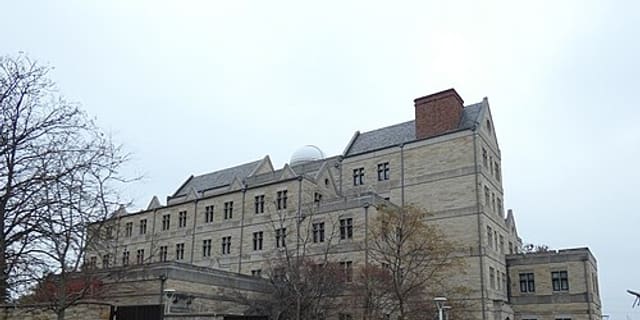
The observatory's current home is Case Western Reserve University's University Circle campus in Cleveland, Ohio, a dense cultural and academic district in the city's east side.
Visiting Warner and Swasey Observatory
Public access is tied to the university's own events and open houses; check Case Western Reserve University's astronomy department or the observatory's own channels for current schedules before planning a visit.
See your named star from here
A telescope like the observatory's rooftop refractor can, in principle, be aimed at the exact coordinates of any named star. If you'd like a star with a story behind it, look through our naming packages or search the star catalogue.
Opening hours and public-visit programs vary by season. Check Google Maps for current times before you travel.
Institutional and reference sources used to verify this guide.
Satellite imagery: Esri, Maxar, Earthstar Geographics

 30 km
30 km
 120 km