
Ulugh Beg Observatory

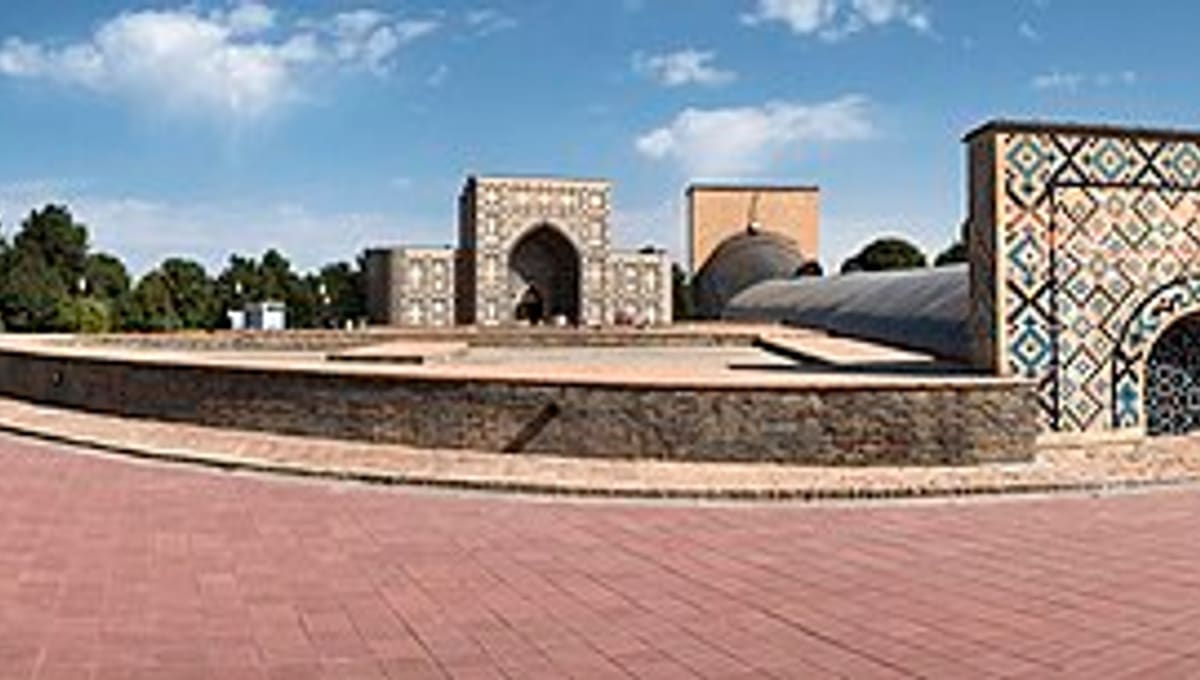
Image: Wikimedia Commons
Few observatories anywhere carry the historical weight of the Ulugh Beg Observatory in Samarkand, Uzbekistan, built in the 1420s by the Timurid ruler and astronomer Ulugh Beg himself.
About Ulugh Beg Observatory
Construction began in the early 1420s and finished around 1428, producing the last great observatory of the Islamic medieval period. The building was a large, three-storey rounded structure decorated with glazed tiles and mosaic, designed around one extraordinary instrument.
History
Its main instrument, the Fakhri sextant, was a monumental meridian arc roughly 40 metres tall, used to measure the length of the year to within 25 seconds of the modern accepted value and to determine Earth's axial tilt with an accuracy still recognised today. Scholars working there, including Jamshid al-Kashi and Ali Qushji alongside Ulugh Beg, spent 17 years, from 1420 to 1437, compiling a star catalogue. The observatory was destroyed in 1449 and lay lost until Russian archaeologist Vassily Vyatkin rediscovered its remains in 1908. In 2001, it was inscribed as part of the UNESCO World Heritage site "Samarkand - Crossroads of Cultures."
Location & getting there
The observatory's remains sit in Samarkand, one of Central Asia's great historic cities, in Uzbekistan.
Visiting Ulugh Beg Observatory
The site is a well-known stop for visitors to Samarkand, alongside the city's other UNESCO-listed monuments; check current opening hours and ticketing with local tourism authorities before you go.
See your named star from here
Ulugh Beg's team spent 17 years plotting the positions of stars by hand - today, a named star's coordinates can be looked up in seconds. If you've named a star of your own, see where it sits in the star catalogue.
Opening hours and public-visit programs vary by season. Check Google Maps for current times before you travel.
Institutional and reference sources used to verify this guide.
Satellite imagery: Esri, Maxar, Earthstar Geographics

 196 km