
Tokyo-Okayama observatory

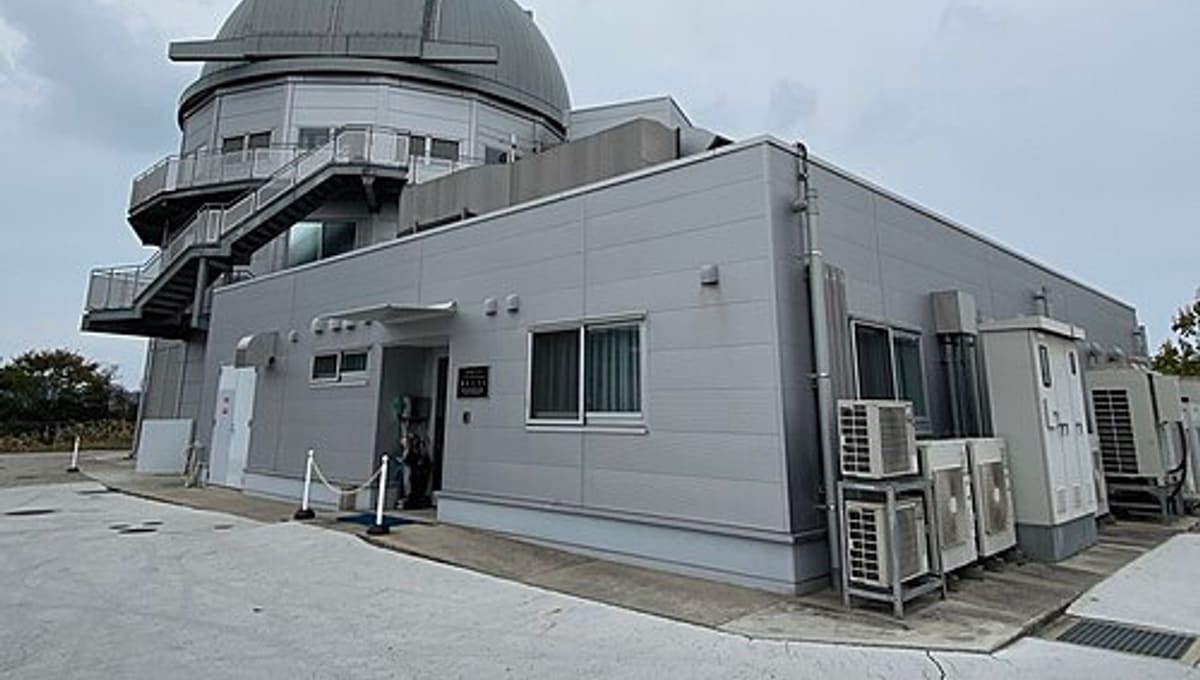
Image: Wikimedia Commons
Tokyo-Okayama Observatory sits atop Mt. Chikurin-Ji in southwestern Okayama Prefecture, Japan, on a site long regarded as one of the country's finest for optical astronomy.
About Tokyo-Okayama Observatory
Founded in 1960 as a branch of the Tokyo Astronomical Observatory, the site became part of the National Astronomical Observatory of Japan (NAOJ) in 1988. It is now operated by the Tokyo Institute of Technology, which runs the observatory's flagship 188cm telescope.
History
Since opening in 1960, the observatory has built a reputation as the best astronomical site in Japan for observing conditions, a status that has kept it in continuous scientific use for over six decades.
Telescopes & research
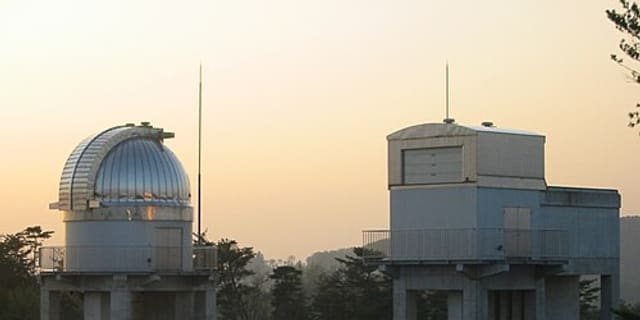
The observatory's primary instrument is a 188cm Cassegrain telescope built by Grubb-Parsons Inc., supplemented by a 91cm telescope, a 65cm solar telescope, and a 50cm telescope. Work here focuses on optical and infrared astronomical observations, and the site's image quality typically reaches around 1.4 arcseconds — a strong figure that reflects its calm atmospheric conditions.
Location & getting there
The observatory stands at 372 metres elevation on Mt. Chikurin-Ji in southwestern Okayama Prefecture, Japan (about 34.57°N, 133.59°E). Its relatively modest elevation, combined with stable regional weather, is part of what makes the site so well regarded for optical work.
Visiting Tokyo-Okayama Observatory
Public access details are best confirmed directly with NAOJ or the Tokyo Institute of Technology, as visiting arrangements at working research observatories can change. Check the official website before planning a trip.
See your named star from here
With one of Japan's largest optical telescopes on site, an observer here has the technical means to point at any set of sky coordinates — including the right ascension and declination of a named star. Take a look at our star-naming packages or browse the star catalogue to find one of your own.
Opening hours and public-visit programs vary by season. Check Google Maps for current times before you travel.
Institutional and reference sources used to verify this guide.
Satellite imagery: Esri, Maxar, Earthstar Geographics

 under 1 km
 12 km
12 km