
Table Mountain Observatory

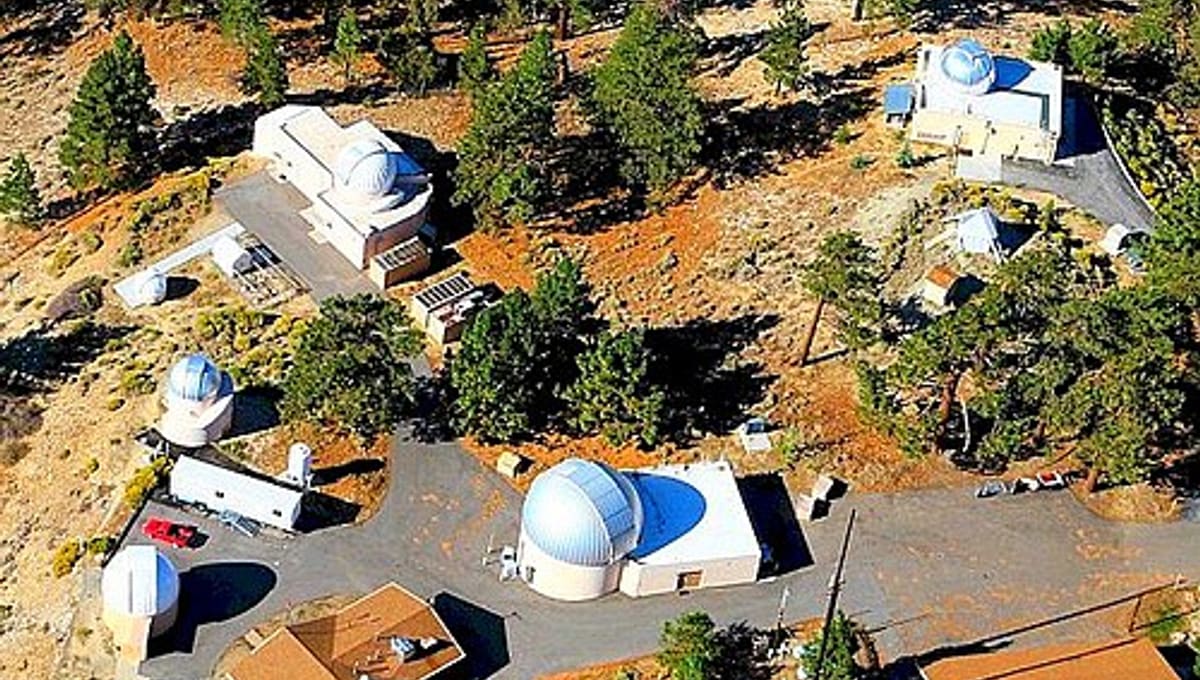
Image: Wikimedia Commons
In the Angeles National Forest near Wrightwood, north-northeast of Los Angeles, Table Mountain Observatory has watched the California sky for a century, from early scientific surveys to modern spacecraft-tracking work.
About Table Mountain Observatory
Table Mountain Observatory (TMO) is operated by NASA's Jet Propulsion Laboratory, part of the California Institute of Technology, and forms part of the wider Table Mountain Facility (TMF), which also hosts several non-astronomical projects on the same site.
History
The site was first used in 1924 by the Smithsonian Institution, which carried out atmospheric, solar and astronomical observations there for many years. JPL took over the lease in 1962, shifting its focus toward space-mission support. The asteroid 84882 Table Mountain was later named in the observatory's honour.
Telescopes & research
TMO's work centres on high-precision astrometric observations that support the navigation of NASA and international spacecraft missions, alongside the confirmation and recovery of near-Earth objects such as comets and asteroids that could pose an impact risk to Earth.
Location & getting there
The observatory sits at around 2,285 metres elevation in Big Pines, California, within the Angeles National Forest near Wrightwood — a mountain setting north-northeast of Los Angeles that offers far darker skies than the city below.
Visiting Table Mountain Observatory
The Los Angeles Astronomical Society is associated with the site and has historically supported public interest in astronomy there. Since TMO is primarily a working JPL research facility, check current access and any public event details on JPL's Table Mountain Facility pages before planning a visit.
See your named star from here
A site built to track near-Earth asteroids and guide spacecraft is a fitting place to think about your own named star. Name a star with Star Register, look up its coordinates in our star catalogue, and compare them with the skies TMO watches over the San Gabriel Mountains.
Opening hours and public-visit programs vary by season. Check Google Maps for current times before you travel.
Institutional and reference sources used to verify this guide.
Satellite imagery: Esri, Maxar, Earthstar Geographics

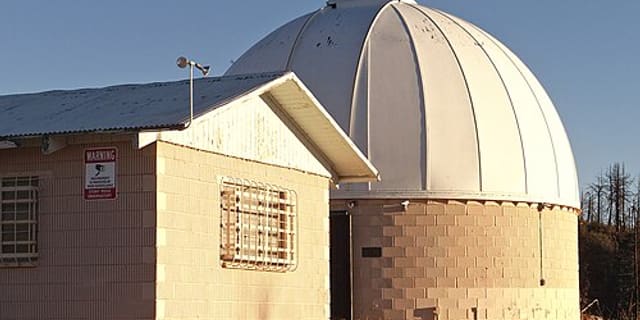 30 km
30 km
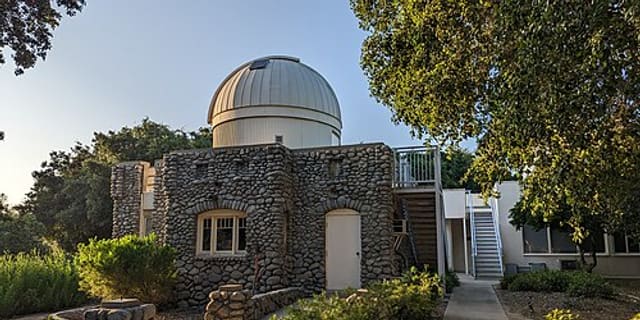 32 kmResearch
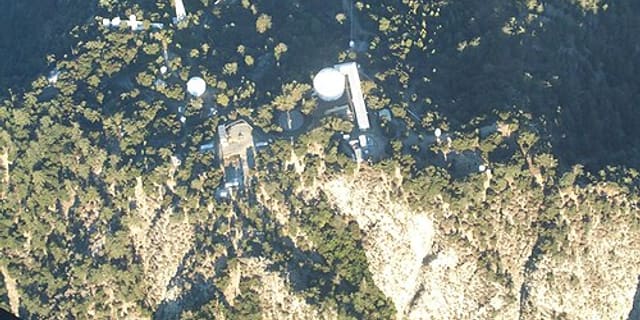 39 km
39 kmMount Wilson Observatory
astronomical observatory in Los Angeles County, California