
Stuttgart Observatory

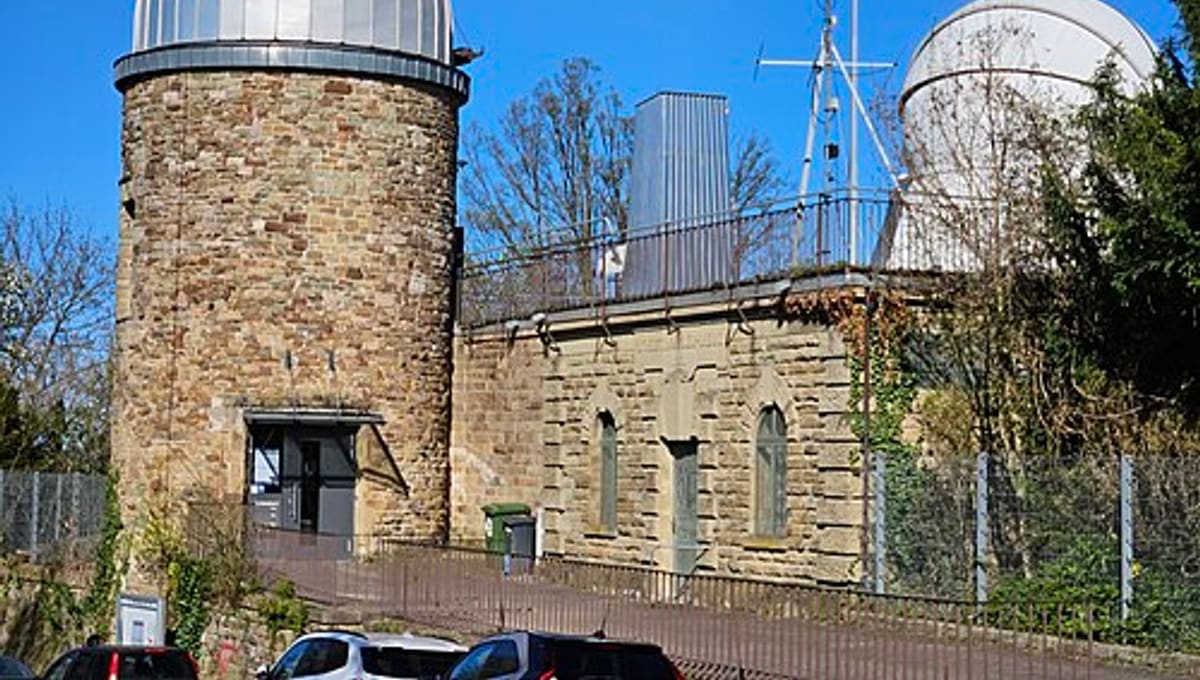
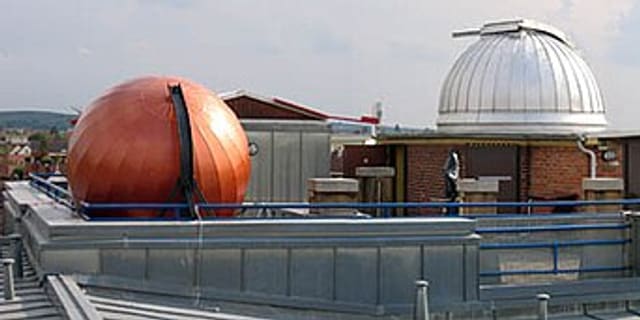
Image: Wikimedia Commons
Stuttgart Observatory has been welcoming visitors up onto the Uhlandshöhe hill for a look through its telescopes since 1922, run entirely by the volunteers of the Schwäbische Sternwarte association.
About Stuttgart Observatory
Stuttgart Observatory, known in German as the Sternwarte Stuttgart, is owned and run by the volunteer association Schwäbische Sternwarte e.V., founded in 1919. Sitting 351 metres up on the Uhlandshöhe hill in Stuttgart, Germany, it carries the Minor Planet Center designation MPC 025.
History
The observatory has been open to the public since 1922, not long after its founding association was formed. It was damaged during the Second World War but reopened on 21 September 1947. Its oldest instrument, a 7-inch Zeiss refractor from 1911 with a 2.59-metre focal length, is still part of the collection today. The construction fund even received an unusual boost early on: Albert Einstein donated the honorarium from a guest lecture toward it.
Telescopes & research
Alongside its historic Zeiss refractor, the observatory operates a 16-inch Newtonian telescope used for genuine scientific work, including observations of stellar occultations by minor planets. It remains entirely volunteer-run, blending public education with real observational astronomy.
Location & getting there
The observatory sits at 351 metres elevation on the Uhlandshöhe, a hill within the city of Stuttgart, Germany, making it one of the more easily reached public observatories in the region.
Visiting Stuttgart Observatory
Stuttgart Observatory keeps a detailed seasonal opening schedule: evening viewing sessions run Monday, Wednesday, Thursday, Friday and Saturday, with start times shifting from 20:00 in the darker months to 22:00 in summer, and Sunday afternoon sessions from 14:00 between March and October. It's closed on public holidays and over the Christmas and New Year period. The site is not currently wheelchair accessible, and visitors can call ahead at +49 711 281871.
See your named star from here
Between its historic Zeiss refractor and its research-grade 16-inch Newtonian, Stuttgart Observatory has the instruments to find almost anything in the sky, including the exact coordinates of a star named through Star Register. Name a star, or browse the catalogue of stars already named.
Source: OpenStreetMap - always confirm on the official website or Google before visiting.
Not wheelchair accessible
Institutional and reference sources used to verify this guide.
Satellite imagery: Esri, Maxar, Earthstar Geographics

 29 kmPublic
 31 kmPublic
 32 kmPlanetarium
 40 kmPublic